As H3N2 sweeps across Canada, what to know about flu’s heart attack risk
An influenza infection brings with it an increased risk of heart attack and stroke, data published in the Journal of the American Heart Association says.
An influenza infection brings with it an increased risk of heart attack and stroke, data published in the Journal of the American Heart Association says.
ALEXANDER, N.C. — Aubreigh Osborne has a new best friend.
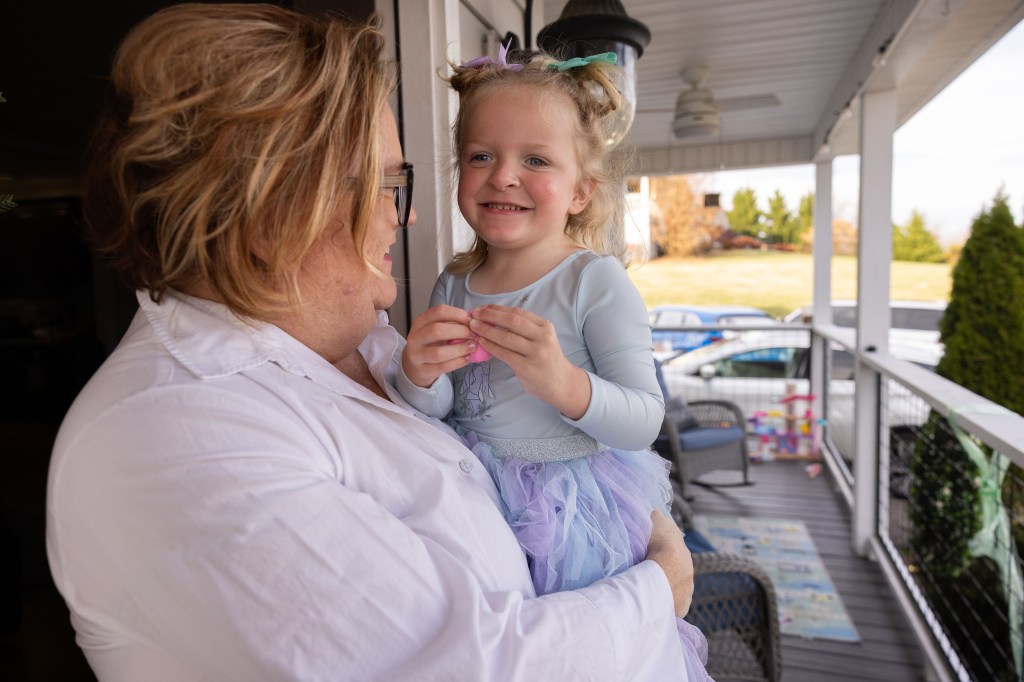
Dressed in blue with a big ribbon in her blond curls, the 3-year-old sat in her mother’s lap carefully enunciating a classmate’s first name after hearing the words “best friend.” Just months ago, Gaile Osborne didn’t expect her adoptive daughter would make friends at school.
Diagnosed with autism at 14 months, Aubreigh Osborne started this year struggling to control outbursts and sometimes hurting herself. Her trouble with social interactions made her family reluctant to go out in public.
But this summer, they started applied behavior analysis therapy, commonly called ABA, which often is used to help people diagnosed with autism improve social interactions and communication. A tech comes to the family’s home five days a week to work with Aubreigh.
Since then, she has started preschool, begun eating more consistently, succeeded at toilet training, had a quiet, in-and-out grocery run with her mom, and made a best friend. All firsts.
“That’s what ABA is giving us: moments of normalcy,” Gaile Osborne said.
But in October, Aubreigh’s weekly therapy hours were abruptly halved from 30 to 15, a byproduct of her state’s effort to cut Medicaid spending.
Other families around the country have also recently had their access to the therapy challenged as state officials make deep cuts to Medicaid — the public health insurance that covers people with low incomes and disabilities. North Carolina attempted to cut payments to ABA providers by 10%. Nebraska cut payments by nearly 50% for some ABA providers. Payment reductions also are on the table in Colorado and Indiana, among other states.
Efforts to scale back come as state Medicaid programs have seen spending on the autism therapy balloon in recent years. Payments for the therapy in North Carolina, which were $122 million in fiscal year 2022, are projected to hit $639 million in fiscal 2026, a 423% increase. Nebraska saw a 1,700% jump in spending in recent years. Indiana saw a 2,800% rise.
Heightened awareness and diagnosis of autism means more families are seeking treatment for their children, which can range from 10 to 40 hours of services a week, according to Mariel Fernandez, vice president of government affairs at the Council of Autism Service Providers. The treatment is intensive: Comprehensive therapy can include 30-40 hours of direct treatment a week, while more focused therapy may still consist of 10-25 hours a week, according to guidelines released by the council.
It’s also a relatively recent coverage area for Medicaid. The federal government ordered states to cover autism treatments in 2014, but not all covered ABA, which Fernandez called the “gold standard,” until 2022.

State budget shortfalls and the nearly $1 trillion in looming Medicaid spending reductions from President Donald Trump’s One Big Beautiful Bill Act have prompted state budget managers to trim the autism therapy and other growing line items in their Medicaid spending.
So, too, have a series of state and federal audits that raised questions about payments to some ABA providers. A federal audit of Indiana’s Medicaid program estimated at least $56 million in improper payments in 2019 and 2020, noting some providers had billed for excessive hours, including during nap time. A similar audit in Wisconsin estimated at least $18.5 million in improper payments in 2021 and 2022. In Minnesota, state officials had 85 open investigations into autism providers as of this summer, after the FBI raided two providers late last year as part of an investigation into Medicaid fraud.
Families Fight Back
But efforts to rein in spending on the therapy have also triggered backlash from families who depend on it.
In North Carolina, families of 21 children with autism filed a lawsuit challenging the 10% provider payment cut. In Colorado, a group of providers and parents is suing the state over its move to require prior authorization and reduce reimbursement rates for the therapy.
And in Nebraska, families and advocates say cuts of the magnitude the state implemented — from 28% to 79%, depending on the service — could jeopardize their access to the treatment.
“They’re scared that they’ve had this access, their children have made great progress, and now the rug is being yanked out from under them,” said Cathy Martinez, president of the Autism Family Network, a nonprofit in Lincoln, Nebraska, that supports autistic people and their families.
Martinez spent years advocating for Nebraska to mandate coverage of ABA therapy after her family went bankrupt paying out-of-pocket for the treatment for her son Jake. He was diagnosed with autism as a 2-year-old in 2005 and began ABA therapy in 2006, which Martinez credited with helping him learn to read, write, use an assistive communication device, and use the bathroom.
To pay for the $60,000-a-year treatment, Martinez said, her family borrowed money from a relative and took out a second mortgage before ultimately filing for bankruptcy.
“I was very angry that my family had to file bankruptcy in order to provide our son with something that every doctor that he saw recommended,” Martinez said. “No family should have to choose between bankruptcy and helping their child.”
Nebraska mandated insurance coverage for autism services in 2014. Now, Martinez worries the state’s rate cuts could prompt providers to pull out, limiting the access she fought hard to win.
Her fears appeared substantiated in late September when Above and Beyond Therapy, one of the largest ABA service providers in Nebraska, notified families it planned to terminate its participation in Nebraska’s Medicaid program, citing the provider rate cuts.
Above and Beyond’s website advertises services in at least eight states. The company was paid more than $28.5 million by Nebraska’s Medicaid managed-care program in 2024, according to a state audit. That was about a third of the program’s total spending on the therapy that year and four times as much as the next largest provider. CEO Matt Rokowsky did not respond to multiple interview requests.
A week after announcing it would stop participating in Nebraska Medicaid, the company reversed course, citing a “tremendous outpouring of calls, emails, and heartfelt messages” in a letter to families.
Danielle Westman, whose 15-year-old son, Caleb, receives 10 hours of at-home ABA services a week from Above and Beyond, was relieved by the announcement. Caleb is semiverbal and has a history of wandering away from caregivers.
“I won’t go to any other company,” Westman said. “A lot of other ABA companies want us to go to a center during normal business hours. My son has a lot of anxiety, high anxiety, so being at home in his safe area has been amazing.”
Nebraska officials have said the state previously had the highest Medicaid reimbursement rates for ABA in the nation and that the new rates still compare favorably to neighboring states’ but will ensure the services are “available and sustainable going forward.”
States Struggle With High Spending
State Medicaid Director Drew Gonshorowski said his agency is closely tracking fallout. Deputy Director Matthew Ahern said that while no ABA providers have left the state following the cuts, one provider stopped taking Medicaid payments for the therapy. New providers have also entered Nebraska since officials announced the cuts.
One Nebraska ABA provider has even applauded the rate cuts. Corey Cohrs, CEO of Radical Minds, which has seven locations in the Omaha area, has been critical of what he sees as an overemphasis by some ABA providers on providing a blanket 40 hours of services per child per week. He likened it to prescribing chemotherapy to every cancer patient, regardless of severity, because it’s the most expensive.
“You can then, as a result, make more money per patient and you’re not using clinical decision-making to determine what’s the right path,” Cohrs said.

Nebraska put a 30 hour-a-week cap on the services without additional review, and the new rates are workable for providers, Cohrs said, unless their business model is overly predicated on high Medicaid rates.
In North Carolina, Aubreigh Osborne’s ABA services were restored largely due to her mother’s persistence in calling person after person in the state’s Medicaid system to make the case for her daughter’s care.
And for the time being, Gaile Osborne won’t have to worry about the legislative squabbles affecting her daughter’s care. In early December, North Carolina Gov. Josh Stein canceled all the Medicaid cuts enacted in October, citing lawsuits like the one brought by families of children with autism.
“DHHS can read the writing on the wall,” Stein said, announcing the state health department’s reversal. “That’s what’s changed. Here’s what has not changed. Medicaid still does not have enough money to get through the rest of the budget year.”
Osborne is executive director of Foster Family Alliance, a prominent foster care advocacy organization in the state, and taught special education for nearly 20 years. Despite her experience, she didn’t know how to help Aubreigh improve socially. Initially skeptical about ABA, she now sees it as a bridge to her daughter’s well-being.
“It’s not perfect,” Osborne said. “But the growth in under a year is just unreal.”
Do you have an experience with cuts to autism services that you’d like to share? Click here to tell KFF Health News your story.
KFF Health News is a national newsroom that produces in-depth journalism about health issues and is one of the core operating programs at KFF—an independent source of health policy research, polling, and journalism. Learn more about KFF.
This story can be republished for free (details).
A Texas boy’s second dose of the MMRV vaccine cost over $1,400. A Pennsylvania woman’s long-acting birth control cost more than $14,000.
Treatment for a Florida Medicaid enrollee’s heart attack cost nearly $78,000 — about as much as surgery for an uninsured Montana woman’s broken arm.
In 2025, these patients were among the hundreds who asked KFF Health News to investigate their medical bills as part of its “Bill of the Month” series.
Insured and uninsured. Job-based and government-funded. Comprehensive and short-term. Part of a sharing ministry. So many people with different health insurance situations asked the same questions: Why do I owe so much? And how am I going to afford it?
As millions of Americans grapple with the rising cost of health insurance next year, the “Bill of the Month” series is approaching its eighth anniversary. Our nationwide team of health reporters has analyzed almost $7 million in medical charges, more than $350,000 of that this year.
Of this year’s 12 featured patients, five had their bills mostly or fully forgiven soon after we contacted the provider and insurer for comment.
Our mission, though, is to empower every patient with the information needed to understand, manage, and — if push comes to shove — fight their own medical bills. Here are our 10 takeaways from 2025.
1. Most insurance coverage doesn’t start immediately. Many new plans come with waiting periods, so it’s important to maintain continuous coverage until the new plan kicks in. One exception: If you lose your job-based coverage, you have 60 days to opt into a COBRA policy. Once you pay, the coverage applies retroactively, even for care received while you were temporarily uninsured.
2. Check out your coverage before you check in. Some plans come with unexpected restrictions, potentially affecting coverage for care ranging from contraception to immunizations and cancer screenings. Call your insurer — or, for job-based insurance, your human resources department or retiree benefits office — and ask whether there are exclusions for the care you need, including per-day or per-policy-period caps, and what you can expect to owe out-of-pocket.
3. “Covered” does not mean insurance will pay, let alone at in-network rates. Carefully read the fine print on network gap exceptions, prior authorizations, and other insurance approvals. The terms may be limited to certain doctors, services, and dates.
4. Get a cost estimate in writing for nonemergency procedures. If you object to the price, negotiate before undergoing care. And if you’re uninsured and receive a bill that’s $400 or more than the estimate, the federal Centers for Medicare & Medicaid Services has a formal dispute process.
5. Location matters. Prices can vary depending on where a patient receives care and where tests are performed. If you need blood work, ask your doctor to send the requisition to an in-network lab. A doctor’s office connected to a health system, for instance, may send samples to a hospital lab, which can mean higher charges.
6. When admitted, contact the billing office early. If possible, when you or a loved one has been hospitalized, it can help to speak to a billing representative. Ask whether the patient has been fully admitted or is being kept under observation status, as well as whether the care has been determined to be “medically necessary.” And while there may be no choice about taking an ambulance, if a transfer to another facility is recommended, you can ask whether the ambulance service is in-network.
7. Ask for a discount. Medical charges are almost always higher than what insurers would pay, because providers expect them to negotiate lower rates. You can, too. If you’re uninsured or underinsured, you may be eligible for a self-pay or charity care discount.
8. There’s help available for Medicaid patients. If you get a bill you don’t think you should owe, file a complaint with your state’s Medicaid program and, if you have one, your managed-care plan. Ask whether there is a caseworker who can advocate on your behalf. A legal aid clinic or consumer protection firm specializing in medical debt can also help file complaints and communicate with providers.
9. Your elected representatives can help, too. While a call from a state or federal lawmaker’s office may not get your bill forgiven, those officials often have an open line of communication with insurance companies, local hospitals, and other major providers — and advocating for you is their job.
10. When all else fails … you can write to “Bill of the Month”!
By Julie Appleby,
January 31, 2025
The Affordable Care Act requires most insurance plans to cover preventive care, including many forms of contraception, without cost to patients — but not if they’re “grandfathered” plans, which predate the law.
By Sandy West,
February 28, 2025
A San Francisco man had friends drive him to the hospital after he was hit by a car. Doctors checked him out, then sent him by ambulance to a trauma center — which released him with no further treatment. The ambulance bill? Almost $13,000.
By Julie Appleby,
March 28, 2025
After leaving his job to launch his own business, an Illinois man opted for a six-month health insurance plan. When he needed a colonoscopy, he thought it would cover most of the bill. Then he learned his plan’s limited benefits would cost him plenty.
By Samantha Liss and Lauren Sausser,
April 30, 2025
Carmen Aiken of Chicago thought their medical appointment would be covered because the Affordable Care Act requires insurers to pay for a long list of preventive services. But after the appointment, Aiken received a bill for more than $1,400.
By Arielle Zionts,
May 29, 2025
Federal law says Medicaid must cover out-of-state emergency care. But a Florida man got a five-figure bill after a South Dakota hospital declined to charge his state’s Medicaid program.
By Julie Appleby,
June 30, 2025
A family living in Galveston was surprised to be charged thousands of dollars for immunizations for their children. Their insurance plan didn’t cover the shots, and the cost of the measles vaccine in particular was more than five times what health officials say it goes for in the private sector.
By Tony Leys,
July 31, 2025
Health insurance generally doesn’t cover treatment for injuries sustained shortly before a customer buys a policy. A Massachusetts woman found that out the hard way.
By Cara Anthony,
August 26, 2025
A kindergartner in Missouri needed eye surgery. Her insurer granted approval for her to see a specialist nearby, yet her parents were confused when they still owed more than $13,000. Then her uncle, a former state senator, reached out to a colleague who contacted the hospital and the insurer.
By Katheryn Houghton,
September 24, 2025
Deborah Buttgereit knew piecing together the broken bone in her elbow would be expensive. But complications the doctor deemed a surprise, midsurgery, drove the total bill tens of thousands of dollars above the original estimate.
By Julie Appleby,
October 29, 2025
A doctor in Colorado became the patient after an accident totaled her car and sent her to the operating room. The hospital kept her overnight, but her insurer stopped paying after she left the emergency room.
By Tony Leys,
November 25, 2025
After her son contracted a serious bacterial infection, an Ohio mother took the toddler to a nearby ER, and staffers there sent him to a children’s hospital in an ambulance. With no insurance, the family was hit with a $9,250 bill for the 40-minute ride.
By Elisabeth Rosenthal,
December 19, 2025
Homemade hot sauce sent a Colorado man to the emergency room with what he called “the worst pain of my life.” But stomach cramps were only the beginning. Two years later, the bill came.
Jason ArdanScott DaltonLoren ElliottJamie Kelter DavisMatt KileJacob Langston
Maddie McGarveyParker Michels-BoyceSophie ParkJim VondruskaJeremy Wade ShockleyRachel Woolf
Bill of the Month is a crowdsourced investigation by KFF Health News and The Washington Post’s Well+Being that dissects and explains medical bills. Since 2018, this series has helped many patients and readers get their medical bills reduced, and it has been cited in statehouses, at the U.S. Capitol, and at the White House. Do you have a confusing or outrageous medical bill you want to share? Tell us about it!
KFF Health News is a national newsroom that produces in-depth journalism about health issues and is one of the core operating programs at KFF—an independent source of health policy research, polling, and journalism. Learn more about KFF.
This story can be republished for free (details).
An Arm and a Leg host Dan Weissmann breaks down how two states passed laws aimed at protecting people from things like medical debt, insurance delays and denials, and corporate profiteering.
In Maine, lawmakers unanimously voted to remove medical debts from credit reports. While a nationwide court ruling has cast doubt on the new law’s future, a consumer rights attorney tells Weissmann why she remains optimistic.
And a law in Oregon aims to prevent corporations and private equity firms from gobbling up medical clinics, raising prices, and, sometimes, delivering worse care.
Plus, the team behind An Arm and a Leg has some good news of its own to share.
Dan Weissmann
Host and producer of “An Arm and a Leg.” Previously, Dan was a staff reporter for Marketplace and Chicago’s WBEZ. His work also appears on “All Things Considered”; Marketplace; the BBC; “99 Percent Invisible”; and “Reveal,” from the Center for Investigative Reporting.
Emily Pisacreta
Producer
Claire Davenport
Producer
Adam Raymonda
Audio wizard
Ellen Weiss
Editor
Click to open the Transcript
Transcript: Some more things that didn’t suck in 2025
Note: “An Arm and a Leg” uses speech-recognition software to generate transcripts, which may contain errors. Please use the transcript as a tool but check the corresponding audio before quoting the podcast.
Dan: Hey there–
It has been a long year, and yes, 2026 is shaping up to be a doozy.
As I record this, it’s looking like any hope that Congress will extend certain Obamacare subsidies for next year are looking like a long shot. Experts say millions of people could lose insurance coverage.
And– not to rub it in– but the federal government actually backtracked this year on another issue we’ve talked about here: Keeping medical debts off of people’s credit reports.
The Biden administration spent years crafting a rule to establish that protection.
The Trump administration has actually said recently: those protections are ILLEGAL.
But states have been enacting laws of their own this year … which means lots of people are still protected.
And this is where we pick up a series we started a few weeks ago — looking at things that DID NOT SUCK in 2025.
Cuz not only did some states fill in holes left by the feds .Other states were staking out new ground.
For example, a new law in Oregon goes hard at a core reason why health care keeps costing more all the time:
Big corporations and investors keep gobbling up more and more medical practices— jacking up prices and (at least sometimes) delivering significantly crummier care.
Oregon’s new law aims to slam the brakes on that.
In fact, lots of states have done lots of things that did not suck this year.
A few weeks ago, we looked at state laws that push back against some ways insurance companies delay and deny care.
And new state laws that protect people from getting their homes and their paychecks taken away because of medical debt.
Laws like these passed in lots of states — red states, blue states, purple states. With bipartisan support.
So did laws restricting middleman companies like pharmacy benefit managers from jacking up what people pay for drugs. And laws restricting price-gouging by hospitals.
We’re digging into these few examples to look at how laws like this get made– and defended.
They take a combination of political work and some hard-core nerding out. And when they pass, laws like Oregon’s become models other states can pick up on.
So, let’s go.
This is An Arm and a Leg– a show about why health care costs so freaking much, and what we can maybe do about it. I’m Dan Weissmann, I’m a reporter, and I like a challenge. So the job we’ve chosen here is to take one of the most enraging, terrifying, depressing, parts of American life and bring you a show that’s entertaining, empowering, and useful.
Of the half-dozen states that passed laws to keep medical debts from dinging people’s credit, most of them look “blue” on a political map: New Jersey, Rhode Island, California.
But Maine is a little more purple. And Maine’s law passed unanimously.
Here’s State senator Donna Bailey, who sponsored it.
Donna Bailey: I don’t remember a lot of heavy pushback, which was pleasantly surprising to me, quite honestly.
Dan: Surprising because it’s not like just saying “let’s help people with medical debts” guarantees success in Maine.
Donna Bailey: We did have a bill last session that did not go through and did not have bipartisan support.
Dan: Donna Bailey had sponsored that one too. This time, she was determined to win. When she campaigned for re-election, she promised to go for it. She says her previous bill had been more complicated. This one had a single focus.
And when it came up in committee, her colleagues heard some compelling testimonies.
Patty Kidder: We pay our mortgage on time every month. But because of unpaid medical bills, we were unable to just go buy a new or used car when the engine blew in our only working vehicle…
Andrea Steward: I began accumulating my own medical debt at 17 when I discovered, which I only discovered on my credit report, when I was trying to purchase my first home in 2022…
Dan: But legislators also heard hard numbers. Fresh numbers, released that very day
From a survey showing that almost half of Mainers were carrying medical debt.
A lot of them wound up with dings on their credit because of it. Which meant — as they said in the survey — medical debt on credit reports was causing them real problems.
Ann Woloson: It’s affecting their ability to get jobs. It’s affecting their ability to buy a car. It’s affecting their ability to rent an apartment. Something needs to be done about it.
Dan: That’s the person who commissioned the survey.
Ann Woloson: I’m Anne Woloson and I’m executive director for Consumers for Affordable Healthcare, a nonprofit, nonpartisan advocacy organization based in Maine.
Dan: How long has the organization been around?
Ann Woloson: We’re gonna be celebrating our 40th anniversary next year.
Dan: Wow. And you haven’t solved the problem of affordable healthcare in 40 years.
Ann Woloson: Nope. Unfortunately. I guess I’m not doing a very good job. Right.
Dan: Well, there might be some countervailing forces.
Dan: Hearing the story behind this bill, I don’t think Ann Woloson is bad at her job.
For years, she’s convened a strategy meeting on Thursday mornings at 9am. Consumer advocates, health care advocates.
Ann Woloson: We used to meet at the State House pre pandemic, but now we meet over, we meet over Zoom slash telephone. However. Whatever’s easy. Sometimes people are in their car.
Dan: She says in fall 2024, the group started looking ahead to the next legislative session.
Ann Woloson: We were starting to talk about like what more can we do with medical debt? And somebody probably said, well, I’ve been talking to Senator Bailey and she’s interested in submitting a bill to address the reporting of medical debt to creditors. And we’re all like, oh, that sounds like a great idea. That’s something we can get behind.
Dan: Ann Woloson found some money in her budget to run a survey — like twelve thousand dollars.
Ann Woloson: Which maybe doesn’t sound like a lot, but for a small nonprofit, that’s a, that’s a lot of money.
Dan: I don’t have it in my pocket. Right? It’s money.
Dan: Ann Woloson says: this was a strategic investment.
Ann Woloson: We will frequently hear from industry representatives that such and such. This is not really a problem. I don’t know where this is coming from.
Dan: And they dismiss individual testimony as a few isolated hard-luck stories.
Ann Woloson: Well, here we have this survey that shows, yeah, medical debt is a problem. So it’s not just something that we’re pulling out and saying is a problem.
Dan: Nobody voted against the bill. Not in committee. Not on the Senate floor, not in the House. It was a better return on investment than Ann Woloson had hoped for.
Ann Woloson: So there was, I would say, almost a unanimous feeling out there that something needed to be done about this. I wasn’t really expecting that.
Dan: State Senator Donna Bailey says she thinks — along with the survey — the Biden administration’s push on the issue helped. Partly because it raised the issue’s profile.
And partly because the actual rule– finalized just before Biden left office — may have left opponents thinking the stakes were lower.
Donna Bailey: Some politicians who may have been opposed, were just like, well, it doesn’t matter if we pass something on the state level. It’s already, you know, forbidden at the federal level, so going to put their energies elsewhere.
Dan: On the other hand, advocates like Ann Woloson were looking at something else: The 2024 election results. Joe Biden may have pushed through this rule before leaving office, but he was still… leaving office.
Ann Woloson: It was in the back of my mind and probably several other people’s minds, that were working on this um, that we needed to codify something in Maine in case something changed at the, at the federal level.
Dan: Which of course, something did. Within weeks of taking office, the Trump administration effectively shuttered the agency behind the rule: the Consumer Financial Protection Bureau.
By that time, the collections industry had already sued to invalidate Biden’s medical-debt rule.
The Trump administration ?didn’t do much to fight that lawsuit, and over the summer a federal judge found the rule illegal. Donna Bailey and her allies were definitely watching.
Donna Bailey: We’re like, wow. You know, thank goodness we put something in law at the state level.
Dan: But there was a new potential threat. The judge who zapped the federal rule went farther.
In his ruling, he wrote that not only did the Biden rule violate a law called the Fair Credit Reporting Act– but that same federal law would pre-empt state laws like Maine’s, and nullify them.
Then, a few months later, in October, Trump’s CFPB issued its own legal opinion — basically elaborating on the judge’s reasoning, arguing that, yep: State laws like Maine’s should be tossed.
Which definitely sounds like it sucks.
But here’s where things get good and nerdy.
I don’t think anybody’s been pushing on this issue of medical debts and credit reports longer — or nerding out harder — than Chi Chi Wu. She’s an attorney with the National Consumer Law Center. You’ve heard from her before on this show.
She’s not thrilled about the judge’s ruling, but she says it did not suck as much as news reports at the time suggested.
Chi Chi Wu: The judge did not quote, unquote, rule that state laws were preempted.
Dan: She uses a nerdy legal word to describe the judge’s statement about pre-emption: Dicta. Meaning, if I’ve got this right, just talking. Not actually making law on this issue of pre-empting state measures.
Chi Chi Wu: It wasn’t central to the ruling. It wasn’t briefed. He didn’t do any analysis. I mean, preemption under the Fair Credit Reporting Act is really complicated. A little bit head spinning. There’s some case law out there and he didn’t consider any of it because frankly the issue wasn’t really before him. So, that’s the part that didn’t suck as bad as you might think.
Dan: Basically, Chi Chi Wu says, to get rid of those state laws, plaintiffs would have to challenge them in court, one at a time. For the record, she thinks the arguments against those laws are weak.
Chi Chi Wu: But they push it. I mean, they push it and they see if a court will buy their arguments. They often push theories that aren’t supported even by the text of the statute. And sometimes they get away with it, unfortunately. I mean, they have very expensive lawyers that, you know, this is how they earn their big bucks by pushing the law as much as they can in favor of their clients.
Dan: I actually talked with one of those high-priced lawyers recently. Who was not ready to claim victory– or accept defeat in advance. She was like, “These things have to be litigated.”
Which of course has started. Actually, in Maine.
But Donna Bailey says — based on early proceedings in that case– she’s not worried:
Donna Bailey: The interesting part was that the court did not put any stay on the legislation, so it was still allowed to go into effect.
Dan: That is, the court hasn’t granted a preliminary injunction, which would have prevented Maine from enforcing the law while the case plays out. Which will take … a while.
And if courts do eventually rule against states like Maine, Chi Chi Wu has legislative tweaks to suggest that could make state laws more lawsuit-proof.
If you want to nerd out, we’ll have links in our First Aid Kit newsletter.
But now, we’ll look at a state that came out swinging this year in a big new fight:
Oregon passed a law to prevent big corporations and investors from taking over medical clinics and basically strip-mining them for profits.
That’s next.
This episode of An Arm and a Leg is produced in partnership with KFF Health News. That’s a nonprofit newsroom covering health issues in America. These folks are amazing journalists. Their reporting wins all kinds of awards every year. We are honored to work with them.
Dan: In the spring of 2024, a news story broke in Oregon that eventually drew national attention.
News anchor: You called and we listened. We have been getting all kinds of calls and emails from patients who were dropped without any warning. It is our top story tonight. KEZI 9…
Dan: These were patients at Oregon Medical Group, a chain of clinics in the Eugene area. And these patients had just gotten letters in the mail
News reporter: telling them their primary care provider is leaving the medical group and the need to find care somewhere else.
Dan: Other patients only got the news when they called to make an appointment.
Over the course of a couple years, more than thirty doctors had quit Oregon Medical Group — and left thousands of patients stranded.
A doctor at one area hospital told a local news outlet more and more Oregon Medical Group patients were starting to show up at the ER.
Some of them just needed refills on prescriptions, since that their regular doctors were gone. Not fired, it turned out. Quit.
Ben Bowman: Those doctors left because they didn’t agree with the way the practice was being run. This wasn’t what they signed up for when they went into medicine.
Dan: That’s Ben Bowman. He’s a democratic state rep from the Portland suburbs.
He says he’s talked with some of those doctors personally. Others talked with reporters.
They said they’d quit because the practice changed after a takeover by Optum. That’s a name that may sound familiar. Optum is a giant subsidiary of the even-more-giant UnitedHealth Group.
We’ve talked about Optum more than once on this show because it’s got tentacles in just about every part of healthcare.
Including running medical practices. These days more than 10 percent of ALL doctors in the US work for Optum. More than for anyone else by huge margins.
Optum took over Oregon Medical Group in 2020, and — as doctors later told reporters– it ended up making big changes. Doctors said dictates from Optum had them spending less time with each patient, with more patients to see, and, after Optum cut staff, with a ton more paperwork to grind through themselves.
To top it off, at least some of them said they got socked with pay cuts.
But quitting their jobs meant truly leaving their patients behind. Their contracts had non-compete clauses, so they couldn’t just see their patients somewhere else nearby.
Ben Bowman: Some of them went to work in other areas. Some of them left the state of Oregon. Some of them were so burned out. They said they’re done with medicine.
Dan: News reports say as many as 10,000 patients got left behind. And here’s why Ben Bowman was talking with those doctors — and why he’s the guy you’re hearing from:
By the time those stories hit the news, Ben Bowman and some allies had already been fighting for more than a year to fix what he and others say is the root cause of what happened in Eugene.
Which is probably going to sound familiar.
Ben Bowman: Over the last 10 to 15 years, there’s been a rapid acceleration of corporate and private equity ownership over medical clinics.
Dan: These are businesses that owe it to their investors to put profits first. But health care providers are supposed to put patients first.
Ben Bowman: Those two things are inherently in conflict sometimes and we get to decide as a state: how are we going to resolve that tension? And in Oregon, we want the answer to be that the doctors are making the decision that’s in the best interest of their patient.
Dan: Ben Bowman’s saying “we get to decide as a state” and here’s what “we in Oregon want the answer to be” because this year he and his allies won a big legislative fight.
He talked about how they did it with this show’s senior producer, Emily Pisacreta.
Ben Bowman: This is probably a much longer story than you’re asking for, but,
Emily: No, I love it. I love it. It’s great.
Dan: Emily? Really long?
Emily: I promise not too long. It starts with an intellectual puzzle.
Bowman could see that big corporations and private-equity — PE for short — were taking over more and more medical practices. All over, including Oregon.
Ben Bowman: Now, here’s where it gets weird. Oregon, like many states, most states, has long had a corporate practice of medicine law on the books.
Emily: …that basically says, to own a medical practice, you have to have a medical license. A corporation or group of investors can’t get one of those.
Ben Bowman: But at the same time, we’re seeing this rapid increase in corporations and PE firms buying clinics. How is that possible if we have a law that says you can’t do that?
Emily: In 2023, Bowman read an article in the New England Journal of Medicine that seemed to offer some answers — and maybe a blueprint for building stronger guardrails.
One of its authors is Erin Fuse Brown.
Erin Fuse Brown: …and I am a Professor of Health Services, Policy, and Practice at the Brown University School of Public Health.
Emily: I met Erin back in 2022, when we looked at how private equity firms were buying up gastroenterology practices and raising the prices on colonoscopies. One investor was calling it ‘The Golden Age of Older Rectums.”
Dan: I still love that you found that quote. And Erin helped us with your next story about private equity. Where ER doctors in California were suing to kick a private-equity backed company out of emergency rooms there.
Emily: The big issue in that case: California’s corporate practice of medicine law. Erin’s a lawyer by training. She was already chewing on this question
Erin Fuse Brown: We have all these laws in the books. Well, why doesn’t the corporate practice of medicine prevent this?
Emily: And what I love is: That case in California helped her start to crack that question.
Because she knew that the answers– what Erin calls the nitty gritty stuff — that’s all buried in contracts. Contracts she didn’t have access to.
Erin Fuse Brown: They tend to be confidential. Um, they’re private contracts. It’s very difficult to see them.
Emily: But now those California contracts were evidence in a lawsuit. So she could study them.
Erin Fuse Brown: That litigation allowed us to get a, a sense of how these contracts are structured.
Emily: And here’s the basic structure.
Erin Fuse Brown: An entity like a hospital or one Medical or Optum, stands up something called a management service organization.
Emily: A management service organization — MSO for short .
The MSO is ostensibly just there to take care of “back office” stuff — like billing or HR or compliance — to make the business run better. Here’s how they end up actually running the show.
Erin and others call this the “friendly physician model.”
The MSO brings in a figure-head doctor — the friendly physician– who works for them as an executive.
Then the MSO fronts this friendly physician money to buy a majority stake in the practice, which puts the friendly physician in charge of the medical side.
So on the one hand, they’re an OWNER. They own the practice — thanks to money from the corporate MSO.
And on the other hand, they’re an EMPLOYEE — working for the same corporate MSO.
Which Erin says is a conflict of interest.?
Erin Fuse Brown: The conflict of interest is that they’re taking all of their marching orders from their ultimate boss, who is the MSO, right? They hit their numbers, then their compensation goes up from the MSO. So they’re really sort of like a business manager who happens to have an MD behind name.
Emily: I think of it as kinda like… the CIA covertly installing its favored leader in a foreign country Except the leader openly, publicly taking a salary from the CIA. Oh, and maybe has maybe never even been to the country.
Erin Fuse Brown: Like the owner– who has an MD, who has a license and is therefore eligible to own the practice – they may live in a different state. They may never have stepped foot in the practice
Emily: And they start changing the way the practice is run in a way that makes the corporate entity the most money. Even if it’s not great for clinicians and patients.
Erin Fuse Brown: You’re gonna see patients not in, you know, 15 minute appointments. You’re gonna see them in nine minute appointments.
Emily: And she says they ratchet up the pressure to do things like “upcode” — assign diagnoses with higher-priced billing codes.
Erin Fuse Brown: The MSO can send sort of notices to, it’s like high performing clinicians saying like, congrats, you get a bonus. Or reminders, like, you’re on the bottom of the list, you’re not hitting your targets. We need you to upcode more. Basically make us more money. And if you don’t, then we’re gonna punish you either by giving you worse scheduling times, we’re gonna dock your pay or, you know, or do other things.
Emily: And then… maybe there’s a non-compete, making it harder to leave, like at Oregon Medical Group.
So Erin and a pair of other researchers published that paper that said — and I’m oversimplifying a bit — that if you want a real ban on the corporate practice of medicine — you need take on these MSOs, and this friendly physician set-up.
After Ben Bowman read that paper, he got in touch with Erin and her colleagues, and eventually they sat down to work together.
Going into the 2024 legislative session, Bowman had the blueprint. And he had allies — like former Oregon governor John Kitzhaber. Who used to be an ER doc himself.
He got co-sponsors from both parties. And they had a powerful coalition of outside supporters.
Ben Bowman: We had patient advocacy groups, we had labor unions. We had the Oregon Medical Association. We had the Oregon Nurses Association.
Emily: Of course there were opponents.
Ben Bowman: You can imagine the interests who didn’t wanna see this happen, like basically any large corporation, which includes four of the six largest corporations in America…
Emily: Like UnitedHealth Group. Obviously. But also CVS. Amazon. Not to mention dozens of private equity firms you’ve never heard of.
He says the bill looked like it would pass — but Republicans blocked it with a last-second parliamentary trick. So it didn’t get a vote. That was March, 2024.
Then, a few weeks later, Oregon Medical Group hit the headlines.
Ben Bowman: You can imagine the feeling in Eugene. Ten thousand people who get this piece of mail saying you don’t have a doctor anymore, including elderly people who were relying on that primary care doctor to fill their prescriptions and to keep them healthy.
Emily: A few months later, a neighborhood group in Eugene hosted a town hall.
Ben Bowman: It included legislators. It included leadership of the Oregon Medical Group. It included Optum Oregon leadership,
Emily: Yep, Optum Oregon showed up. And handed Ben Bowman and his allies a talking point.
Ben Bowman: The head of Optum, Oregon said in that, in that town hall, this quote:
Dr. Phil Capp, Optum Oregon: …the experiment of having physician directed healthcare in this country over the last 50 or 70 years didn’t work. It didn’t work. So we have to try a new way.
Emily: Bowman says that line helped make the stakes really clear when he brought his bill back in 2025.
Ben Bowman: What is at stake in the corporate practice of medicine debate is do you want your healthcare decisions when you’re in an exam room being made by a doctor? Or do you agree with what Optum’s stated position was? Which is we think somebody else should be making that decision. Not physicians.
Emily: And when the 2025 session started, he had another new advantage: his party tapped him to be majority leader.
Ben Bowman: I think that was really helpful, that this was no longer just like a freshman legislator’s bill. This was the house majority leader saying, this is really important to me and my constituents.
Emily: This time the bill passed by more than two-thirds. The final language has limits. It doesn’t apply to hospitals – which also gobble up tons of medical practices. It doesn’t apply to telehealth providers. And doesn’t totally ban MSOs. But it makes really clear what MSOs are allowed to do– what kind of decisions they can make. For instance, they can’t limit how long a doctor spends with a patient.
Ben Bowman: a corporate owner, a non-physician, cannot dictate to a doctor “you can only see this patient for 15 minutes.”
Emily: And they can’t make clinicians sign non-compete clauses. Those doctors can fly free if they want.
And crucially — the new law addresses the conflict of interest in that “friendly physician” figurehead setup. It limits how much control they can have in the medical practice if they’re really working for the MSO.
Erin Fuse Brown says this provision got the most pushback from the industry–– and it’s the one lobbyists are working to prevent in other states.
Erin Fuse Brown: And that’s telling, right? If the industry is most concerned about the dual compensation, dual ownership then that is where the rubber hits the road.
Emily: And based on what she learned from Oregon, she’s put together model legislation for other states.
Which, Ben Bowman says, is something his opponents were afraid of all along. He says out of state companies sent lobbyists to Oregon to fight his bill.
Dan: Whoa. Emily, thank you so much for that story. I love the idea that companies outside of Oregon are already scared that other states will adopt a version of this law.
We’ll be watching both of these stories in 2026, and others — including stuff we just didn’t get to.
I mentioned earlier that states moved to restrict pharmacy b enefit managers, and to restrict price gouging by hospitals. But I don’t think I mentioned that the most aggressive laws on those topics were from two states that show up bright red on political maps: Arkansas and Indiana.
We’ve gotta get around to that.
Meanwhile, it was SO heartening to report these stories. Because that meant meeting advocates and legislators from around the country — folks I’d never heard of before, people I’m so glad to have met, because they’re doing so much smart, dedicated work to make things suck less.
Emily: 100% and I will add that I also got to talk with people in states like Colorado and California who have been doing incredible work to lower drug prices on things like insulin and the rheumatoid-arthritis drug Enbrel.
Following up on what they’ve accomplished and getting those stories on the show is one of the things I’m especially looking forward to in 2026.
Dan: I am so looking forward to having you do that — and speaking of what you’ll be doing in 2026, Emily, I think we’ve actually saved the best news for last.
Anybody who’s been listening to our show recently knows: Like a lot of people, we’ve been SWEATING health insurance for 2026.
Emily: I mean, I’ve been sweating bullets. I moved to an Obamacare plan this year, and without the enhanced subsidies that are set to expire, I didn’t know how I was supposed to afford those premiums.
Dan: I’ve been sweating too. Because if that happened: Could you afford to actually keep working here part-time?
We’ve been exploring an alternative: Could you get insurance through An Arm and a Leg? It would be less expensive, and better insurance.
But we’d need to increase your hours — from 20 hours a week to 30 or more.
Could An Arm and a Leg afford to do that? I didn’t know.
But I ran some numbers last week — looking especially at the donations people have been making since our fundraising season started in November.
And the answer is: YES. People have been so generous so far, I’m ready to make that commitment.
Emily: We have the all-time greatest community of listeners.
Dan: Seriously. Don’t get me wrong: The numbers so far do not mean we are ALL SET for 2026.
So, if you’re listening to this, and you’ve been considering making a gift — PLEASE DO IT. We are counting on you.
Not only so Emily gets better, more-affordable health insurance. But so WE GET FIFTY PERCENT MORE EMILY.
Now, you’ve just heard Emily’s reporting right here. You’ve been hearing it. You know how amazing her work is.
But you may not know: Emily’s also the reason for a lot of OTHER stuff you’ve noticed.
Like, we brought back our First Aid Kit newsletter this year, and made it weekly?
You don’t see Emily’s byline on it– because she’s the EDITOR. You don’t wanna hear all the backstage work — on that project and others — but it’s been huge.
Having fifty percent more of Emily’s time is gonna power SO much new work in 2026. You’re going to absolutely love it.
And we definitely need your help to make it happen.
To make that gift, just go to arm and a leg show dot com, slash support.
Arm and a leg show dot com, slash support.
You may be asking: Hey, Dan, will my gift be MATCHED? I’ve heard you talk about the NewsMatch campaign from the Institute for Nonprofit News. Is that still in effect?
And the answer is: Maybe, if you act fast. You all gave a lot more in November than we expected — which was AMAZING… and it means we have fewer matching dollars left at this point.There are still SOME — but they’re going fast. If you want your gift doubled, head NOW to arm and a leg show dot com, slash, support.
But no matter what, to make this plan work — fifty percent more Emily — every dollar you give us this month counts more than ever.
Thank you SO much to everybody who’s already given, who’s allowed us to get here, to make this commitment.
If you haven’t yet, now’s your time: The place to go is arm and a leg show dot com, slash support.
Thank you SO much! We’ll be back with one more episode before the end of the year.
Till then, take care of yourself.
This episode of An Arm and a Leg was produced by me, Dan Weissmann along with Emily Pisacreta — and edited by Ellen Weiss.
Adam Raymonda is our audio wizard.
Our music is by Dave Weiner and Blue Dot Sessions.
Claire Davenport is our engagement producer.
Sarah Ballema is our Operations Manager. Bea Bosco is our consulting director of operations.
An Arm and a Leg is produced in partnership with KFF Health News. That’s a national newsroom producing in-depth journalism about health issues in America and a core program at KFF, an independent source of health policy research, polling, and journalism.
Zach Dyer is senior audio producer at KFF Health News. He’s editorial liaison to this show.
An Arm and a Leg is distributed by KUOW, Seattle’s NPR news station.
And thanks to the Institute for Nonprofit News for serving as our fiscal sponsor.
They allow us to accept tax-exempt donations. You can learn more about INN at INN.org.
Finally, thank you to everybody who supports this show financially.
You can join in any time at arm and a leg show, dot com, slash: support.
“An Arm and a Leg” is a co-production of KFF Health News and Public Road Productions.
For more from the team at “An Arm and a Leg,” subscribe to its weekly newsletter, First Aid Kit. You can also follow the show on Facebook, Instagram, LinkedIn, and Bluesky. And if you’ve got stories to tell about the health care system, the producers would love to hear from you.
To hear all KFF Health News podcasts, click here.
And subscribe to “An Arm and a Leg” on Spotify, Apple Podcasts, Pocket Casts, or wherever you listen to podcasts.
KFF Health News is a national newsroom that produces in-depth journalism about health issues and is one of the core operating programs at KFF—an independent source of health policy research, polling, and journalism. Learn more about KFF.
This story can be republished for free (details).
The rate of flu hospitalization in Canada has nearly doubled compared to the previous week of available data, with infections now up almost 30 per cent, Health Canada data shows.
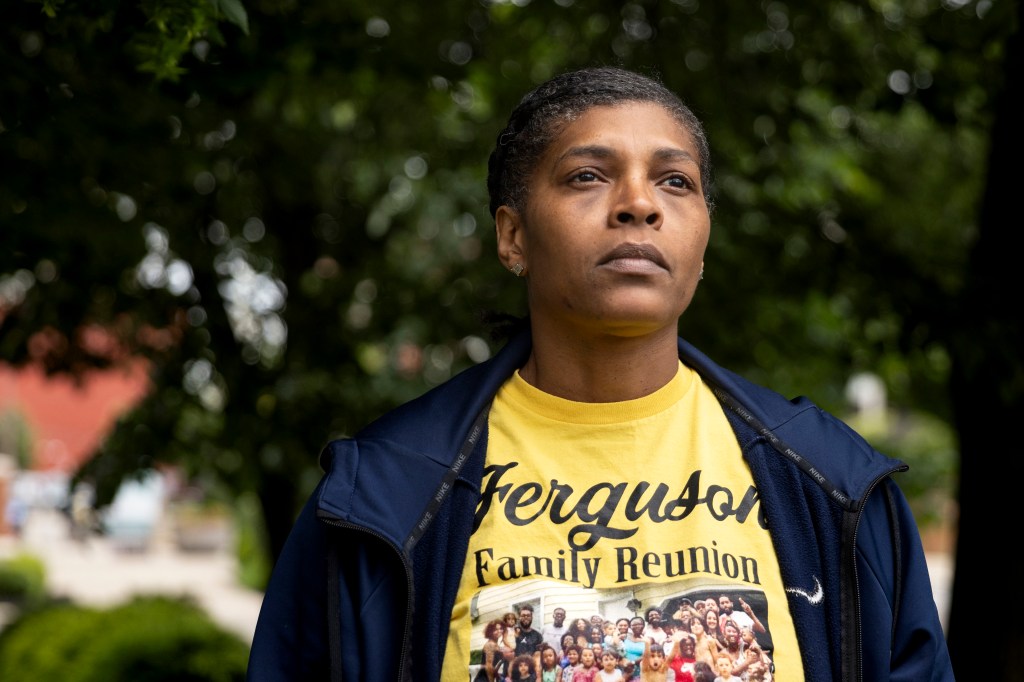
SPRINGFIELD, Ohio — Tyeesha Ferguson fears her 28-year-old son will kill or be killed.
“That’s what I’m trying to avoid,” said Ferguson, who still calls Quincy Jackson III her baby. She remembers a boy who dressed himself in three-piece suits, donated his allowance, and graduated high school at 16 with an academic scholarship and plans to join the military or start a business.
Instead, Ferguson watched as her once bright-eyed, handsome son sank into disheveled psychosis, bouncing between family members’ homes, homeless shelters, jails, clinics, emergency rooms, and Ohio’s regional psychiatric hospitals.
Over the past year, The Marshall Project – Cleveland and KFF Health News interviewed Jackson, other patients and families, current and former state hospital employees, advocates, lawyers, judges, jail administrators, and national behavioral health experts. All echoed Ferguson, who said the mental health system makes it “easier to criminalize somebody than to get them help.”
State psychiatric hospitals nationwide have largely lost the ability to treat patients before their mental health deteriorates and they are charged with crimes. Driving the problem is a meteoric rise in the share of patients with criminal cases who stay significantly longer, generally by court order.
Patients Wait or Are Turned Away
Across the nation, psychiatric hospitals are short-staffed and consistently turn away patients or leave them waiting with few or no treatment options. Those who do receive beds are often sent there by court order after serious criminal offenses.
In Ohio, the share of state hospital patients with criminal charges jumped from about half in 2002 to around 90% today.
The surge has coincided with a steep decline in total state psychiatric hospital patients served, down 50% in Ohio in the past decade, from 6,809 to 3,421, according to the U.S. Substance Abuse and Mental Health Services Administration. During that time, total patients served nationwide dropped about 17%, from 139,434 to 116,320, with state approaches varying widely, from adding community services and building more beds to closing hospitals.
Ohio Department of Behavioral Health officials declined multiple interview requests for this article.
The decline in capacity at state facilities unfurled as a spate of local hospitals across the country shuttered their psychiatric units, which disproportionately serve patients with Medicaid or who are uninsured. And the financial stability of local hospital mental health services is likely to deteriorate further after Congress passed President Donald Trump’s One Big Beautiful Bill Act, which slashes nearly $1 trillion from the federal Medicaid budget over the next decade.
The constricted flow of new patients through state hospitals is “absolutely” a crisis and “a huge deal in Ohio and everywhere,” said retired Ohio Supreme Court Justice Evelyn Lundberg Stratton. As co-chair of the state attorney general’s Task Force on Criminal Justice and Mental Illness, Lundberg Stratton has spent decades searching for solutions.
“It hurts everybody who has someone who needs to get a hospital bed that’s not in the criminal justice system,” she said.
‘It’s Heartbreaking’
Quincy Jackson III’s white socks stuck out of the end of a hospital bed as police officers stood watch.
At 5 feet, 7 inches tall, Jackson has a stocky build and robotic stare. Staff at Blanchard Valley Hospital in Findlay, Ohio, had called for help, alleging Jackson had assaulted a security guard.
“I’m sick; I take medication,” Jackson said to the officers, according to law enforcement body camera footage. His hands were cuffed behind his back as he lay on the bed, a loose hospital gown covering him.
Ferguson called it one of his “episodes” and said her son experienced severe psychosis frequently. In one incident, she said, Jackson “went for a knife” at her home.
From December 2023 through this July, Jackson was arrested or cited in police reports on at least 17 occasions. He was jailed at least five times and treated more than 10 times at hospitals, including three state-run psychiatric facilities. A recent psychiatric evaluation noted that Jackson has been in and out of community and state facilities since 2015.
Jackson is among a glut of people nationwide with severe mental illness who overwhelm community hospitals, courtrooms, and jails, eventually leading to backlogs at state hospitals.
High-Profile Incidents
That dearth of care is often cited by families, law enforcement authorities, and mental health advocates after people struggling with severe mental illness harm others. In the past six months, at least four incidents made national headlines.
In August, a homeless North Carolina man reportedly diagnosed with schizophrenia fatally stabbed a woman on a train. Also in August, police said a Texas gunman with a history of mental health issues killed three people, including a child, at a Target store. In July, a homeless Michigan man who family members said had needed treatment for decades attacked 11 people at a Walmart store with a knife. In June, police shot and killed a Florida man reportedly diagnosed with schizophrenia after authorities said he attacked law enforcement.
Mark Mihok, a longtime municipal judge near Cleveland, told a spring gathering of judges and lawyers that he had never seen so many people with serious mental illnesses living on the streets and “now punted into the criminal justice system.”
37-Day Wait for a Bed
At Blanchard Valley Hospital, sheriff’s deputies had taken Jackson from jail for a mental health check. But Jackson’s actions raised concerns.
In the body camera video, a nurse said Jackson was “going to be here all weekend. And we’re going to be calling you guys every 10 minutes.”
The officer responded: “Yeah, well, if he keeps acting like that, he’s going to go right back” to the county jail.
Within minutes, Jackson was taken back to jail, yelling at the officers: “Kill me, motherf—–. Yeah, shoot them, shoot them. Pop!”
Statewide, Ohio has about 1,100 beds in its six regional psychiatric hospitals. In May, the median wait time to get a state bed was 37 days.
That’s “a long time to be waiting in jail for a bed without meaningful access to mental health treatment,” said Shanti Silver, a senior research adviser at the national nonprofit Treatment Advocacy Center.
Long waits, often leaving people who need care lingering in jails, have drawn lawsuits in several states, including Kansas, Pennsylvania, and Washington, where a large 2014 class action case forced systemic changes such as expansion of crisis intervention training and residential treatment beds.
Ohio officials noticed bed shortages as early as 2018. State leaders assembled task forces and expanded treatment in jails. They launched community programs, crisis units, and a statewide emergency hotline.
Yet backlogs at the Ohio hospitals mounted.
Ohio Department of Behavioral Health Director LeeAnne Cornyn, who left the agency in October, wrote in a May emailed statement that the agency “works diligently to ensure a therapeutic environment for our patients, while also protecting patient, staff, and public safety.”
Eric Wandersleben, director of media relations and outreach for the department, declined to respond to detailed questions submitted before publication and, instead, noted that responses could be publicly found in a governor’s working group report released in late 2024.
Elizabeth Tady, a hospital liaison who also spoke to judges and lawyers at the May gathering, said 45 patients were waiting for beds at Northcoast Behavioral Healthcare, the state psychiatric hospital serving the Cleveland region.
“It’s heartbreaking for me and for all of us to know that there are things that need to be done to help the criminal justice system, to help our communities, but we’re stuck,” she said.
Ohio officials added 30 state psychiatric beds by replacing a hospital in Columbus and are planning a new 200-bed hospital in southwestern Ohio.
Still, Ohio Director of Forensic Services Lisa Gordish told the gathering in Cleveland that adding capacity alone won’t work.
“If you build beds — and what we’ve seen in other states is that’s what they’ve done — those beds get filled up, and we continue to have a waitlist,” she said.
This year, Jackson waited 100 days in the overcrowded and deadly Montgomery County jail for a bed at a state hospital, according to jail records.
Ferguson said she was afraid to leave him there but could not bail him out, in part, she said, because her son cannot survive on his own.
“There’s no place for my son to experience symptoms in the state of Ohio safely,” Ferguson said.
Sick System
Patrick Heltzel got the extended treatment Ferguson has long sought for her son, but he stabbed a 71-year-old man to death before getting it.
The 32-year-old is one of more than 1,000 patients receiving treatment in Ohio’s psychiatric hospitals.
“People need long-term care,” Heltzel said in October, calling from inside Heartland Behavioral Healthcare, near Canton, where he has lived for more than a decade after being found not guilty by reason of insanity of aggravated murder. Inpatient care, he said, helps patients figure out what medication regimen will work and deliver the therapy needed “to develop insight.”
As he spoke, the sound of an open room and patients chatting filled the background.
“You have to know, ‘OK, I have this chronic condition, and this is what I have to do to treat it,’” Heltzel said.
As the ranks of criminally charged patients in Ohio’s hospitals have increased over the past decade, the shift has had an impact on patient care: The hospitals have endangered patients, have become more restrictive, and are understaffed, according to interviews with Heltzel, other patients, and former staff members, as well as documents obtained through public records requests.
Escapes and a Lockdown
Katie Jenkins, executive director of the National Alliance on Mental Illness Greater Cleveland, said the shift from mostly civil patients, who haven’t been charged with a crime, to criminally charged patients has changed the hospitals.
“It’s hard in our state hospitals right now,” she said. Unfortunately, she said, patients who have been in jail bring that culture to the hospitals.
In the first 10 months of 2024, at least nine patients escaped from Ohio’s regional psychiatric hospitals — compared with three total in the previous four years, according to state highway patrol reports.
In one instance, two female patients at Summit Behavioral Healthcare near Cincinnati escaped after one lunged at a staff member. In another, a man broke a window and climbed out.
Most of the escapes, though, were not violent. Days after a patient at Northcoast jogged away during a trip to the dentist in a Cleveland suburb, state officials stopped allowing patients to leave any of the six regional hospitals.
A memo to leaders at the hospitals said officials had seen “similarities across multiple facilities,” raising significant concern about “ensuring patient and public safety.”
For Heltzel, the inability to go on outings or to his mother’s house on the weekends was a setback for his treatment. In 2024, when the lockdown began, he had more freedom than most patients at the psychiatric hospitals, regularly leaving to go to the local gym and attend off-site group therapy.
His mother signed him out each Friday to go home for the weekend, where he drove a car and played with his 2-year-old German shepherd, Violet. On Sundays, Heltzel was part of the “dream team” at church, volunteering to operate the audio and slides.
Federal records reveal that, at Ohio’s larger state-run psychiatric hospitals, including Summit and Northcoast, patients and staff have faced imminent danger.
In 2019 and 2020, federal investigators responded to patient deaths, including two suicides in six months at Northcoast. One hospital employee told federal inspectors, “The facility has been understaffed for a while and it’s getting worse,” according to the federal report. “It is very dangerous out here.”
Disability Rights Ohio, which has a federal mandate to monitor the facilities, filed a lawsuit in October against the department. The advocacy group, alleging abuse and neglect, asked for records of staff’s response to a Northcoast patient who suffocated from a plastic bag over their head. At the end of October, the court docket showed the parties had settled the case.
Retired sheriff’s deputy Louella Reynolds worked as a police officer at Northcoast for about five years before leaving in 2022. She said the increase in criminally charged patients meant the hospitals “absolutely” became less safe. Her hip still hurts from a patient who threw her against a cement wall.
Reynolds said officers should be able to carry weapons, which they don’t, and that more staff are needed to handle the patients. Mandatory overtime was common, she said, and often staff would report to work and not “know when we would get off.”
A Disaster That Wasn’t Averted
Back at Heartland, Heltzel requested conditional release. The judge denied the release request.
Heltzel said it was devastating. He grew up Catholic and said, “I was kind of looking for absolution.”
Now, Heltzel said he is practicing acceptance. “Acceptance is all the more important to practice when you don’t agree with something,” Heltzel said, adding, “I’m a ward of the state.”
He still hopes to be released: “I just do what I can to move forward.”
Heltzel, like Jackson, had been hospitalized before and released.
In early 2013, Heltzel said, he asked his dad to kill him. “And he refused and I did smack him,” he said. Heltzel was sent to Heartland for a short stay — about 10 days, according to his mother, Jan Dyer. She recalled “begging” the hospital staff to keep him.
Heltzel said he remembers not being ready to leave: “I was still sick, and I was still delusional.” Back at home, he said, he had a “sense of existential dread, like that all this horrible stuff was going to happen.” He stopped taking his medication.
Within weeks, Heltzel killed 71-year-old Milton A. Grumbling III at his home, placing him in a chokehold and stabbing him repeatedly, according to court records. He beat him with a remote control and then left, taking a Bible from the home, as well as a ring. Delusional with schizophrenia, Heltzel believed that Grumbling had sexually abused him in another life, according to the records.
A family member of the man he killed told the judge in 2023 that Heltzel should “stay in prison,” according to court records.
In denying his conditional release, judges cited Heltzel’s failure to take medication before killing Grumbling.
Jenkins, who said she worked at a state hospital for nine years before becoming the lead advocate for NAMI Greater Cleveland, said psychiatric medications can take as long as six weeks to become fully effective.
“So clients aren’t even getting stabilized when they’re being hospitalized,” Jenkins said.
‘He’s Not a Throwaway Child’
In a July interview, Jackson said inconsistent care or unmedicated time in jail “worsens my symptoms.” Jackson was on the phone during a stay at a state psychiatric hospital.
Without medicine, “my head hurts, to be honest,” Jackson said, before asking to get off the phone because he was hungry. It was lunchtime. “Can you get the information from my mom?” Jackson said. “She has the records.”
After Jackson hung up the phone, Ferguson explained that “he says the food is excellent, so he does not want to miss it.” And, she added, the hospital staff had not yet seen the explosive side of her son.
In early September, after 45 days at Summit — his longest stay yet at a state psychiatric hospital — Jackson returned to the Montgomery County jail facing misdemeanor charges because of an altercation in April with staff at a Dayton behavioral health hospital. In court, Ferguson said, her son struggled to explain to the judge why he was there. On a video call from the jail days later, she saw him playing with his hair and ears.
“That tells me he’s not OK,” Ferguson said.
Before Jackson’s diagnosis more than a decade ago, Ferguson said, her son wasn’t a troublemaker. He had goals and dreams. And he’s still “loved and liked by a lot of people.”
“He’s not a throwaway child,” she said.
The Marshall Project – Cleveland is a nonprofit news team covering Ohio’s criminal justice systems.
KFF Health News is a national newsroom that produces in-depth journalism about health issues and is one of the core operating programs at KFF—an independent source of health policy research, polling, and journalism. Learn more about KFF.
This story can be republished for free (details).
For the week ending Dec. 13, Canada saw 11,646 new cases of the flu being detected, which means 27.7 per cent of all the tests conducted in the country came out positive.
I’ve been checking on the progress of the Affordable Care Act’s open enrollment season, which is happening as Congress continues to debate whether to extend the subsidies that have given consumers extra help paying their health insurance premiums.
The story drew responses from readers facing large cost increases if these enhanced subsidies expire. They wrote about trying to find ways to squeeze hundreds of dollars a month out of family budgets, or even facing the possibility of going uninsured — and thus not being able to continue cancer or arthritis treatment. A few said they were waiting to see whether Congress would act, while others were enrolling but choosing less expensive plans with higher annual deductibles.
Those cost increases could have serious political repercussions.
According to a KFF poll released this month, about half of current enrollees who are registered to vote said that if their overall health care expenses — copays, deductibles, and premiums — increased by $1,000 next year, it would have a “major impact” on whether they vote in next year’s midterm elections or which party’s candidate they will support.
As for enrollment, the Centers for Medicare & Medicaid Services on Dec. 5 released early figures showing 949,450 new sign-ups — people who did not have existing ACA coverage — across the federal and state marketplaces. That’s down a bit from approximately the same period last year, when there were 987,869 new enrollees. But CMS showed an increase in returning customers who had already selected a plan for next year, with the number up by more than 400,000 from the same time in 2024.
Jessica Altman, executive director of California’s insurance marketplace, and Audrey Morse Gasteier, executive director of the exchange in Massachusetts, both said it’s too early to tell how final tallies will compare with 2025’s record 24 million sign-ups nationally.
California reported a 33% drop in new enrollments through Dec. 6. And Altman said more people are opting for “bronze”-level plans, which have lower premium payments than most other ACA plans but higher deductibles.
Both state exchange directors said they are hearing from scared consumers.
“Our call centers are getting heartbreaking phone calls from people about how they can’t understand how they can possibly remain in coverage,” Gasteier said.
If Congress does act, even in January, the states say they can update their websites to reflect changes, but those updates could take a week or two. In the meantime, people who sign up for coverage would pay their premiums based on the originally programmed information, which assumed the subsidies would expire at the end of the year.
KFF Health News is a national newsroom that produces in-depth journalism about health issues and is one of the core operating programs at KFF—an independent source of health policy research, polling, and journalism. Learn more about KFF.
This story can be republished for free (details).
Lawmakers in several states are working to expand medical debt protections for patients, even after the Trump administration reversed course and told states they don’t have authority to take action on credit reporting.
In Alaska and Michigan, legislators are nonetheless advancing bills to keep medical debt off consumer credit reports.
The attorneys general of California and Colorado said they would stand behind credit reporting laws enacted in those states in recent years, even as Colorado faces a lawsuit from debt collectors contesting such laws.
Indiana and Ohio lawmakers have dropped proposals to remove medical debt from credit reports but are pushing legislation that would extend other protections to patients who cannot pay their medical bills.
“Seventy-four percent of Alaska voters don’t think credit reports should include medical debt,” said state Rep. Genevieve Mina, a Democrat sponsoring a medical debt measure there. “I’m not going to wait on the courts on the medical debt issue.”
An estimated 100 million Americans are saddled with health care debt. And a growing number of red and blue states have enacted laws to protect patients.
But federal policy on such debt boomeranged this year when President Donald Trump’s administration chose not to defend federal regulations that would have removed medical debt from all Americans’ credit scores. And in October, Trump’s Consumer Financial Protection Bureau said that states do not have the authority to regulate consumer credit reports.
“It’s sort of a head-spinning, 180-degree reversal,” said Chi Chi Wu, an attorney with the National Consumer Law Center, which advocates for people with low incomes. She called the Consumer Financial Protection Bureau, now led by Project 2025 architect Russell Vought, the “evil twin” of its predecessor under President Joe Biden.
The bureau did not respond to requests for comment.
Eight days after the new federal guidance, debt collectors filed a lawsuit contesting Colorado’s 2023 medical debt credit reporting law, the first to require removal of some or all medical debt from credit reports.
Scott Purcell, CEO of ACA International, which is a debt collection trade group and a plaintiff in the Colorado suit, said removing the debt makes it harder to gauge creditworthiness, which he said would lead creditors to assume everyone is a riskier bet.
His organization’s case also argues the Colorado law violates the First Amendment by suppressing “truthful commercial speech.”
Colorado Attorney General Phil Weiser, a Democrat, called the lawsuit outrageous in a statement to KFF Health News. His office, he said, “will strongly oppose all efforts to strip away critical medical debt protections.”
In California, Attorney General Rob Bonta, too, is standing firm on his state’s law regardless of how federal officials now interpret state rights. The Democrat told constituents in a Nov. 13 alert: “Let me be clear: This remains the law in California.”
In other states still contemplating credit reporting laws, legislators are adjusting their strategy to account for the lawsuit and the Trump administration’s moves, by either ditching the plan to remove medical debt from credit reports or modifying such legislation.
Wu said her organization saw the federal change coming and had already urged state lawmakers to make pending legislation on credit reporting more lawsuit-proof by looking upstream and downstream of the credit reporting agencies. For example, Wu said, states can tell landlords, employers, or other credit report perusers that they cannot use a person’s medical debt history in their decision-making. And states can require health providers to include, in their contracts with debt collectors, limits on what they can tell credit reporting agencies about the bills they’re collecting.
“You’ll often hear providers say, ‘Oh, well, we don’t want to hurt our patients’ credit,’” she said. “Tell the debt collectors, ‘Don’t report this.’”
Alaska’s legislation has both elements: It bars landlords from making decisions about potential renters based on their medical debt history, and it bars providers and collectors from telling credit reporting agencies about patient debt.
Elsewhere, state lawmakers have opted out of trying to pass credit reporting provisions in proposed legislation. Indiana state Sen. Fady Qaddoura, a Democrat, filed a medical debt measure that tries to, among other things, cap interest rates, limit wage garnishment, and keep people from losing their homes over unpaid bills from medically necessary procedures. But he and his colleagues made a tactical decision to leave out credit reporting, after unsuccessfully including it in a similar bill last year.
“It’s out of legislative pragmatism,” Qaddoura said. “We want to be sure that you don’t get a piece of legislation killed with many benefits to tens of thousands of families just because one provision can’t go in.”
In Ohio, Democratic state Rep. Michele Grim made a similar calculation. She has been working on a measure to ban wage garnishment over medical debt, cap interest rates for such debt at 3%, and scratch it from credit reports. She said she and other lawmakers recently removed the credit reporting portion.
“It’s better to pass something than nothing at all,” Grim said. “It still bans wage garnishment, which is a very aggressive, more-common-than-you-think practice. And it caps the interest rate.”
A recent investigation by KFF Health News found that, in Colorado alone, thousands of people each year have their wages garnished to pay back medical bills, and some people taken to court for medical debts never actually owed the money.
Legislative efforts to protect people from the effects of medical debt are often bipartisan, but that doesn’t mean they pass easily. Even before the Consumer Financial Protection Bureau reversed its stance on credit reports, several measures hit obstacles in conservative states this year, and legislation failed in Wyoming and South Dakota that aimed to take medical debt off credit reports.
Americans are largely protected from having their credit scores dinged by small medical debts. In 2023, the three big credit bureaus — TransUnion, Equifax, and Experian — voluntarily opted to remove medical debts under $500 from their credit reports, and the Consumer Data Industry Association, a trade group for the companies, confirmed they are still doing so.
Even so, lawmakers in several states said they are deciding whether and how to get ahead of the federal guidance with legislation that tackles additional, larger medical debt on credit reports.
“We know that this will need to get beefed up,” said Sarah Anthony, a Democratic state senator in Michigan, of legislation she’s co-sponsoring. She isn’t sure what that will look like, though consumer advocates including Libby Benton hope to see the measure follow Wu’s strategy.
“These aren’t debts that people choose to take on. People might choose to buy a huge pickup truck and that’s a bad financial decision,” said Benton, director of the Michigan Poverty Law Program. “People don’t choose to have emergency heart bypass surgery.”
Yet both can end up on a credit report.
KFF Health News is a national newsroom that produces in-depth journalism about health issues and is one of the core operating programs at KFF—an independent source of health policy research, polling, and journalism. Learn more about KFF.
This story can be republished for free (details).
Maxwell Kruzic said he was in such “crippling” stomach pain on Oct. 5, 2023, that he had to pull off the road twice as he drove himself to the emergency room at Mercy Regional Medical Center in Durango, Colorado. “It was the worst pain of my life,” he said.
Kruzic was seen immediately because hospital staff members were pretty sure he had appendicitis. They inserted an IV, called a surgeon, and sent him off for a scan to confirm the diagnosis.
But the scan showed a perfectly normal appendix and no problems in his abdomen. Doctors racked their brains for other possible diagnoses. Could it be a kidney stone? Gallstones? Here was a 37-year-old man in agony, but nothing really fit.
Then, someone asked what Kruzic had eaten the night before. He said he’d consumed tacos with some hot sauce that he’d made from a kind of scorpion pepper, grown from seeds he ordered from a chile pepper research institute.
The peppers measure over 2 million Scoville heat units on the spiciness scale, he noted, compared with a jalapeño at up to 8,000 or a habanero at 100,000 to 350,000.
The peppers are among “the world’s hottest, incredibly hot,” Kruzic said. “Delicious.” He loves spicy food and had never had a problem with it, but apparently this was just too much burn for his digestive system.
Kruzic spent much of the night on a gurney in the ER. After about four hours, the pain decreased, and he was sent home with medicine to treat nausea and vomiting.
Then the bill came — about two years later.
The Medical Procedure
Kruzic underwent blood work and a CT scan of his abdomen during his ER visit for acute abdominal pain.
Consuming very spicy foods can cause painful inflammation and irritation of the digestive system. The discomfort typically resolves on its own.
The Final Bill
$8,127.41, including $5,820 for the CT scan. Kruzic paid $97.02 during his visit to the hospital, which was in-network under his insurance. After insurance payments and discounts, he owed $2,460.46 — the remainder of the $1,585.26 he owed toward his plan’s deductible and $972.22 he owed in coinsurance.
The Problem: Ghost Bills From Visits Past
This September, Kruzic received a bill for his pepper-induced ER visit in 2023.
Unfortunately for patients, there are no uniform rules for timely billing.
Anticipating a bill, Kruzic repeatedly checked the hospital’s online portal, as well as that of his insurer, UnitedHealthcare. He noted that the insurer said the claim had been processed shortly after his treatment. For about eight months, he kept checking the hospital portal’s billing section, which indicated he owed “$0.” He called UnitedHealthcare, and Kruzic said a representative assured him that if the hospital said he owed nothing, that was the case.
It is unclear what caused the nearly two-year delay. At least part of the problem seems to have involved protracted disagreements between the insurer and the hospital over how much his visit should have cost.

Lindsay Radford Foster, a spokesperson for CommonSpirit Health, the hospital system, said in a statement to KFF Health News: “United Healthcare, the insurer responsible for the medical claim, underpaid the account based on the care provided. As a result, CommonSpirit contacted UnitedHealthcare’s Payer Relations Department to rectify the underpayments.”
Asked why it had taken two years, she cited a reorganization at UnitedHealthcare and a change in the insurer’s representative assigned to the case.
But UnitedHealthcare contested that view. “This was paid accurately,” said Caroline Landree, a spokesperson for the insurer.
But those explanations don’t satisfy Kruzic, a geological consultant: “Receiving a bill two years after the service wouldn’t fly in any other industry. We could never contact a client two years after we completed a project and say, ‘By the way, we missed this charge.’”
“How could this be considered anything but surprise billing?” he added.
The federal No Surprises Act doesn’t protect against all types of medical bills that patients find surprising. It primarily protects patients from out-of-network charges when they visit an in-network hospital, or in an emergency.
But in medical billing, what’s legal and what’s reasonable are two very different issues.
“The bill certainly sounds outrageous,” said Maxwell Mehlmen, co-director of the Law-Medicine Center at the Case Western Reserve University School of Law. “The question is whether it’s legal.”
That, he said, “is a matter of state law and the terms of the insurance policy and the agreement between the hospital and the insurer.”
In Colorado, there are extensive regulations about how long health care providers have to file a claim and bill a patient. For instance, claims for Medicaid patients must be filed within 120 days from the date of service. For patients with private insurance, the terms may be outlined in their insurers’ contracts with individual providers.
If a hospital submitted a proper claim and the provider and insurer were working out payment in good faith, then a patient can be billed for their share of the costs years later.
The Resolution
Within hours of KFF Health News contacting the hospital’s media relations department for this article, Kruzic got a call from a hospital executive telling him his bill had been adjusted to zero.
Blaming administrative changes at the insurer, Radford Foster of CommonSpirit said that UnitedHealthcare had taken so long to properly pay the bill that the hospital couldn’t collect from the patient. She said that Kruzic’s statement balance “was to be adjusted to zero, but due to a clerical error, a statement was sent to the patient in error.”
UnitedHealthcare’s Landree said that “given the significant delay, we are addressing this issue directly with the physician’s office.”
“Mr. Kruzic will not be responsible for any additional costs related to this bill,” she said.

The Takeaway
KFF Health News’ “Bill of the Month” series receives complaints every year about ghost bills — bills that arrive long after a service is rendered.
Sometimes it’s because the insurer and hospital are haggling over payment, and the patient’s responsibility — usually a percentage of that number — can’t be calculated until the dispute is resolved. Other times, insurers audit old bills and, determining they overpaid, try to claw back the money, resulting in the patient (or even the patient’s surviving spouse) being billed for the difference.
For now, the legality of billing long after treatment depends primarily on the fine print of insurance contracts.
An insurer’s word that a claim has been “processed” doesn’t mean that the insurer has agreed to pay and that the billing is resolved. It could also mean that the insurer balked at the bill or completely denied payment.
As for Kruzic and his affinity for hot peppers? He said he still loves spicy food, but in his cooking, “I will not use scorpion peppers again.”
Bill of the Month is a crowdsourced investigation by KFF Health News and The Washington Post’s Well+Being that dissects and explains medical bills. Since 2018, this series has helped many patients and readers get their medical bills reduced, and it has been cited in statehouses, at the U.S. Capitol, and at the White House. Do you have a confusing or outrageous medical bill you want to share? Tell us about it!
KFF Health News is a national newsroom that produces in-depth journalism about health issues and is one of the core operating programs at KFF—an independent source of health policy research, polling, and journalism. Learn more about KFF.
This story can be republished for free (details).