FDA cuestiona uso de antidepresivos en el embarazo, pero médicos dicen que son esenciales

Si estás embarazada o acabas de ser madre y estás lidiando con depresión o ansiedad, puedes llamar o enviar un mensaje de texto a la Línea Nacional de Salud Mental Materna, disponible 24/7: 833-TLC-MAMA (833-852-6262). Postpartum Support International puede ayudarte a encontrar un proveedor local de salud mental en el 800-944-4773 o psidirectory.com.

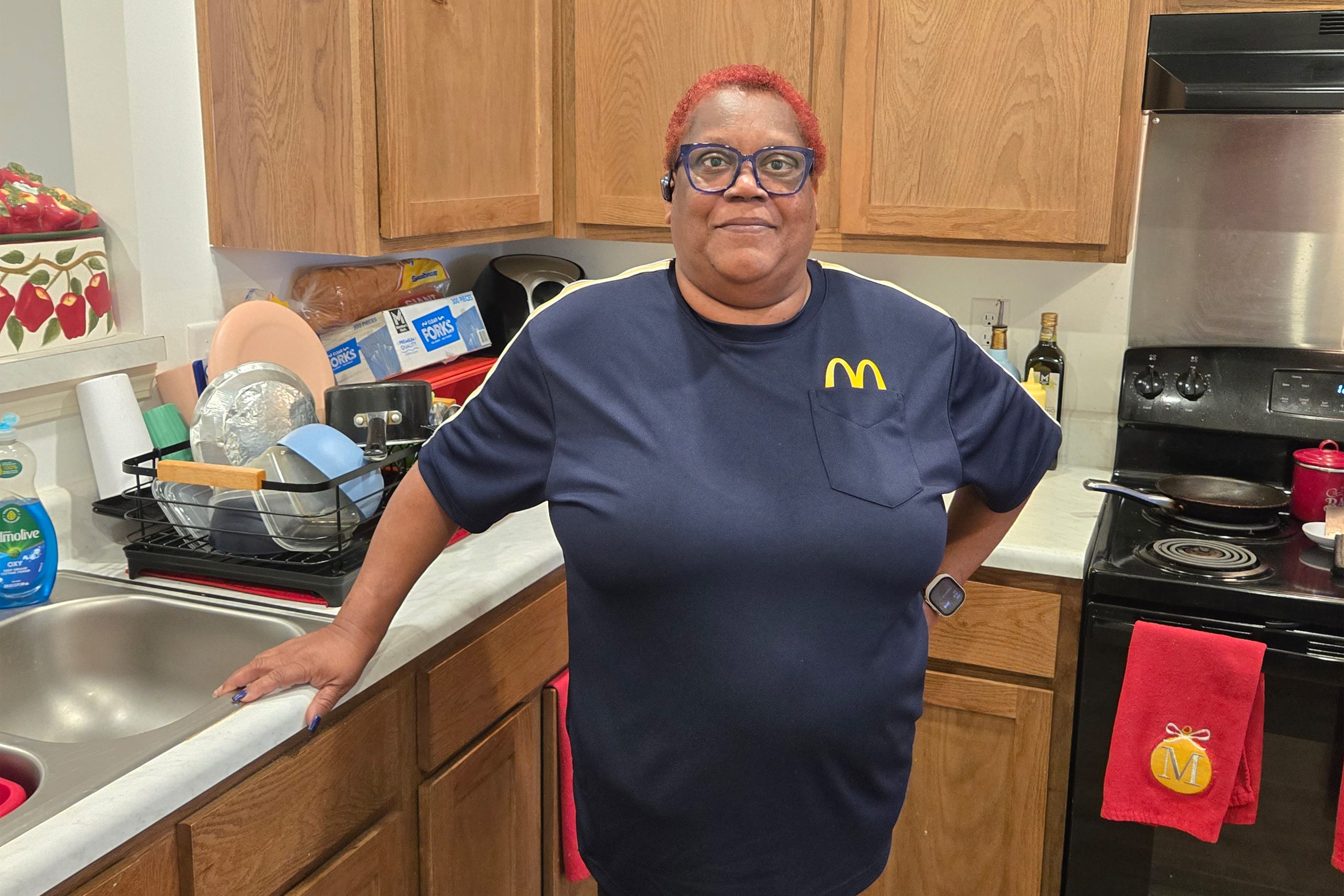
Antes de dar a luz a su segundo hijo, Heidi DiLorenzo sentía ansiedad. Le preocupaba su presión arterial y la preeclampsia que la llevó a ser hospitalizada dos veces durante el embarazo. Le angustiaba que algo terrible e indefinido le ocurriera a su hija de 3 años. Le preocupaba no poder amar a su segundo bebé tanto como al primero.

Pero DiLorenzo, abogada en Birmingham, Alabama, no se preocupaba por tomar Zoloft. Ya había usado ese medicamento para tratar la ansiedad antes de tener a su primer hijo, y continuó tomándolo durante ese embarazo y también en el más reciente.

Desde que tuvo a su segunda hija, en septiembre, atribuye a una dosis más alta del medicamento el haber salido del “pozo oscuro” de tristeza en el que se encontraba después del parto. “No sería tan buena madre para mis niñas si no lo tomara”, dijo. “No tendría la energía”.

DiLorenzo forma parte del estimado 20% de mujeres en Estados Unidos que tienen depresión o ansiedad durante o después del embarazo.

Sin embargo, solo la mitad de ellas recibe tratamiento adecuado, según Kay Roussos-Ross, quien dirige el programa de trastornos del estado de ánimo perinatal en la Universidad de Florida. Y apenas un 5% toma inhibidores selectivos de la recaptación de serotonina (ISRS, por sus siglas en inglés), una clase de medicamentos comúnmente usada para tratar ambas condiciones.

Actualmente, a los expertos médicos les preocupa que una mesa redonda convocada en julio por la Administración de Alimentos y Medicamentos (FDA, por sus siglas en inglés) pueda provocar más casos de depresión no tratada.

Muchos de los 10 integrantes del panel expresaron preocupación sobre el uso de los ISRS, como Zoloft, durante el embarazo. Entre ellos estaban Josef Witt-Doerring, un psiquiatra que tiene clínicas enfocadas en ayudar a las personas a dejar los antidepresivos, y Adam Urato, un obstetra-ginecólogo que recientemente solicitó a la FDA colocar advertencias más fuertes en estos medicamentos.

Aunque la discusión no representó una guía oficial de la FDA, los panelistas —en afirmaciones que el Colegio Americano de Obstetras y Ginecólogos (ACOG, por sus siglas en inglés) calificó como “extravagantes y sin fundamento”— relacionaron estos medicamentos con un mayor riesgo de aborto espontáneo, defectos congénitos y autismo en los niños expuestos durante el embarazo.

La Sociedad de Medicina Materno-Fetal expresó que sus miembros estaban “alarmados por las afirmaciones infundadas e inexactas de los panelistas de la FDA”.

Los antidepresivos son una herramienta segura y “que salva vidas”, dado que los problemas de salud mental como el suicidio y las sobredosis son la principal causa de muerte materna en el país, señaló el presidente de ACOG, Steven Fleischman, en un comunicado en el sitio web de la organización.

Christena Raines, enfermera especializada que en 2011 ayudó a fundar la primera unidad psiquiátrica perinatal de hospitalización del país, en Carolina del Norte, dijo que los ISRS son “probablemente los medicamentos más estudiados durante el embarazo”.

En estudios de largo plazo de niños expuestos a estos medicamentos en el útero, aseguró, los investigadores no han observado problemas.

Aún es pronto para saber si esta discusión ha afectado las tasas de recetas, o si las embarazadas están evitando más estos medicamentos.

Pero Raines, quien enseña en la Escuela de Medicina de la Universidad de Carolina del Norte en Chapel Hill, dijo que ya está recibiendo preguntas de sus pacientes. Comentó que la desinformación difundida por los panelistas —junto con afirmaciones distorsionadas del presidente Donald Trump sobre tomar Tylenol durante el embarazo— está complicando su trabajo.

Dorothy DeGuzman, médica de medicina familiar que atiende embarazos de alto riesgo en California, dijo: “Ya existe mucho estigma en torno al uso de antidepresivos durante el embarazo. Esto solo aumentará el miedo”.

El panel

La discusión de julio fue una de cuatro mesas redondas que la FDA ha convocado desde mayo. En el pasado, la agencia evaluaba cuidadosamente a los miembros de sus comités asesores para evitar conflictos de interés.

Sin embargo, estos paneles se seleccionaron en privado y los eventos se llevaron a cabo con poca difusión pública. Una investigación de MedPage Today publicado en julio cuestionó la ética y legalidad de estas mesas, según investigadores y consultores.

Emily Hilliard, vocera del Departamento de Salud y Servicios Humanos (HHS, por sus siglas en inglés), no respondió directamente sobre el proceso de selección de los panelistas. Dijo que los eventos son “mesas redondas” en las que expertos revisan la evidencia científica más reciente, evalúan riesgos potenciales para la salud y “exploran alternativas más seguras”.

El panel de julio pareció responder a una orden ejecutiva que Trump emitió en febrero para crear la Comisión Make America Healthy Again y ordenarle que “evaluara la prevalencia y los riesgos del uso de inhibidores selectivos de la recaptación de serotonina” y otros medicamentos.

El secretario de Salud y Servicios Humanos, Robert F. Kennedy Jr., quien supervisa la FDA, es un crítico frecuente de estos medicamentos. Ha afirmado —sin pruebas— que podrían estar contribuyendo a los tiroteos escolares.

En sus comentarios iniciales durante el panel de julio, el comisionado de la FDA, Marty Makary, también expresó preocupación sobre los medicamentos. “Desde una perspectiva nacional, mientras más antidepresivos recetamos, más depresión hay”, dijo.

“No es un lujo”

La única integrante del panel que era psiquiatra certificada y obstetra-ginecóloga —Kay Roussos-Ross, de la Universidad de Florida— expresó una preocupación distinta. “Las investigaciones muestran que las mujeres que dejan de tomar sus medicamentos durante el embarazo tienen cinco veces más probabilidades de sufrir una recaída”, dijo.

Agregó que las madres con depresión o ansiedad de moderada a grave durante el embarazo tienen mayor riesgo de parto prematuro y de tener bebés con bajo peso al nacer. Si no reciben tratamiento, tienen más probabilidades de consumir drogas o alcohol y de estar en riesgo de suicidio.

También pueden tener dificultades para crear un vínculo con sus bebés, lo que aumenta el riesgo de que esos niños enfrenten problemas como trastorno de déficit de atención e hiperactividad, depresión o ansiedad, no por los ISRS, sino por los desafíos de salud mental de la madre.

“Quiero subrayar que tratar las enfermedades mentales durante el embarazo no es un lujo”, dijo al panel. “Es una necesidad”.

En general, alrededor del 19% de las mujeres en Estados Unidos de entre 20 y 30 años sufren depresión, según los datos más recientes de los Centros para el Control y Prevención de Enfermedades (CDC, por sus siglas en inglés), y cerca del 10% toma ISRS.

Pero los estudios muestran que la mitad de las mujeres dejan de tomar antidepresivos antes o durante el embarazo.

Una de las razones por las que tan pocas mujeres embarazadas reciben tratamiento para la depresión, según los médicos, es que ya sienten temor de tomar cualquier medicamento durante el embarazo.

La mayoría de las pacientes de DeGuzman son beneficiarias de Medicaid, el programa de cobertura médica para personas con bajos ingresos o con discapacidad. La mitad son latinas. Aunque ella suele recetar ISRS, dijo que sus pacientes rara vez los toman.

Este problema es especialmente urgente para madres negras no hispanas y latinas, quienes experimentan tasas más altas de depresión y ansiedad que las mujeres blancas no hispanas, pero reciben tratamiento adecuado con menos frecuencia. Entre los factores que contribuyen a esta disparidad están el racismo sistémico, la exposición a la violencia, diagnósticos erróneos y la falta de acceso a atención médica.

Shanna Williams, terapeuta de salud mental perinatal que atiende a madres afroamericanas en Philadelphia, dijo que muchas de sus pacientes ya tienden a confiar más en sus familiares y amistades que en los médicos para decidir si es seguro tomar antidepresivos durante el embarazo o la lactancia.

El panel de la FDA es “una voz más que dice que no deberían hacerlo”, comentó. “Y eso no ayuda”.

Judite Blanc, quien estudia la salud mental perinatal en mujeres de color, dijo que el acceso universal al cuidado infantil y la licencia por maternidad remunerada serían de gran ayuda. “Mi investigación mostró que lo más importante que podemos ofrecer es apoyo social”, señaló Blanc, profesora asistente de Psiquiatría en la Escuela de Medicina Miller de la Universidad de Miami. “Necesitamos que la comunidad actúe”.

Kellyn Haight experimentó una depresión debilitante después de mudarse a la ciudad de Brevard, en las montañas de Carolina del Norte. Esta ex enfermera de partos no tenía atención infantil para su hija de 2 años ni familia o amistades cercanas, mientras su esposo viajaba por trabajo.

Su doctora le recetó Prozac, pero no la ayudó. Llamó a su esposo para que regresara a casa, pero su insomnio empeoró. Una mañana, le suplicó que acabara con su sufrimiento. El esposo la llevó a la sala de emergencias, desde donde la trasladaron a la unidad psiquiátrica de un hospital local. Allí, contó, le quitaron la ropa y la pusieron en una habitación cerrada. “Me sentía como un animal”, dijo Haight, ahora de 37 años. “Uno de mis mayores temores es que eso vuelva a ocurrir”.

Después de salir del hospital, Haight encontró a un psiquiatra y comenzó a tomar Zoloft. Hizo amistades y empezó a sentirse estable.

Ahora que su hija tiene 5 años, intenta tener otro hijo y planea continuar tomando Zoloft durante todo el embarazo. “Prefiero estar segura y presente para mi hija”, dijo. “Estoy dispuesta a asumir el riesgo, porque sé cómo se ve la alternativa, y no quiero volver a eso”.

KFF Health News is a national newsroom that produces in-depth journalism about health issues and is one of the core operating programs at KFF—an independent source of health policy research, polling, and journalism. Learn more about KFF.

USE OUR CONTENT

This story can be republished for free (details).

FDA Panelists Questioned Antidepressants in Pregnancy. But Doctors Call Them a Lifeline.

If you are pregnant or a new mother who is struggling with depression or anxiety, you can call or text the National Maternal Mental Health Hotline, 24/7: 833-TLC-MAMA (833-852-6262). Postpartum Support International can help connect you with a local mental health provider at 800-944-4773 or psidirectory.com.

Before giving birth to her second child, Heidi DiLorenzo was anxious. She worried about her blood pressure, and the preeclampsia that prompted her to be hospitalized twice during the pregnancy. She worried that some terrible, unnamed harm would come to her 3-year-old daughter. She worried about her ability to love another baby as much as she loved her first.

But DiLorenzo, an attorney in Birmingham, Alabama, did not worry about taking Zoloft. She had used the medication to treat anxiety before she had her first child, and she continued it throughout that pregnancy and this latest one.

And since having her second daughter, in September, she credits an increased dosage with pulling her out of the “dark hole” of sadness she felt postpartum. “I wouldn’t be as good of a mom to my girls if I didn’t take it,” DiLorenzo said. “I wouldn’t have the energy.”

She is among the estimated 20% of women in the U.S. who have depression or anxiety during or after pregnancy. Yet only half of those mothers receive adequate treatment, according to Kay Roussos-Ross, who runs the perinatal mood disorders program at the University of Florida. And just 5% take a selective serotonin reuptake inhibitor, a class of medications commonly used to treat both conditions.

Now medical experts are concerned that a July panel discussion convened by the Food and Drug Administration could lead to more cases of untreated depression. Many of the 10 members of the panel expressed concern about the use of SSRIs, such as Zoloft, during pregnancy. They included Josef Witt-Doerring, a psychiatrist who owns clinics aimed at helping people wean themselves off antidepressants, and Adam Urato, an OB-GYN who recently petitioned the FDA to put stronger warnings on SSRIs.

While the discussion did not represent any official FDA guidance, the panelists — in claims the American College of Obstetricians and Gynecologists called “outlandish and unfounded” — linked the drugs to increased risks of miscarriage, birth defects, and autism in children exposed to them in utero. The Society for Maternal-Fetal Medicine said its members were “alarmed by the unsubstantiated and inaccurate claims made by FDA panelists.”

Antidepressants are a safe, “lifesaving” tool, given that mental health issues such as suicide and overdoses are the leading cause of maternal death in the country, ACOG President Steven Fleischman said in a statement on the group’s website.

Christena Raines, a nurse practitioner who in 2011 helped found the nation’s first inpatient perinatal psychiatric unit, in North Carolina, said SSRIs are “probably the most well-studied medicine in pregnancy.” In long-term studies of children exposed to the drugs in utero, she said, researchers haven’t seen problems.

It’s too soon to know whether the panel discussion has affected prescribing rates — or whether those who are pregnant are avoiding the drugs more. But Raines, who teaches at the University of North Carolina-Chapel Hill School of Medicine, said she’s already fielding questions from patients. She said the misinformation the panelists spread — along with President Donald Trump’s distorted claims about taking Tylenol during pregnancy — is making her job harder.

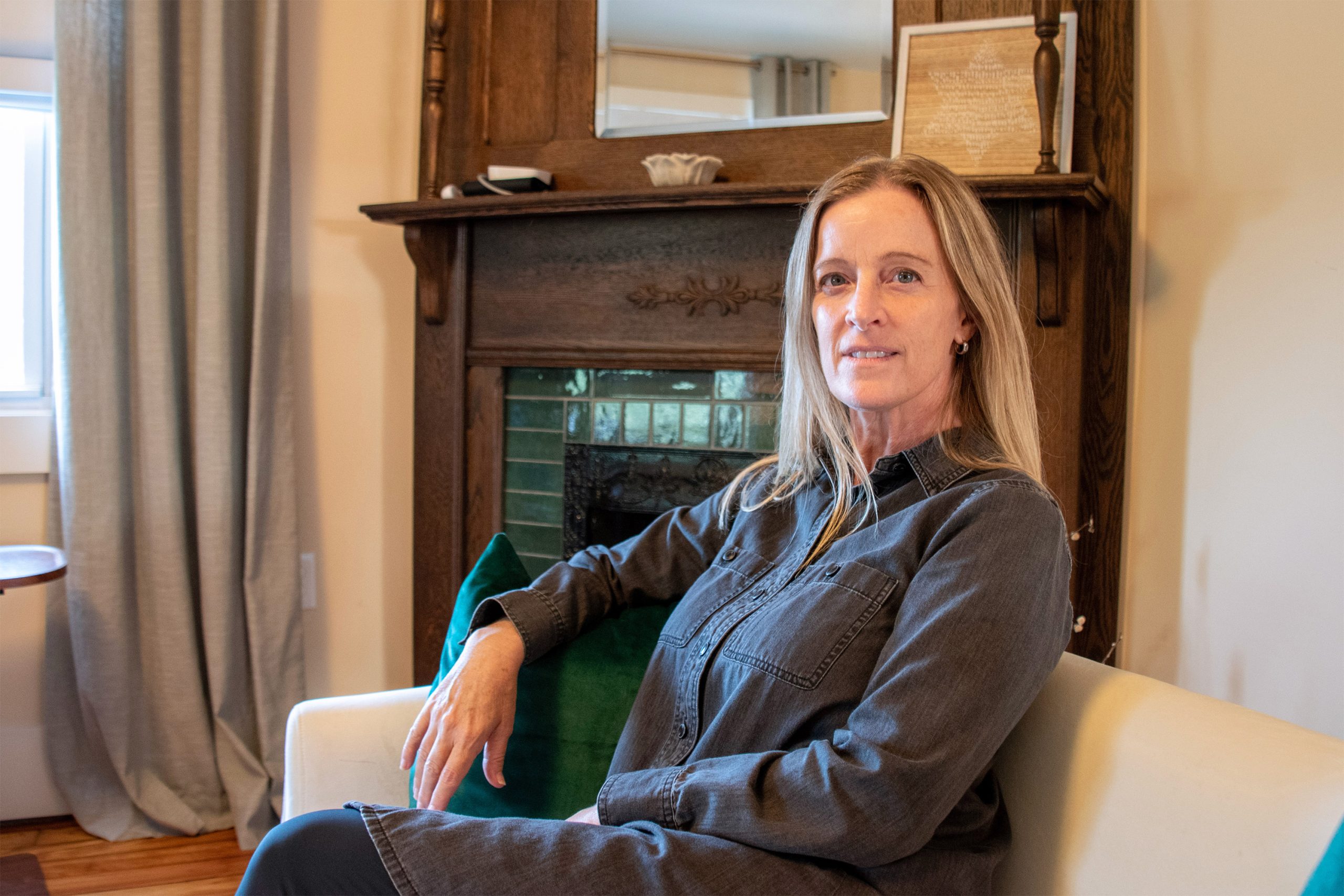
Dorothy DeGuzman is a family medicine physician who treats high-risk pregnancies in California. “There’s already so much stigma around taking antidepressants in pregnancy,” she said. “This will just add to the fear.”

The Panel

The July panel discussion was one of four the FDA has convened since May. In the past, the agency vetted members of advisory committees to avoid conflicts of interest. Yet these panels were chosen in private and the events were held with scant public notice. In a July investigative report by MedPage Today, researchers and consultants raised questions about the events’ ethics and legality.

Department of Health and Human Services spokesperson Emily Hilliard did not directly answer when asked about the panelist selection process. She called the panel events “roundtable discussions” in which experts review the latest scientific evidence, evaluate potential health risks, and “explore safer alternatives.”

The July panel appeared to be following an executive order Trump issued in February establishing the Make America Healthy Again Commission and directing it to “assess the prevalence of and threat posed by the prescription of selective serotonin reuptake inhibitors” and other medications.

Health and Human Services Secretary Robert F. Kennedy Jr., who oversees the FDA, is a frequent critic of such drugs. He has claimed, without evidence, that they might be contributing to school shootings.

In opening remarks at the July panel discussion, FDA Commissioner Marty Makary also voiced concerns about the medications. “From a national standpoint, the more antidepressants we prescribe, the more depression there is,” he said.

‘Not a Luxury’

The sole member of the panel who was both a board-certified psychiatrist and an OB-GYN — the University of Florida’s Roussos-Ross — raised a different concern. “Research shows that in women who stop their medications in pregnancy, they are five times more likely to experience a relapse,” she said.

Mothers with moderate to severe depression and anxiety during pregnancy are more likely to give birth early and have low-birth-weight infants, she added. If they don’t receive treatment, she said, they are more likely to misuse drugs or alcohol and are at risk of suicide. They can have trouble bonding with their babies, Roussos-Ross said, and those children are at higher risk for problems such as attention-deficit/hyperactivity disorder, depression, or anxiety — due to their mother’s mental health challenges, not the SSRIs.

“I want to stress that treating mental illness in pregnancy is not a luxury,” she told the panel. “It’s a necessity.”

Overall, about 19% of U.S. women in their 20s and 30s experience depression, according to the latest data from the Centers for Disease Control and Prevention, and roughly 10% take SSRIs. But studies show that half of women decide to stop taking antidepressants before or during their pregnancies.

One reason so few expectant mothers receive depression treatment, doctors say, is that they are already afraid to take any medications during pregnancy. The majority of DeGuzman’s patients rely on Medicaid, the government health coverage for those with low incomes or disabilities. Half are Latina. She often prescribes SSRIs, she said, but her patients rarely take them.

The issue is especially urgent for Black and Latina mothers, who experience higher rates of depression and anxiety than white, non-Latina mothers but are less likely to receive adequate treatment. Many factors contribute to this disparity, including systemic racism, exposure to violence, misdiagnosis, and a lack of access to care.

Shanna Williams, a perinatal mental health therapist who treats African American mothers in Philadelphia, said many of her clients were already more likely to trust friends and family over their doctors when it comes to whether antidepressants are safe to take while pregnant or breastfeeding. The FDA panel is “one other voice that’s saying you shouldn’t do this,” Williams said. “And that does not help.”

Judite Blanc, who studies perinatal mental health in women of color, said universal child care and paid parental leave would help. “My research showed that the most important thing we can offer is social support,” said Blanc, an assistant professor of psychiatry at the University of Miami Miller School of Medicine. “We need the village to step up.”

Kellyn Haight experienced debilitating depression after she moved to the mountain town of Brevard, North Carolina. The former labor and delivery nurse had no child care for her then-2-year-old daughter and no family or friends nearby as her husband was traveling for work.

Her doctor prescribed Prozac — it didn’t help. She called her husband to return home, but her insomnia just got worse. One morning, she begged him to end her suffering. He took her to the emergency room, and staffers sent her to the psychiatric unit of a local hospital. She said she was stripped of her clothing and put in a locked room. “I felt like a creature, like an animal,” said Haight, now 37. “One of my biggest fears is that happening again.”

After she was released, Haight found a psychiatrist and started taking Zoloft. She built a community of friends and began to feel stable.

Now that her daughter is 5, she’s trying to have another child — and plans to keep taking Zoloft throughout the pregnancy. “I would rather be safe and present for my child,” she said. “I’m OK with assuming the risk, because I know what the alternative looks like, and I’m not going there.”

KFF Health News is a national newsroom that produces in-depth journalism about health issues and is one of the core operating programs at KFF—an independent source of health policy research, polling, and journalism. Learn more about KFF.

USE OUR CONTENT

This story can be republished for free (details).

In RFK Jr.’s Upside-Down World of Vaccines, Panel Votes To End Hepatitis B Shot at Birth

Recent weeks have brought good news about vaccines, with studies indicating that flu vaccination reduces heart disease, shingles vaccines can prevent or slow dementia, and a single human papillomavirus shot protects a girl from cervical cancer for the rest of her life.

But in the upside-down world of Health and Human Services Secretary Robert F. Kennedy Jr., vaccines are on the ropes. A vaccine committee dominated by skeptics he chose for the panel voted 8-to-3 Friday to end a 34-year recommendation to inoculate newborns against hepatitis B, a practice that helped reduce childhood infections of the virus by 99%, from around 16,000 in 1991 to only seven in 2023.

While the committee went about its deliberations, the peril of abandoning vaccines was plain to see. The country’s worst year since 1992 for measles — an entirely vaccine-preventable illness — continued with flare-ups in Utah, Arizona, and South Carolina. A two-year outbreak of whooping cough, which vaccines can also check, has caused about 60,000 reported cases — including at least six infant deaths.

But neither of those diseases was discussed on the first day of the meeting by members of the Advisory Committee on Immunization Practices. The panel’s chartered purpose is to determine vaccination policies to counter such risks, but under Kennedy, it has focused on responding to doubts from vaccine skeptics and opponents.

Like previous gatherings of the committee, which was handpicked by Kennedy after he fired the panel’s 17 incumbent experts in June, the session was chaotically at odds with past practices of the Centers for Disease Control and Prevention. Kennedy has described the agency as a “cesspool of corruption.”

The committee’s chair, epidemiologist Martin Kulldorff, left three days before the meeting and was named to a senior HHS position. His successor, Kirk Milhoan, a pediatric cardiologist who has claimed that the mRNA technology used to make covid vaccines is “the biggest threat to humanity,” was on a plane or in Asia for most of the meeting, leaving Vice Chair Robert Malone holding the reins. Malone opposes vaccine mandates and became a darling of the anti-vaccine movement when he told podcast host Joe Rogan in 2021 that Americans were “basically being hypnotized” into taking the covid vaccine.

Typically, slides and data for the panel’s meetings are posted on the CDC’s website several days beforehand. This time they weren’t posted at all.

The committee’s working group that studied hepatitis B vaccines did not include recognized hepatitis experts. When a few panel members expressed reservations during the ACIP meeting, CDC hepatitis specialist Adam Langer was brought in to answer questions. He frowned on the proposed changes.

Surprising Choice of Experts

At 8 a.m. Dec. 4, the CDC finally listed the names of the meeting’s presenters. Aaron Siri, one of Kennedy’s former lawyers and a strident legal foe of vaccination, was set to headline Friday’s discussion of the pediatric immunization schedule.

Sen. Bill Cassidy, a Louisiana Republican and physician who cast a deciding vote for Kennedy to win confirmation to his job, said on the social platform X: “Aaron Siri is a trial attorney who makes his living suing vaccine manufacturers. He is presenting as if an expert on childhood vaccines. The ACIP is totally discredited. They are not protecting children.”

In replies to his post, some people demanded to know what Cassidy planned to do about it. While he has publicly criticized some of Kennedy’s moves on vaccines, the senator has made no visible effort to reverse them.

As the meeting began, Malone revealed that Vicky Pebsworth, a senior officer at the National Vaccine Information Center, a four-decade-old cornerstone of vaccine skepticism, was chairing a committee that is reviewing the entire childhood vaccine schedule. That’s the repository of ACIP recommendations that protect American children from measles, pertussis, influenza, tetanus, chickenpox, meningitis, and a host of other diseases.

Typically, seasoned CDC and FDA experts on vaccines and infectious disease present data about a disease and the options for its prevention before ACIP votes on a policy. Instead, Pebsworth, vaccine-skeptical climate scientist Cynthia Nevison, and businessperson Mark Blaxill, who helped lead another anti-vaccine group, presented the case — a negative one — on the hepatitis B vaccine on Dec. 4.

Sports medicine doctor Tracy Beth Høeg, who parlayed a year working with University of California-San Francisco epidemiologist Vinay Prasad, now the FDA’s vaccine chief, into a leading role at the agency, frequently chimed in. Nevison and Blaxill were co-authors of a 2021 autism study retracted for data misrepresentation and other problems.

Unsurprisingly, the picture they painted Dec. 4 suggested that the hepatitis B birth dose wasn’t necessary, and might be dangerous, notwithstanding years of scientific consensus to the contrary.

The presentations stunned Cody Meissner, an infectious disease specialist and one of the only vaccinologists on the CDC panel. “There were so many statements that I don’t agree with that it’s hard to be succinct,” he said.

Yvonne Maldonado, a Stanford University infectious disease specialist and one of the former ACIP members ejected in June, said she found it horrifying to watch unvetted presentations by nonexpert nonphysicians.

“Almost every statement made by this committee was misinformation, disinformation, or outright lies,” she said. “They are cherry-picking data, pulling up fringe papers, misunderstanding good papers. They are not the right people to be making decisions.”

Pebsworth said the committee was taking up the birth dose issue because of “pressure coming from stakeholder groups” — presumably including Kennedy and his allies. The U.S. is an “outlier” in its universal recommendation, she erroneously said.

In fact, the birth dose of the hepatitis B vaccine is given in 115 countries and is recommended by the World Health Organization. Many Western European countries limit the birth dose to targeted groups, however.

Arguments for the Birth Dose

Nevison said targeted measures to stop the virus in the 1980s, including promoting safer sex, increasing blood screening, and vaccinating the babies of hepatitis B-positive mothers, had achieved most of the reduction in cases since then. But most experts say the birth dose played a key role. And the virus remains a threat, with an estimated 640,000 carriers in the U.S.

The birth dose “is a safety net,” Meissner said. “It’s really for chronically infected mothers who for one reason or another do not get tested.”

“Where is the evidence of harm?” asked another panelist, psychiatrist Joseph Hibbeln.

In the years since the birth dose of hepatitis B vaccine was recommended, it has caused vanishingly few confirmed major side effects.

Blaxill, who 25 years ago helped advance the since-disproven theory that traces of mercury in vaccines were causing an epidemic of autism, said that hepatitis B vaccines were inadequately studied. He pointed to a study that showed high fevers in some children after the shot, which he said suggested brain inflammation.

Maldonado said that’s wrong. “I’ve seen thousands of children with fevers,” she said. “It’s not the same as encephalitis.”

Nevison said that a small number of vaccine court awards proved at least some harm by hepatitis B vaccinations. Reed Grimes, director of the Division of Injury Compensation Programs at the Health Resources and Services Administration, explained that an award does not necessarily signify proof of injury, but rather that the government decided not to contest a claim.

Speculation bloomed. Panelist Evelyn Griffin, an obstetrician, posited that rising cases of inflammatory bowel disease might be related to a medium — brewer’s yeast — used in the production of the hepatitis B vaccine. She did not cite a source for the idea.

Babies born with hepatitis B infections have a 90% chance of chronic liver infection later in life, and 25% of those with a chronic infection will die prematurely with chronic liver disease.

Panel members pushing to end the universal birth dose argued that blood tests of pregnant women should show who needs the shot. But only 35% of women who test positive receive all recommended follow-up care, and the virus can spread easily through contacts as common as a toothbrush or a bath towel. Ending the birth dose could result in nearly 500 deaths a year, according to a recent study.

The meeting was preceded by a heavy round of briefings for journalists and “prebunking” papers from established medical experts who view the new ACIP as a sounding board for anti-vaccine views — “inflating speculative risks while downplaying well-established vaccine benefits,” as three recent CDC officials wrote.

They noted that the hepatitis B birth dose is already optional, although doctors strongly recommend it. But recommending that it be a shared decision based on individual choice, as the ACIP voted Dec. 5, could add paperwork for doctors and introduce doubts in parents’ minds.

ACIP recommendations aren’t binding but have been used by health insurers in the past to establish coverage decisions. Federal agencies and private insurers will in most cases continue to pay for the hepatitis B vaccination if parents want it, said Andrew Johnson, who represented the Centers for Medicare & Medicaid Services during the meeting. But studies have shown that ambiguous advice leads to lower vaccination rates, said Kathryn Edwards, a Vanderbilt University vaccinologist.

Anti-vaccine activists have long targeted the hepatitis B birth dose. At one time they baselessly claimed it caused sudden infant death syndrome.

But within a decade of the universal dose implementation, the rate of SIDS had fallen by nearly half. That was thanks to an HHS-American Academy of Pediatrics’ “back to sleep” campaign, which urged parents to avoid suffocation risk by not letting their babies go to sleep on their stomachs.

KFF Health News is a national newsroom that produces in-depth journalism about health issues and is one of the core operating programs at KFF—an independent source of health policy research, polling, and journalism. Learn more about KFF.

USE OUR CONTENT

This story can be republished for free (details).

What the Health? From KFF Health News: The Government Is Open

The Host

Emmarie Huetteman
KFF Health News

Emmarie Huetteman, senior editor, oversees a team of Washington reporters, as well as “Bill of the Month” and “What the Health? From KFF Health News.” She previously spent more than a decade reporting on the federal government, most recently covering surprise medical bills, drug pricing reform, and other health policy debates in Washington and on the campaign trail.

The longest federal government shutdown in history is over, after a handful of House and Senate Democrats joined most Republicans in approving legislation that funds the government through January. Despite Democrats’ demands, the package did not include an extension of the expanded tax credits that help most Affordable Care Act enrollees afford their plans — meaning most people with ACA plans are slated to pay much more toward their premiums next year.

Also, new details are emerging about the Trump administration’s efforts to use the Medicaid program — for low-income and disabled people — to advance its immigration and trans health policy goals. And President Donald Trump has unveiled deals with two major pharmaceutical companies designed to increase access to weight loss drugs for some Americans.

This week’s panelists are Emmarie Huetteman of KFF Health News, Anna Edney of Bloomberg News, Shefali Luthra of The 19th, and Sandhya Raman of CQ Roll Call.

Panelists

Anna Edney
Bloomberg News


@annaedney


@annaedney.bsky.social


Read Anna’s stories.

Shefali Luthra
The 19th


@shefali.bsky.social


Read Shefali’s stories.

Sandhya Raman
CQ Roll Call


@SandhyaWrites


@sandhyawrites.bsky.social


Read Sandhya’s stories.

Among the takeaways from this week’s episode:

  • Though the shutdown deal did not include an extension of the enhanced ACA subsidies, it came with a plan for a Senate vote by next month — on what exactly, it is unclear. Senate Republicans appear to be coalescing around providing money via health savings accounts rather than through the subsidies, while House Republicans seem more fragmented. The clock is ticking; the existing credits expire on Jan. 1, and open enrollment has begun.
  • Even as the Trump administration is likely to be tied up in court over its efforts to use Medicaid to crack down on health care for immigrants and trans people, they’ve had a real chilling effect. Immigrants, for instance, are skipping medical care, and hospitals are cutting back on offering gender-affirming care for trans people for fear of losing federal funding.
  • Trump’s newly announced GLP-1 price deals could help Medicare enrollees afford the weight loss drugs, potentially opening up access to a new population of patients — and customers. And a steady stream of policy reversals, unexplained dismissals, and negative news coverage is leading to worries that the FDA’s credibility is being undermined by internal drama. Also in question is whether it’s interfering with the agency’s work. Drug companies would likely say yes, and some within the FDA are trying to combat these concerns.
  • A major anti-abortion group is leaning into the current electoral moment, targeting key states and preparing for sizable political contributions ahead of next year’s midterm elections. Abortion opponents see an opportunity to capitalize on voters’ changing motivations and reposition themselves to fit into the post-Trump Republican Party.

Also this week, KFF Health News’ Julie Rovner interviews KFF Health News’ Julie Appleby, who wrote the latest “Bill of the Month” feature, about a doctor who became the patient after a car accident sent her to the hospital — and $64,000 into debt. Do you have an outrageous medical bill? Tell us about it!

Plus, for “extra credit,” the panelists suggest health policy stories they read this week that they think you should read, too:

Emmarie Huetteman: KFF Health News’ “Immigrants With Health Conditions May Be Denied Visas Under New Trump Administration Guidance,” by Amanda Seitz.

Anna Edney: Bloomberg News’ “Bayer Weighs Roundup Exit as Cancer Legal Bill Nears $18 Billion,” by Tim Loh, Hayley Warren, and Julia Janicki.

Shefali Luthra: The 19th’s “Detransition Is Rare, but It’s Driving Anti-Trans Policy Anyway,” by Orion Rummler.

Sandhya Raman: BBC’s “Canada Loses Its Measles-Free Status, With US on Track To Follow,” by Nadine Yousif.

Also mentioned in this week’s episode:

Click to open the transcript

Transcript: The Government Is Open

[Editor’s note: This transcript was generated using both transcription software and a human’s light touch. It has been edited for style and clarity.]

Emmarie Huetteman: Hello and welcome to “What the Health?” from KFF Health News and WAMU. I’m Emmarie Huetteman, a senior editor for KFF Health News, filling in for host Julie Rovner this week. I’m joined by some of the best and smartest health reporters in Washington. We’re taping this week on Thursday, Nov. 13, at 10 a.m. As always, news happens fast, and things might’ve changed by the time you hear this. So, here we go.

Today, we’re joined via video conference by Sandhya Raman of CQ Roll Call.

Sandhya Raman: Good morning.

Huetteman: Anna Edney of Bloomberg News.

Anna Edney: Hi, everyone.

Huetteman: And Shefali Luthra of The 19th.

Shefali Luthra: Hello.

Huetteman: Later in this episode, we’ll have Julie’s interview with KFF Health News’ Julie Appleby, who wrote our latest “Bill of the Month” story about a doctor who became the patient after a car accident sent her to the hospital and $64,000 into debt. But first, this week’s news.

The longest federal government shutdown in history is over. Late Wednesday, six House Democrats joined most Republicans in approving legislation that funds the government through January. That vote came after a handful of Senate Democrats broke ranks with their party last weekend and brokered a deal to end the shutdown. Although the Trump administration was still fighting earlier this week not to fully fund food stamps, the White House has said those benefits would be fully restored within hours of the shutdown’s end. That said, food banks and other safety-net programs have warned the shutdown’s consequences could linger, especially for those who were forced to redirect rent money, dip into savings, and make other sacrifices to feed their families. Notably, despite Democrats’ demands, the deal does not include an extension of the expanded tax credits that help people afford Affordable Care Act plans. That means those enhanced subsidies are still slated to expire at the end of the year. Sandhya, you were on Capitol Hill last night. What was included in the deal? And now that the shutdown’s over, can we expect a vote on extending the tax credits?

Raman: So part of that deal was that sometime in the middle of next month, the Senate is going to be able to vote on a health bill of Democrats’ choosing to extend the Affordable Care Act enhanced subsidies that are set to expire at the end of the year. There’s been a decent amount of talk already in both chambers about what a health care bill could look like, because it would need to be bipartisan to pass. There’s some multiple camps right now.

I think in the Senate, Republicans are coalescing around putting money into flexible savings accounts instead of doing an extension of the credits as something that they would want to do instead. There are other Republicans that are still open to extending the credits with some reforms attached. The House, we figured out last night, was a little bit more fragmented. They’re less united in the way the House is around doing something with the flexible spending accounts. So a lot of them are still anti-extending the credits at all. They are working on a health package, but it remains to be seen what they want to do with that, given the short amount of time they have. But I think a lot of them are also looking for the same reforms that the Senate is on the Republican side, if they do sign on to extend them.

Huetteman: Yeah, short is right. We’re already looking at that Dec. 31 deadline to extend the existing credits. And of course, we’re already in the open enrollment period at this point. People are already getting their plans for next year. Polls show that most Americans blamed Republicans for the shutdown. A tracking poll from my KFF colleagues out last week showed most Americans want Congress to extend the tax credits. Republicans are aware of this heading into the midterms next year, no?

Raman: I think that’s definitely been a big factor when talking to folks, especially ones that I think have been more interested in extending the credits are set up for our competitive races next year. There has been talk at different times of doing a one-year extension. But that puts us pretty close to the midterms, which might not be in everyone’s best interest depending on how things shake out. So, I think it’s definitely in a lot of folks’ minds, just because it is a lot more popular than it has been in previous years. But there are a lot of the more conservative folks that just have been anti-ACA for so long, that they don’t want to extend something that was … The enhanced subsidies were started by Democrats during covid. They think it’s a covid-era thing that needs to be phased out.

Huetteman: Yeah, and also notably, you might’ve noticed I said that they only funded the government through January. Does that mean we’re getting ready to do this again in a couple of months?

Raman: There’s a chance. So part of the deal got done this week is that they did three of the 12 spending bills that they do every year to fund the government. But they usually do them in order of which ones are easiest to get done. So we still have to come to agreements on some of the bigger ones, including Labor, HHS [Health and Human Services]. Education is what funds most of the health activities, and that’s usually a tougher one. So, I think it depends on a few things. Are folks sticking to their word? Do they get that health care vote that they were promised? Do other things shake out that make people at odds with each other over the next bit? But we could possibly be in the same situation if we don’t make inroads on funding the government for a yearlong situation before then.

Huetteman: Oh goodness. Well, it sounds like we’ll be back again having this conversation soon. Meanwhile, months after the president [Donald Trump] signed into law the One Big Beautiful Bill with big changes to Medicaid, new details are emerging about how the Trump administration is using the Medicaid program to promote its policy goals. My KFF Health News colleague Phil Galewitz recently reported on how the Trump administration has ordered state Medicaid agencies to investigate the immigration status of certain enrollees — providing states with lists of names to re-verify — and effectively roping the health program into the president’s immigration crackdown.

Also, NPR reports the Trump administration plans to dramatically restrict access to medical care for transgender youth. New proposals that could be released as soon as this month would block federal money from being spent on trans care. Policy experts say that would make it difficult, if not impossible, to access that care, in large part because government funding is a huge source of revenue, and losing it could force hospitals to end the programs entirely. Both of these programs are pretty striking: enlisting Medicaid to perform spot checks of immigration status, and also potentially blocking funding for trans care. Have we seen other presidential administrations use Medicaid like this? And since we’re talking about funding, is there a role for Congress here?

Luthra: My understanding is that this approach, specifically with gender-affirming care and with immigration, doesn’t really have a precedent. And what I think is really important about these is these are decisions that will be litigated, challenged, argued in court. But, even if and as that happens, there’s a real chilling effect that I think is really important. Already, we know that a lot of immigrants are very afraid to sign up even for benefits they are entitled to, because they’re worried it could count against them. We already know that a lot of immigrants with health needs are skipping their health care because they are so worried about what happens if ICE [Immigration and Customs Enforcement] shows up at a hospital. This only threatens to add to that. On the vantage of gender-affirming care, already we have seen some major hospitals and health providers drop the offering, even in anticipation of this policy coming into effect. So I think what’s really important is to understand that no matter what happens, already, people’s health is really being affected, and people are suffering as a result.

Raman: I think we’ve seen little sprinkles of some of these things that have happened in the past, but this is elevated at such a level that it’s different. Even in the first Trump administration, there were some things put in place with the public charge to crack down on what benefits immigrants could be entitled to. But I think, as with a lot of the things that we’re seeing, it’s really been amped up. I think one thing that Shefali was saying that made me think of was, we’ve already seen a lot of this chilling effect with a lot of things in abortion and reproductive care, where even if laws or regulations don’t go into effect, they’re being talked about or litigated. It already has that effect of people not wanting to show up or not knowing what’s available to them. So we have a little bit of that to look at as well.

Huetteman: Yeah, absolutely. All right, well, we’re going to take a quick break. We’ll be right back with more health news.

We’re back. In an Oval Office announcement last week, President Trump unveiled agreements with the pharmaceutical giants Eli Lilly and Novo Nordisk to offer some Americans lower prices on their weight loss drugs. Under the deals, the Trump administration says, most eligible patients on Medicare and Medicaid, or those who use the planned TrumpRx website, would pay a few hundred dollars a month for some of the most popular GLP-1 drugs. That’s compared to current price tags, which can be $1,000 or more. Anna, these are only some of the most recent deals between the Trump administration and drugmakers. What does this mean for Americans who take these weight loss drugs, and what do the companies get in exchange?

Edney: Yeah, I think for Americans who take these or are hoping to take these, I think, is probably where it really opens up. Because … Medicare was not covering these. Now that they’ve come to the table and made a deal, it might open it up to some Medicare beneficiaries. I don’t think you’re going to see everyone on Medicare who wants it be able to get it. I think it’ll be a little stricter on what BMI [body mass index] and comorbidities and things that they need to meet, but it will open access to some Americans. Medicaid, I think, it might not be as beneficial for people’s pocketbooks because they’re already paying extremely low out-of-pocket prices, and Medicaid already negotiates very low prices. That might not be the big change that it was hyped up to be.

But on the Medicare side, certainly, the companies benefit from that, too, because that opens a new patient population to them. And through TrumpRx — that’s the other place where they made this deal for lowered prices on the GLP-1s — a lot of people have employer coverage that they might be trying to already get these drugs through, and then they’re not paying a whole lot out-of-pocket. But there are employer coverage plans that aren’t covering GLP-1s because they’re just so expensive. So it could be a place where some people might go to try to comparison shop and get their GLP-1s that they didn’t have access to before.

Huetteman: I also noticed, in looking at the Trump administration’s fact sheet on this, that they were heralding that the companies had agreed to some extra American manufacturing. Let’s say concessions. Am I correct about that? Is this connected to tariffs by any chance?

Edney: Yeah, I think that that’s been going on in conjunction with some of these deals. As you usually hear the companies say, And we’re opening a new factory in Virginia or somewhereAnd certainly they’re trying to avoid the tariffs. As with a lot of these things, some of it, in some cases, they have been factories that the companies were already planning to open, and then they just pumped up for this purpose. I think for so many of this — and even for the prices, the lower prices that these companies are negotiating — we just haven’t seen the details that will matter on what the company’s got, and what the American people actually benefit from for all of this, and what these factories will mean or will be making. These are things that might not come online for several years. So you can say you’re building something, but will we see it once Trump is out of office?

Huetteman: Exactly. And a lot of the framing has been: We’re helping Americans by bringing this work back to America, so that Americans can do the work, so that Americans can benefit from the drug prices. But it seems like there’s at best a lag on that sort of benefit. Right?

Edney: Definitely. Definitely a lag on being able to bring some of that stuff online. I think with a lot of the Trump administration’s health policies — and I use that word loosely — it is that it is a lot of negotiation and handshakes. And so we don’t really know how solid those efforts will be in the years to come.

Huetteman: Well, we can definitely keep an eye on that. In other news: Drama, drama, drama at the Food and Drug Administration. With a steady stream of controversial policy reversals, unexplained dismissals, and just plain unflattering stories, concerns are growing that mismanagement at the FDA is undermining the usually cautious agency’s credibility. In some of the latest developments, Stat reported the FDA’s top drug regulator resigned after being accused of using his position to punish a former associate. Stat also reported that dozens of scientists are considering leaving the already diminished FDA office that regulates vaccines, biologics, and the blood supply to get away from a toxic work environment. What are the ramifications of problems at the FDA? Is the internal drama interfering with business there?

Edney: I think the pharmaceutical industry would say yes, definitely. They’re feeling like their applications for new drugs aren’t getting reviewed in time. They’re worried that they’re not going to be reviewed in time. And this starts with the administration letting go hundreds of workers in those offices, but also, is now … There’s just been such chaos at the top. You had Vinay Prasad, who is the head of vaccines and biologic drugs there, who has been let go and then brought back. And then now we have the head of the drug center, George Tidmarsh, who resigned under investigation for basically using his position to fulfill a vendetta against an old colleague who pushed him out of some companies. And so I think, certainly, there’s a lot of potential for disruption, as people are trying to avoid retaliation, avoid getting in the crosshairs of all of this.

And recently, the FDA has now put Rick Pazdur, who was the head of their cancer center, in charge of the drug center to try to show some stability to encourage the pharmaceutical industry. Because he is someone who’s really pushed for innovation, pushed for trying to get drugs to the market faster. And he’s been at the FDA for, I think, 26 years. So, they’re trying to show some stability with that. But we’ll have to see how that goes because he’s also been highly criticized in the past by Prasad, and they’ll be working closely together at the head of those two centers.

Huetteman: Well, finally, in reproductive health news, a federal judge ruled late last month that the FDA violated federal law by restricting access to mifepristone. While the government’s restrictions remain in place for the politically controversial medication, which is used to manage miscarriages as well as abortions, the judge did order the FDA to consider the relevant evidence in order to “provide a reasoned explanation for its restrictions.” And a major anti-abortion group, Susan B. Anthony Pro-Life America, announced plans for it and its super PAC [political action committee] to spend about $80 million in at least four states to support anti-abortion candidates in the midterm elections next year. Shefali, what does this say about how abortion opponents see this moment? What are they looking to gain in the midterms and beyond?

Luthra: It’s so interesting to me to see how much anti-abortion groups are really — and, in particular, SBA — leaning into this moment. And they really see this as a reversal of last year’s election, where Trump certainly won. But we do know from polling that voters largely opposed abortion restrictions, supported abortion rights. I think some really useful context is to consider that the president, despite being backed by abortion opponents, has not really been the champion many of them would’ve hoped for. He hasn’t actually done very much on abortion, has not taken the very meaningful steps that you might’ve expected in a post-Dobbs landscape [Dobbs v. Jackson Women’s Health Organization] to remarkably restrict it, beyond the normal things any Republican president does. And so I think what we’re seeing here is an effort to reposition the anti-abortion movement beyond this presidential administration. Thinking ahead to what does it look like if there is a post-Trump GOP?

How do you build out a movement that is a more staunch ally to the anti-abortion movement going forward? One other thing that I think is really noteworthy is: A lot of abortion opponents are looking at polling that says that voters who support abortion rights aren’t prioritizing it in the same way they might have a year ago. And they’re really hoping that things can revert to how they used to be. Or the voters who were these single-issue abortion voters were on their side, were supportive of restrictions, and then might be mobilized by these kinds of really seismic investments in elections.

Huetteman: Yeah, absolutely. I’m thinking about now how there was such a reaction about a month ago — check me on the timing — when a generic version of the abortion pill was put out. What was the reaction like then, and what does that say about how they feel the Trump administration is reacting to their needs?

Luthra: A lot of abortion opponents were really livid about this, and approving this generic was pretty standard. It was not that complicated of a process. This drug has been available for so long in other forms. But it underscored that a lot of people who oppose abortion feel like they’re really just waiting. The HHS and the FDA have promised this review of mifepristone that they say could ultimately lead to restrictions. But all it has really been has been a promise this review is ongoing, is coming. There will eventually be results, but there haven’t been any. So to be waiting for some kind of policy that people keep telling you is coming, and then at the same time, to see actually the FDA moving to make abortion medication more available — not less — is really frustrating for a lot of people who hope that this administration would be an ally to them.

Huetteman: Absolutely. OK. That’s it for this week’s news. Now, we’ll have Julie’s interview with KFF Health News’ Julie Appleby. And then we’ll do our extra credits.

Julie Rovner: I am pleased to welcome back to the podcast, KFF Health News’ other Julie, Julie Appleby, who reported and wrote the latest KFF Health News “Bill of the Month.” Julie, welcome back.

Julie Appleby: Thanks for having me.

Rovner: So this month’s patient is actually a doctor, so she knows how the system works. But, as so often happens, she was in a car accident and ended up in an out-of-network hospital. Tell us who she is and what kind of care she needed.

Appleby: OK. Her name is Lauren Hughes, and she was heading to see patients at a clinic about 20 miles from where she lives in Denver back in February when another driver T-boned her car, totaling it. She was taken by ambulance to the closest hospital, which turned out to be Platte Valley Hospital, where she was diagnosed with bruising, a deep cut on her knee, and a broken ankle. Physicians there recommended immediate surgical repair because they wanted to wash out that wound on her knee. And also, she needed some screws in her ankle to hold it in place.

Rovner: So then after the surgery and an overnight stay, she goes home, and then the bills start to come. How much did it end up costing?

Appleby: Well, she was billed $63,976 by the hospital.

Rovner: And the insurance company denied her claim. What was their argument?

Appleby: Yeah, this is where it gets complicated, as many of these things often do. Her insurer, Anthem, fully covered the nearly $2,400 ambulance ride and some smaller radiology charges from the ER. But it denied the surgery and the overnight stay charges from the hospital, which did happen to be out-of-network. Four days after her surgery, Anthem notified Hughes in a letter that after consulting clinical guidelines for her type of ankle repair, its reviewer determined that it wasn’t medically necessary for her to be fully admitted for an inpatient hospital stay. So, the note said that if she’d needed additional surgery or had other problems such as vomiting or fever, an inpatient stay might’ve been warranted. But they didn’t have that in this case. And generally, people don’t stay overnight in the hospital after broken ankle surgery.

Rovner: Of course, she had no car and she …

Appleby: Right? Her car was totaled. She had no way to get home. She had nobody to pick her up. And it turns out, there’s a couple more little quirks. So the surgery charges were denied because this quirk that under Anthem’s agreement with the hospital, all claims for services before and after a patient are approved or denied together. So, since the hospital stay was generally not required after the ankle surgery, the surgery charges itself were denied as well. Even though Anthem said they always felt that that was medically necessary — that she needed the ankle surgery — it all came down to this overnight hospital stay.

Rovner: So, isn’t this exactly what the federal surprise billing law was supposed to eliminate — being in an accident, getting taken to an out-of-network hospital for emergency care? How did it not apply here?

Appleby: Right. Well, that’s where it’s so interesting because initially, that’s what everybody thought: The No Surprises Act would cover it. And the No Surprises Act from 2022, it’s aimed at preventing these so-called surprise bills, which come when you go to an out-of-network hospital or provider. And in those cases, it limits your financial liability for emergency care to the exact same cost sharing as if you had been in an in-network hospital.

So in this case, it applies to emergency care, and we saw that it did actually cover some of her emergency room charges, and that kind of thing. But generally though, emergency care is defined as treatment needed to stabilize a patient. So once she was stabilized before the surgery, she enters this post-stabilization situation. And if your provider determines that you can travel using nonmedical transport to an in-network facility, you might lose those No Surprises Act protections. Generally, you’re asked to sign some paperwork saying you want to stay at the out-of-network facility, and you want to continue treatment, and you waive your rights in that case. Hughes does not remember getting anything like that. And this case didn’t come down to the No Surprises Act. It was a question of medical necessity. Your insurer has broad power to determine medical necessity. And if they review a situation and determine that it’s not medically necessary, and you’re post-stabilization, that trumps any No Surprises Act protections.

Rovner: So what eventually happened with this bill?

Appleby: So what eventually happened was that the hospital resubmitted the charges as outpatient services. And that seemed to be the crux of the matter here. It was that inpatient overnight hospital stay. If she was kept [on] an observation status — which is a lower level of care, hospitals get paid a little bit less — that would’ve seemed to solve the problem. And that’s what happened here. Platte Valley resubmitted the bill, and her insurer paid about $21,000 of that bill. There was another $40,000 that was knocked off by an Anthem discount. And in the end, Hughes only owed a $250 copayment.

Rovner: Wow.

Appleby: Yeah.

Rovner: Of course, you left out the part where we actually called and made it …

Appleby: Well, there was that, too. And she was very savvy, as you mentioned. She also got her HR department at her employer involved. She wrote letters. She was not going to give up on this. That’s one of the advice that she gave is not to wait — not to delay too long if you get a notice of not medical necessity — but to quickly and aggressively question insurance denials once they’re received. Make sure you understand what’s going on. Try to get it escalated to the insurers and the hospital’s leadership. All of those things. And I think another takeaway for folks is — and this is harder because, look, you’re in the emergency room, you don’t know what’s going on — but it might be worth asking, Hey, am I post-stabilization? Am I being admitted as an inpatient? Am I being held for an observation stay? Is there some kind of difference with that in terms of my insurance coverage? And you could perhaps try to put this to the hospital billing department. But it’s even better if there’s a way you can call your insurer. But that’s not always realistic in these kinds of emergency situations.

Rovner: Yeah, and just out of curiosity, if somebody totals my car and I end up [in] an ambulance needing surgery, I’m going to assume that the other driver’s insurance is going to pay my medical bills. Why didn’t that happen?

Appleby: Well, in this case, the way it was explained to me is the other driver had the minimum coverage needed in the state of Colorado. And so it did pay nearly $5,000 toward some of these charges. But that’s about all it paid.

Rovner: Wow. Well, now, obviously, as you said, Lauren Hughes is a doctor. Savvy about the way the system works, or doesn’t in this case. Even then, it took her months and called us to work this all out. How should somebody with less expertise handle a situation like this? Is there somebody they can turn to help, assuming that they’re not cognizant enough to start asking questions about their admission status while they’re still in the emergency room waiting for surgery?

Appleby: Right. Again, that is so complicated. If you can, call your insurer and see what they have to say. And again, it may be after hours. It may be not possible. Perhaps see if you can chat with the hospital billing department. But again, some of this is going to be after the fact. And remember, the billing in this situation came down to how the hospital coded the billing. They coded it as an inpatient hospital stay, and that’s after the fact. And there’s not a lot you can do about it. But in the end, it was resubmitted as an outpatient service, and that made all the difference in this case.

Rovner: Wow. Another complicated one. Or I guess you can just write to us. Julie Appleby, thank you very much.

Appleby: Thanks for having me.

Huetteman: All right, now it’s time for our extra-credit segment. That’s where we each recognize a story we read this week that we think you should read, too. Don’t worry if you miss it. We’ll put the links in our show notes on your phone or other mobile device. Anna, how about you go first this week?

Edney: Sure. This story is from a few of my colleagues at Bloomberg. “Bayer Weighs Roundup Exit as Cancer Legal Bill Nears $18 Billion.” And I thought this was an interesting story, not just because there is the possibility that the world’s most-used weed killer could be going away because it’s just folding under so many legal challenges related to cancer. But it’s also just a deep dive to look at this herbicide that has affected all of our lives and how it came to be, what’s going on with it now, why it’s not working. And also at this company, Bayer, that in the middle of these legal challenges, bought the company that owned Roundup. So I just think it’s an interesting look at the whole situation and something that we’ve probably all consumed before in certain ways, through just fruits and vegetables and different seeds and things.

Huetteman: Definitely. Shefali, how about your story?

Luthra: Sure. So I picked a four-part series by my colleague at The 19th, Orion Rummler. The headline for the piece I picked is “Detransition Is Key to Politicians’ Anti-Trans Agenda. But What Is It Really Like?” I think this is a really smart package of stories because, as Orion notes, people who have “detransitioned” — transitioned and then transitioned back — are a really central part of the modern conservative movement’s efforts to target trans health and, in particular, trans health for young people. Saying, look at these people who transitioned and then came back and regretted it. But there hasn’t been a lot of journalism actually looking at people who navigate this experience beyond those who are these political tokens. So Orion does exactly that. He talked to people who have had the experience of transitioning and then detransitioning in some way.

He notes that this is a pretty rare experience to have this journey with one’s gender, but that the people he interviewed, he profiled, said that they felt really frustrated with how the conversation has unfolded. In fact, their transitioning was an important part of their journey to discover their gender, and that they are deeply concerned that restrictions on trans health could be harmful to them and their loved ones as well. I think this is really valuable journalism, and I’m so excited that Orion did it, and I hope everyone reads it.

Huetteman: That’s really interesting. Thank you for sharing that one. Sandhya, what do you have this week?

Raman: So I pick, “Canada Loses Its Measles-Free Status, With US on Track To Follow,” and it’s by Nadine Yousif for the BBC. So this week, the Pan-American Health Organization, Canada is no longer measles-free. And so that means that the Americas region as a whole has lost its elimination status. I thought this was important because in the U.S., we’re at a 33-year high with measles. And Mexico has also seen a surge in cases. And just an interesting way to look at what’s happening a little broader than just the U.S. lens, as all these places are seeing fewer people vaccinated against measles.

Huetteman: Thanks for sharing that story, Sandhya. My extra credit this week is a great scoop from my KFF Health News colleague Amanda Seitz. The headline is, “Immigrants With Health Conditions May Be Denied Visas Under New Trump Administration Guidance.” Amanda got her hands on a State Department cable that expands the list of reasons that would make visa applicants ineligible to enter the country, including now age or the likelihood they might rely on government benefits. And it gives visa officers quite a bit of power to make those calls.

Now immigrants, they’re already screened for communicable diseases and mental health problems. But the new guidance goes further and emphasizes that chronic diseases should be considered. And it calls on those visa officers to assess whether applicants can pay for their own medical care, noting that certain medical conditions can “require hundreds of thousands of dollars’ worth of care.”

All right, that’s this week’s show. Thanks this week to our editor, Stephanie Stapleton, and our producer-engineers, Taylor Cook and Francis Ying. “What the Health?” is available on WAMU platforms, the NPR app, and wherever you get your podcasts. And, as always, on kffhealthnews.org. Also, as always, you can email us your comments or questions. We’re at whatthehealth@kff.org. Or you can find me on LinkedIn. Where are you folks these days? Sandhya?

Raman: I’m on X and on Bluesky @SandhyaWrites.

Huetteman: Shefali?

Luthra: I’m on Bluesky @Shefali.

Huetteman: And Anna?

Edney: X or Bluesky @AnnaEdney.

Huetteman: We’ll be back in your feed next week. Until then, be healthy.

Credits

Francis Ying
Audio producer

Stephanie Stapleton
Editor

Click here to find all our podcasts.

And subscribe to “What the Health? From KFF Health News” on Apple Podcasts, Spotify, the NPR app, YouTube, Pocket Casts, or wherever you listen to podcasts.

KFF Health News is a national newsroom that produces in-depth journalism about health issues and is one of the core operating programs at KFF—an independent source of health policy research, polling, and journalism. Learn more about KFF.

USE OUR CONTENT

This story can be republished for free (details).

What the Health? From KFF Health News: Happy Open Enrollment Eve!

The Host

Julie Rovner
KFF Health News


@jrovner


@julierovner.bsky.social


Read Julie’s stories.

Julie Rovner is chief Washington correspondent and host of KFF Health News’ weekly health policy news podcast, “What the Health?” A noted expert on health policy issues, Julie is the author of the critically praised reference book “Health Care Politics and Policy A to Z,” now in its third edition.

Open enrollment for 2026 Affordable Care Act insurance plans starts in most states Nov. 1, with no resolution in Congress about whether to continue more generous premium tax credits expanded under President Joe Biden or let them expire at the end of this year. It is unclear whether the backlash from millions of enrollees seeing skyrocketing premiums will move Democrats or Republicans to back away from entrenched positions that are keeping most of the federal government shut down.

Meanwhile, the Trump administration — having done away earlier this year with a Biden-era regulation that prevented medical debt from being included on consumers’ credit reports — is now telling states they cannot pass their own laws to bar the practice.

This week’s panelists are Julie Rovner of KFF Health News, Paige Winfield Cunningham of The Washington Post, Maya Goldman of Axios, and Alice Miranda Ollstein of Politico.

Panelists

Paige Winfield Cunningham
The Washington Post


@pw_cunningham


Read Paige’s stories.

Maya Goldman
Axios


@mayagoldman_


@maya-goldman.bsky.social


Read Maya’s stories

Alice Miranda Ollstein
Politico


@AliceOllstein


@alicemiranda.bsky.social


Read Alice’s stories.

Among the takeaways from this week’s episode:

  • Tens of millions of Americans are bracing to lose government food aid on Nov. 1, after the Trump administration opted not to continue funding the Supplemental Nutrition Assistance Program during the shutdown. President Donald Trump and senior officials have made no secret of efforts to penalize government programs they see as Democratic priorities, to exert political pressure as the stalemate continues on Capitol Hill.
  • People beginning to shop for next year’s plans on the ACA marketplaces are experiencing sticker shock due to the expiration of more generous premium tax credits that were expanded during the covid pandemic. The federal government will also take a particular hit as it covers growing costs for lower-income customers who will continue to receive assistance regardless of a deal in Congress.
  • In state news, after killing a Biden-era rule to block medical debt from credit reports, the Trump administration is working to prevent states from passing their own protections. In Florida, doctors who support vaccine efforts are being muffled, and the state’s surgeon general says he did not model the outcomes of ending childhood vaccination mandates before pursuing the policy — a risky proposition as public health experts caution that recent measles outbreaks are a canary in the coal mine for vaccine-preventable illnesses.
  • And in Texas, the state’s attorney general, who is also running for the U.S. Senate as a Republican, is suing the maker of Tylenol, claiming the company tried to dodge liability for the medication’s unproven ties to autism. The lawsuit is the latest problem for Tylenol, with recent allegations undermining confidence in the common painkiller, the only one recommended for pregnant women to reduce potentially dangerous fevers and relieve pain.

Plus, for “extra credit” the panelists suggest health policy stories they read this week that they think you should read, too:

Julie Rovner: KFF Health News’ “Many Fear Federal Loan Caps Will Deter Aspiring Doctors and Worsen MD Shortage,” by Bernard J. Wolfson.

Alice Miranda Ollstein: ProPublica’s “Citing Trump Order on ‘Biological Truth,’ VA Makes It Harder for Male Veterans With Breast Cancer To Get Coverage,” by Eric Umansky.

Paige Winfield Cunningham: The Washington Post’s “Study Finds mRNA Coronavirus Vaccines Prolonged Life of Cancer Patients,” by Mark Johnson.

Maya Goldman: KFF Health News’ “As Sports Betting Explodes, States Try To Set Limits To Stop Gambling Addiction,” by Karen Brown, New England Public Media.

Also mentioned in this week’s podcast:

Click to open the transcript

Transcript: Happy Open Enrollment Eve!

[Editor’s note: This transcript was generated using both transcription software and a human’s light touch. It has been edited for style and clarity.]

Julie Rovner: Hello, from KFF Health News and, starting this week, from WAMU public radio in Washington, D.C., and welcome to “What the Health?” I’m Julie Rovner, chief Washington correspondent for KFF Health News, and I’m joined by some of the best and smartest health reporters in Washington. We’re taping this week on Thursday, Oct. 30, at 10 a.m. As always, news happens fast, and things might’ve changed by the time you hear this. So here we go. Today, we are joined via video conference by Alice Miranda Ollstein of Politico.

Alice Miranda Ollstein: Hello.

Rovner: Maya Goldman of Axios News.

Maya Goldman: Good to be here.

Rovner: And we welcome back to the podcast one of our original panelists, Paige Winfield Cunningham of The Washington Post. So great to see you again.

Winfield Cunningham: Hi, Julie. It’s great to be back.

Rovner: Before we dive in, we have a little of our own news to announce. Starting this week, we’re partnering with WAMU, Washington D.C.’s public radio station, to distribute the podcast. That means you can also now find us on the NPR app. And welcome to all you new listeners. OK, onto the news. We are now 30 days into the federal government shutdown, and there is still no discernible end in sight. And this Saturday is not only the start of open enrollment in most states for the Affordable Care Act health plans, which we’ll talk more about in a minute. It’s also the day an estimated 42 million Americans will lose access to food stamps after the Trump administration decided to stop funding the SNAP [Supplemental Nutrition Assistance] program. That’s something the administration did keep funding during the last Trump shutdown in 2019, and, according to budget experts, could continue to do now. So what’s behind this? As I think I pointed out last week, not such a great look to deprive people of food aid right before Thanksgiving.

Ollstein: So I think this follows the pattern we’ve seen throughout the shutdown, which is just a lot of picking and choosing of what gets funded and what doesn’t. The angle of this I’ve covered is that out of all of the uniformed forces of the government, the Trump administration dug around and found money to keep paying the armed members, but not the public health officers, who are also part of the uniformed branches of the country. And yeah, you’re seeing this in the SNAP space as well. President Trump and his officials have openly threatened to go after what they see as Democrat programs. So it’s just interesting what they consider in that category. But you’re seeing a lot of choices being made to exert maximum political pressure and force various sides of this fight to cave, but we’re not seeing that yet either.

Rovner: Yeah, they are. I mean, it seems this is also backwards because it’s usually the Republicans who are shutting down the government, the Democrats who are trying to pressure them to reopen it. And now, of course, we’re seeing the opposite because the Democrats want the Republicans to do something about the Affordable Care Act subsidies, and the Republicans are going after previously what had been kind of sacrosanct bipartisan programs like food stamps and the WIC [the Special Supplemental Nutrition Program for Women, Infants, and Children] program, for pregnant and breastfeeding moms and babies. And now, apparently, they’re going to stop funding for Head Start, the preschool program for low-income families with kids. On the one hand, you’re right, they are programs that are very cherished by Democrats, but I feel like this whole shutdown is now sort of going after the most vulnerable people in America.

Goldman: It’s also been interesting because [Health and Human Services] Secretary [Robert F.] Kennedy [Jr.] has tried to use SNAP as a vehicle for his Make America Healthy Again agenda, right? Trying to get states to limit the sugary drinks that their SNAP programs offer. And he’s, like, really touted that as part of the agenda. And now there does not seem to be any interest from HHS in speaking out about that.

Rovner: Well, of course, and SNAP isn’t an HHS program.

Goldman: Exactly. Exactly.

Rovner: It’s a program in the Department of Agriculture, which is even more confusing, but you’re absolutely right. I mean, it’s odd that some of the things that he’s been pointing to are things that this administration is kind of trying to lay at the Democrats’ feet, as in, You want this program, reopen the government. So as I mentioned, Saturday is the start of Obamacare open enrollment in most of the states. And, Paige, you got a sneak peek at the premiums for plans in the 30 states that use the federal marketplace, which is now open for what we call window-shopping before open enrollment officially begins. What did you find?

Winfield Cunningham: Yeah. So I got some documents at the end of last week showing that the average premium for the second-lowest-cost silver plan — which, of course, is what, we know … that’s what the subsidies are pegged to — is going up 30%, which is the second-highest premium increase. The highest we saw was 2017 to 2018. But this is a really, really significant increase. And of course, CMS [the Centers for Medicare & Medicaid Services] didn’t include that number in the document that it finally released this week. So the documents I saw had some sort of numbers like that, which were all stripped out of the official documents. But all of this is just so interesting because I was thinking about, back to 2017-2018, and the politics of this are so flipped right now because basically it was the Democrats then who didn’t want to talk about premium increases and the Republicans who were yelling about it.

So it’s funny how that has changed. But I guess on the politics of this, it seemed for a while like Democrats were thinking maybe the Nov. 1 start of open enrollment would provide this out for them to pass the spending bill because they could say, like, OK, we tried. Now open enrollment has started, or the premiums are kind of baked, so we can’t really do anything to change it now. But I don’t think we’re going to have anything this week. It seems like both sides are pretty dug in still. I mean, I guess the other thing I would say on these costs, it’s really highlighting a weakness that we’ve known for a long time in the Affordable Care Act, which is that, like, yes, it made health insurance affordable for a lot of people, but there’s always been this smaller number of people that are above 400% federal poverty that have had no shield from insurance costs. They have the last four years, and now they’re not going to have one anymore. And it’s funny because Democrats are talking about this, but that’s sort of a problem they hadn’t wanted to acknowledge for a long time in the early years of the Affordable Care Act. And as you guys all know, there’s not going to be any political will for bipartisan work to create affordable options for these folks unless the subsidies get extended, which, of course, that doesn’t seem very likely at the moment from how things stand.

Rovner: Yeah. Going back to what the Republicans sort of announced, their talking points, is that, well, first the premium increases aren’t that big and that the expiring extra subsidies aren’t that big a piece of it, both of which are actually kind of true. But, of course, that’s not where the sticker shock is coming from. The sticker shock is coming from the expiration of those tax credits that’s going to …

So people who had been shielded from these very high premiums are no longer going to be shielded from them. And that’s why, if you look at social media, you see all these screenshots now of insurance that costs $3,000 a month for people who were paying $150 a month, which is obviously not affordable. Why is it so difficult to explain the difference? I’ve been working on different ways to explain it for the last three weeks.

Goldman: I was trying to figure this out last night, when I was writing something for my newsletter today. And I think one of the really confusing parts about this is that, like Paige said, like Paige scooped, premiums are going up a certain amount, and that’s not actually what people are seeing. That’s not what almost anyone is going to actually face. Either you’re getting that huge sticker shock because you’re losing your subsidies that you had this year or you’re continuing to have subsidies, they’re not quite the same, but you’re still not going to pay a 30% increase. And so I think that that’s really confusing for me even, and hard to explain.

Winfield Cunningham: I think one way to think about this is like the party that is going to bear the brunt of the premium costs to a large degree is the government because for people that are before 400% federal poverty, they are basically guaranteed under the Affordable Care Act that they’re not going to have to pay more for premiums over a certain percentage of their income. And so this just means, like, the subsidies are getting really expensive for the federal government, which goes back to the issue of kind of like why Democrats didn’t extend these enhanced premiums indefinitely — because it’s just expensive to do it. This is the government subsidizing private health insurance. And then it’s also significant again for those people over 400% poverty who had had a cap on what they would pay. I think it was 9.5% of their income under the enhanced … and now they have no cap.

Rovner: I think 8.5% of their income, actually, under the enhanced premiums.

Winfield Cunningham: Under the enhanced. OK.

Rovner: It’s going to go back to 10%.

Winfield Cunningham: Yeah. Yeah. But there’s no cap if you’re like over, over 400%.

Rovner: 400%.

Winfield Cunningham: Right. Yeah. Yeah.

Rovner: That’s right.

Winfield Cunningham: Yeah. But that’s why people are confused. And the other thing is, like, the administration is correct, that the vast majority of people in the marketplaces will continue to get subsidies. And we are basically going back to what the situation was before covid, but it’s that smaller number of people that are at the higher income levels. But the other thought I had was, of course, the health care industry and Democrats are talking a lot about this and spreading these huge premium increases far and wide and making sure everybody hears about them, but it’s like a relatively small number of people, if you think about it.

And I think it’s only like a couple million people in the marketplaces who are at that higher income levels. And I wonder if that factors into Republicans’ calculations here, where they’re looking at how many voters are actually seeing these massive premium increases, having to pay for all of them. And in the whole scheme of the U.S. population, it’s not like a ton of people. So I just wonder if that’s one reason they’re sort of, like, seem to be increasingly dug in on this and very reticent to extend these subsidies.

Rovner: Although I would point out that when the Affordable Care Act started, it was only a small number of people who lost their insurance, and that became a gigantic political issue.

Winfield Cunningham: This is very true.

Rovner: So it’s the people who get hurt who sometimes yell the loudest, although you’re right. I mean, at that point, the Democrats stayed the course and eventually, as Nancy Pelosi said, people came to like it. So it could work out the same way. It does help explain why everybody’s still dug in. Maya, you wanted to say something.

Goldman: I was just going to say, I think it’ll be interesting to see, if subsidies aren’t extended, how this affects premiums next year for people and for the federal government, because if a couple million people drop out of the ACA marketplace because it’s too expensive, and those people tend to be healthier, then the remaining pool of people is sicker, and then that’s the death spiral, right? So …

Rovner: Yeah. Although it is …

Goldman: Obviously, that’s a lot of what ifs, but …

Rovner: … only the death spiral that goes back to prior to covid, which — it was kind of stable at 12 million. I’m sort of amused by seeing Republicans complaining about subsidizing insurance companies. It’s like, but this was the Republicans’ idea in the first place, going back to the very origin of the ACA.

Ollstein: And we should not forget that there is a group of people who are going to be losing all of their subsidies, not just the enhanced subsidies. And that’s legal immigrants, and that’s hundreds of thousands of people. So, like Maya said, that will probably mean a lot of younger, healthier people dropping coverage altogether, which will make the remaining pool of people more expensive to insure. So these things have ripple effects, things that impact one part of the population inevitably impact other parts of the population. And again, these are legal tax-paying immigrants with papers — will be subject to the full force of the premium increases because they won’t have any subsidies.

Rovner: Yes, our health system at work. All right, we’re going to take a quick break. We will be right back with more health news.

Moving on, the federal government is technically shut down, but the Trump administration is still making policy. You might remember last summer, a federal judge blocked a Biden administration rule that prevented medical debt from appearing on people’s credit reports. The Trump administration chose not to appeal that ruling, thus killing the rule. Now the administration is going a step further — this week, putting out guidance that tries to stop states from passing their own laws to prevent medical debt from ruining people’s credit, and often their ability to rent, or buy a house, or purchase a car, or even sometimes get a job. According to the acting head of the federal Consumer Financial Protection [Bureau], Russell Vought — yes, that same Russell Vought who’s also cutting federal programs as head of the Office of Management and Budget — states don’t have the authority to restrict medical debt from appearing on credit reports, only the federal government does, which of course he has already shown he doesn’t want to do. Who does this help? I’m not sure I see what the point is of saying we’re not going to do it and states, you can’t do it either. Part of this, I know, is Russell Vought has made no secret of the fact that he would like to undo as much of the federal government as he can. In this case, is he doing the bidding of, I guess it’s the people who extend credit, who, I guess, want this information, want to know whether people have medical debt, think that that’s going to impact whether or not they can pay back their loans, or is this just Russell Vought being Russell Vought?

Goldman: I guess, in theory, maybe it goes back to the idea that if you have consequences for medical debt, then people will pay their bills, and maybe that would help the health systems in the long run. But I also think that — I don’t know what health systems have said about this particular move, to be honest — but I think there’s an interest in making medical debt less difficult for people to bear in the whole health system. So I’m not sure how popular that is.

Rovner: Yeah. Yes. Another one of those things that’s sort of like, we’re going to hurt the public to thwart the Democrats, which kind of seems to be an ongoing theme here. Well, as we tape this morning, the Senate health committee was supposed to be holding a hearing on the nomination of RFK Jr. MAHA ally Casey Means to be U.S. surgeon general. Casey Means was going to testify via video conference because she is pregnant, but, apparently, she has gone into labor, so that hearing is not happening. We will pick up on it when that gets rescheduled. Perhaps she will appear with her infant.

Back at HHS, a U.S. district judge this week indefinitely barred the Trump administration from laying off federal workers during the shutdown, but at the Centers for Disease Control and Prevention, it appears the damage is already done. The New York Times’ global health reporter, Apoorva Mandavilli, reports that the agency appears to have had its workforce reduced by a third and that the entire leadership now consists of political appointees loyal to HHS secretary Kennedy, who has not hidden his disdain for the agency and the fact that he wants to see it dissolved and its activities assigned elsewhere around the department. What would that mean in practice if there, in effect, was no more CDC?

Winfield Cunningham: Hopefully we don’t have another pandemic. There’s just a lot of stuff the CDC does. And it’s been really confusing to follow these layoffs because in this last round, I remember trying to figure out with my colleague Lena Sun how many people were sent notices and then hundreds were sort of, those were rescinded and they were brought back. But yeah, I mean, I think we’re going to see the effects of this over the next couple of years. When I’ve asked the administration broadly about the reductions to HHS, what they say is that the agency overall has grown quite a lot in its headcount through the pandemic, which is true. I think they got up to like 90,000 or so. And then, according to our best estimates, maybe they’re back around 80,000, although I’m not entirely sure if that’s accurate. Again, it’s really been hard to track this.

Rovner: Yeah. I’ve seen numbers as low as 60,000.

Winfield Cunningham: It may be lower. Yeah. Yeah. So I think actually the 80,000, that may have been the headcount before the pandemic. Anyway, all that to say, it did grow during the pandemic, and that’s kind of the argument that they’re making, is that they’re just bringing it back to pre-pandemic levels.

Rovner: But CDC, I mean, it really does look like they want to just sort of devolve everything that CDC does to the states, right? I mean, that we’re just not going to have as much of a federal public health presence as we’ve had over these past 50, 60 years.

Winfield Cunningham: For sure. They’ve definitely targeted CDC. I mean, they mostly left CMS alone and FDA because, statutorily, I think it’s easier for them to shrink CDC, but it definitely is going to have massive effects over the next couple of years, especially as we see future pandemics.

Ollstein: And the whole argument about returning to pre-covid, that doesn’t fit with what they’re actually cutting. I mean, they’re gutting offices that have been around for decades — focused on smoking, focused on maternal health, all these different things. And so this is not just rolling back increases from the past few years. This is going deeper than that.

Winfield Cunningham: Well, yeah, it’s not like they’re just cutting the roles that were added since the pandemic.

Ollstein: Exactly.

Rovner: It’s not a last-in, first-out kind of thing. Well, as I said, since it looks like public health is now mostly going to be devolved to the states, let’s check in on some state doings. In Florida, where state Surgeon General Joseph Ladapo last month announced a plan to end school vaccination mandates. My KFF Health News colleague Arthur Allen has a story about how health officials, including university professors and county health officials, who actually do believe in vaccinating children, are effectively being muzzled, told they cannot speak to reporters without the approval of their supervisors, who are likely to say no. Seeing the rising number of unvaccinated children in a state like Florida, where so many tourists come and go, raising the likelihood of spreading vaccine preventable diseases, this all seems kind of risky, yes?

Goldman: Yes. That was a fantastic article from your colleague, and there was a really illuminating line, which I think had been reported before, but a reporter asked the surgeon general if he had done any disease modeling before making the decision. And he said, Absolutely not, because this to him was a personal choice issue and not a public health issue. And I think that just goes to show that we have no idea what is going to happen as a result of this public health decision and it could have massive ripple effects.

Rovner: But what we are already seeing are the rise of vaccine-preventable diseases around the country. I mean, measles, first in Texas, now in South Carolina; whooping cough in Louisiana; I’m sure I am missing some, but we are already seeing the consequences of this dwindling herd immunity, if you will. Alice, you’re nodding your head.

Ollstein: Yeah. And I’ve heard from experts that measles is really sort of the canary in the coal mine here because it’s so infectious. It spreads so easily. You can have an infected person cough in a room and leave the room, and then a while later, someone else comes in the room and they can catch it. Not all of these vaccine-preventable illnesses are like that. So the fact that we’re seeing these measles outbreaks is an indication that other things are probably spreading as well. We’re just not seeing it yet, which is pretty scary.

Rovner: And of course, one of the things that the CDC does is collect all of that data, so we’re probably not seeing it for that reason, too. Well, meanwhile, in Texas, Attorney General and Republican Senate candidate Ken Paxton is suing the makers of Tylenol. He’s claiming that Johnson & Johnson spun off its consumer products division — that includes not just Tylenol, but also things like Band-Aids and Baby Shampoo — to shield it from liability from Tylenol’s causing of autism, something that has not been scientifically demonstrated by the way — even Secretary Kennedy admits that has not been scientifically demonstrated. My recollection, though, is that Johnson & Johnson was trying to shield itself from liability when it spun off its consumer products division, but not because of Tylenol, rather from cancer claims related to talc in its eponymous Baby Powder. So what’s Paxton trying to do here beyond demonstrate his fealty to President Trump and Robert F. Kennedy Jr.?

Ollstein: I was interested to see some GOP senators distancing themselves from the Texas lawsuit and saying like, Look, there is no proof of this connection and this harm. Let’s not go crazy. But as I’ve reported, it’s just very hard to get good information out to people because there just isn’t enough data on the safety of various drugs, because testing drugs on pregnant women was always hard and it’s gotten even harder in recent years. And so, based on the data we have, this is a correlation, not causation. But it would be easier to allay people’s fears if we had more robust and better data.

Rovner: Yeah. Does a lawsuit like this, though, sort of spread the … give credence to this idea that — I see you nodding, Maya — that there is something to be worried about using Tylenol when pregnant? Which is freaking out the medical community because Tylenol is pretty much the only drug that currently is recommended for pregnant women to deal with fever and pain.

Goldman: Yeah. I think some of my colleagues have reported on the concern of another death spiral here, right? Where people get concerned, perhaps without basis, of taking Tylenol or any other drugs, vaccines even, because there are lawsuits and then the makers of these drugs say it’s not worth it for us to make these anymore. And then they don’t make them. And then it’s like a bad cascade of events. And so it’s obviously too soon to see if that’s what’s happening here, but it’s certainly something to watch.

Rovner: But as we’ve pointed out earlier, not treating, particularly, fever can also cause problems. So …

Ollstein: Right. Basically all of the alternatives are more dangerous. Not taking anything to treat pain and fever in pregnancy can be dangerous and can lead to birth effects. And taking other painkillers and fever reducers are known to have dangerous side effects. Tylenol was the safest option known to science. And now that that’s being questioned in the court of public opinion, people are worried about these ramifications.

Winfield Cunningham: I think about the effect on moms who have kids with autism who are now thinking back to their pregnancies and thinking, Oh my gosh, how much Tylenol did I take? I know I took, I had pregnancies that I took plenty of Tylenol during. My nephew has autism, and I was talking to my sister about this, and she was like, “I took Tylenol.” And what they’re doing is, I guess, other reflection I have on it is, in general, there’s just less research on most things than we need. And there are some studies showing a correlation, which as we all know is not causation. And what it looks like the administration did was they took those tiny little nuggets of suggestions and have blown them up into this overly confident declaration of Tylenol and pregnancy and probably unnecessarily causing many women to blame themselves or think, Should I have done something differently during my pregnancy? when they were really just doing what their doctor recommended they do.

Ollstein: I’m surprised that we haven’t seen legal action from Tylenol yet. I imagine we might at some point, especially if there is some kind of government action around this, like a label change. I think we will see some sort of legal action from the company because this is absolutely going to impact their bottom line.

Rovner: Yeah. All right. Well, finally this week, more news on the reproductive health front. California announced it would help fund Planned Parenthood clinics so they can continue providing basic health services, as well as reproductive health services, after Congress made the organization ineligible for Medicaid funds for a year and the big budget bill passed last summer. California’s the fourth state to pitch in joining fellow blue states Washington, Colorado, and New Mexico. Meanwhile, family planning clinics in Maine are closing today due to that loss of Medicaid funding. And at the same time, the Health and Human Services Office of Population Affairs, which oversees the federal family planning program, Title X, is down apparently from a staff of 40 to 50 to a single employee, according to my colleague Céline Gounder. Is contraception going to become the next health care service that’s only available in blue states, Alice?

Ollstein: So Title X has been in conservatives’ crosshairs for a long time. There have been attempts on Capitol Hill to defund it. There have been various policies of various administrations to make lots of changes to it. Some of those changes have really limited who gets care. And so it’s been a political football for a while. Of course, Title X doesn’t just do contraception. It’s one of the major things they do, providing subsidized and sometimes even free contraception to millions of low-income people around the country. But they also provide STI testing, even some infertility counseling and other things, cancer screenings. And so this is really hitting people at the same time as the anticipated Medicaid cuts, and at the same time Planned Parenthood clinics are closing because they got defunded. And so it’s just one on top of another in the reproductive health space. Each one alone would be really impactful, but taken all together, yeah, there’s a lot of concern about people losing access to these services.

Winfield Cunningham: I think the politics of this are more interesting to me than the practical effect. I mean, under the ACA, birth control has to be covered, right? by marketplace plans. Generally speaking, if people have insurance, they do have coverage for a range of birth control. But the Title X program is interesting because it seems to like overlap between the MAHA priorities and the social conservatives. Of course, as Alice said, this has long been a target of social conservatives. I think in Project 2025 called for any Title X, I believe. And then there’s this current in the MAHA movement that’s kind of like anti-hormonal birth control and there’s also these kinds of streams of pronatalist people, of have more babies, don’t take birth control. So that’s kind of interesting to me because there’s this larger narrative I think in HHS right now of the RFK MAHA people versus the traditional conservative, anti-abortion people. So that’s just like one program where I see overlap between the two.

Rovner: One of my favorite pieces of congressional trivia is that Title X has not been reauthorized since 1984, which, by the way, is before I started covering this. But I’ve been doing this 39 years and I have never covered a successful reauthorization of the Title X program. So it’s obviously been in crosshairs for a very, very long time. Maya, did you want to add something?

Goldman: I was just going to say to Paige’s point, telling women that they can’t take any painkillers during pregnancy is not a good way to raise the birth rate.

Rovner: Yes. That’s also a fair point. Well, meanwhile, red states are trying to expand the role of crisis pregnancy centers, which provide mostly nonmedical services and try to convince those with unplanned pregnancies not to have abortions. In Wyoming, state lawmakers are pushing a bill that would prohibit the state or any of the localities from regulating those centers “based on the center’s stance against abortion.” This comes after a similar proposal became law in Montana, the efforts being pushed by the anti-abortion group Alliance Defending Freedom. Is the idea here to have crisis pregnancy centers replace these Title X clinics and Planned Parenthoods?

Ollstein: I think there are a lot of people that would like to see that, but, as you said, they do not provide the same services, so it would not be a one-to-one replacement. Already, there are way more crisis pregnancy centers around the country than there are Planned Parenthood clinics, for example, but that doesn’t mean that everyone has access to all the services they want.

Rovner: And many of these crisis pregnancy centers don’t have any medical personnel, right? I mean, some of them do, but …

Ollstein: It’s really a range. I mean, some have a medical director on staff, or maybe there’s one medical person who oversees several clinics, some do not. Some offer ultrasounds, some don’t, some just give pamphlets and diapers and donated items. It’s just really a range around the country. And states have also been grappling with how much to, on the conservative side, support and fund such centers. And on the other side, states like California have really gone to battle over regulating what they tell patients, what they’re required to tell patients, what they can’t tell patients. And that’s gotten into the courts and they’ve fought over whether that violates their speech rights. And so it’s a real ongoing fight.

Rovner: Yes, I’m sure this will continue. All right, that is the news for this week. Now it’s time for our extra-credit segment. That’s where we each recognize a story we read this week we think you should read too. Don’t worry if you miss it; we’ll put the links in our show notes on your phone or other mobile device. Maya, why don’t you go first this week?

Goldman: Sure. So this story is from KFF Health News and New England Public Media. It’s called “As Sports Betting Explodes, States Try To Set Limits To Stop Gambling Addiction,” by Karen Brown. And I think this stood out to me because I was just in Vegas last week for health, but this, I think, is a really interesting issue to explore through a public health lens, the issue of sports betting and betting addiction. And there are states that are trying to do a lot of work around this and just organizations. And then of course the gaming companies themselves have their own pushback on that, and I think this story just lays it out really well and it’s an important issue that gets very overlooked.

Rovner: Yeah, it is a public health issue, an interesting one. Alice?

Ollstein: I chose a story from ProPublica by reporter, Eric Umansky, and it’s called “Citing Trump Order on ‘Biological Truth,’ VA Makes It Harder for Male Veterans With Breast Cancer To Get Coverage.” So this is one of many examples that you could give of policies intended to target transgender folks having spillover effects and impacting cisgender folks, too. In this instance, it’s now harder for male veterans to qualify to get treatment for breast cancer. Men can get breast cancer. Let’s just say that. Men can and do get breast cancer, and it can be harder to detect and very lethal, and obviously very expensive to treat if you don’t have coverage. And so this story has a lot of sad quotes from folks who are losing their coverage, especially because they likely acquired cancer by being exposed during their service to various toxic substances. And so I think, yeah.

Rovner: Yeah. A combination of a lot of different factors in that story.

Ollstein: Definitely.

Rovner: Paige?

Winfield Cunningham: Yeah. So my story is by, actually, my colleague Mark Johnson. I sit next to him at The [Washington] Post, and the headline is “Study Finds mRNA Coronavirus Vaccines Prolonged Life of Cancer Patients.” I was really struck by this story because it talks about how patients with advanced lung cancer, they were given the covid vaccines and it somehow had the effect of supercharging their immune systems. And, actually, their median survival rates went up by 17 months compared with those that weren’t given the vaccines. And, of course, this administration has really gone after the covid vaccines and the mRNA research, in particular, and canceled $500 million in funding for mRNA research. And all of the ACIP’s [Advisory Committee on Immunization Practices’] moves on vaccines have gotten so much attention. But I think the thing that also is going to be perhaps even more impactful is pulling back on this really promising research, because it has sort of become politicized because the covid vaccines have become politicized. And it seems a shame that we’re pulling back on this really promising research. So I thought that was a really interesting story by my colleague.

Rovner: Yes. Yet another theme from 2025. My extra credit this week is from my KFF Health News colleague Bernard J. Wolfson, and it’s called “Many Fear Federal Loan Caps Will Deter Aspiring Doctors and Worsen MD Shortage.” And it’s a good reminder about something we did talk about earlier this year when the Republican budget bill passed. It limits federal grad school loans to $50,000 per year at a time when the median tuition for a year in medical school is more than $80,000. The idea here is to push medical schools to lower their tuition, but in the short run, it’s more likely to push lower-income students either out of medicine altogether or to require them to take out private loans with more stringent repayment terms, which could in turn push them into pursuing more lucrative medical specialties rather than the primary care slots that are already so difficult to fill. It’s yet another example of how everybody agrees on a problem: Medical education is way too expensive in this country. But nobody knows quite how to fix it.

OK. That is this week’s show. Thanks this week to our editor, Emmarie Huetteman, and our producer-engineer, Francis Ying. A reminder, “What the Health?” is now available on WAMU platforms, the NPR app, and wherever else you get your podcasts, as well as, of course, kffhealthnews.org. If you already follow the show, nothing will change. The podcast will show up in your feed as usual. Also, as always, you can email us your comments or questions. We’re at whatthehealth@kff.org, or you can find me at X, @jrovner, or on Bluesky, @julierovner. Where are you folks hanging these days? Maya?

Goldman: I am on X as @mayagoldman_ and I’m also on LinkedIn, just under my name.

Rovner: Alice?

Ollstein: @alicemiranda on Bluesky and @AliceOllstein on X.

Rovner: Paige?

Winfield Cunningham: I am still @pw_cunningham on X.

Rovner: Great. We will be back in your feed next week. Until then, be healthy.

Credits

Francis Ying
Audio producer

Emmarie Huetteman
Editor

Click here to find all our podcasts.

And subscribe to “What the Health? From KFF Health News” on Apple Podcasts, Spotify, the NPR app, YouTube, Pocket Casts, or wherever you listen to podcasts.

KFF Health News is a national newsroom that produces in-depth journalism about health issues and is one of the core operating programs at KFF—an independent source of health policy research, polling, and journalism. Learn more about KFF.

USE OUR CONTENT

This story can be republished for free (details).

Luego de criticar a demócratas por su política transgénero, Newsom veta una medida de salud clave

El gobernador de California, Gavin Newsom, firmó la semana del 13 de octubre un conjunto de proyectos de ley para proteger la privacidad de pacientes transgénero, en medio de las constantes amenazas de la administración Trump.

Sin embargo, hubo una omisión importante que, según defensores de la comunidad LGBTQ+ y estrategas políticos, forma parte de una situación cada vez más compleja que enfrenta el demócrata mientras delinea un perfil más ubicado en el centro para una posible candidatura presidencial.

Newsom vetó un proyecto de ley que habría obligado a las aseguradoras a cubrir y a las farmacéuticas a dispensar 12 meses de terapia hormonal de una sola vez a pacientes transgénero y a otras personas.

La propuesta era una prioridad absoluta para los líderes de los derechos de las personas trans, quienes afirmaron que era crucial preservar la atención médica mientras las clínicas cierran o limitan los servicios de afirmación de género bajo la presión de la Casa Blanca.

Expertos políticos afirman que el veto de Newsom pone de relieve la carga que ha adquirido la atención médica para las personas transgénero para los demócratas a nivel nacional y, en particular, para Newsom, quien, como alcalde de San Francisco, cometió actos de desobediencia civil al permitir que las parejas homosexuales se casaran en el Ayuntamiento.

El veto, junto con su tibia respuesta a la retórica antitrans, argumentan, forma parte de un patrón alarmante que podría dañar su credibilidad ante su base de votantes clave.

“Aunque no hubiera ninguna motivación política tras la decisión de Newsom, sin duda existen ramificaciones políticas de las que es muy consciente”, declaró Dan Schnur, ex estratega político republicano que ahora es profesor de política en la Universidad de California-Berkeley. “Es lo suficientemente inteligente como para saber que este es un tema que va a enojar a su base, pero que, a cambio, podría hacerlo más aceptable para un gran número de votantes indecisos”, agregó.

A principios de este año, en el podcast de Newsom, el gobernador le dijo al difunto activista conservador Charlie Kirk que la participación de atletas trans en deportes femeninos era “profundamente injusta”, lo que desencadenó una reacción negativa entre la base de su partido y los líderes LGBTQ+. Y ha descrito la problemática trans como un “problema grave para el Partido Demócrata”, afirmando que los anuncios de campaña de Donald Trump centrados en la comunidad trans fueron “devastadores” para su partido en 2024.

Aun así, en una conversación con el streamer de YouTube ConnorEatsPants en octubre, Newsom se defendió: “Como alguien que ha arriesgado su vida política por la comunidad durante décadas, ha sido un defensor y un líder”.

“No quiere enfrentar las críticas como alguien que, estoy segura, intenta postularse para la presidencia, cuando la retórica antitrans actual es tan fuerte”, dijo Ariela Cuellar, vocera de la Red de Salud y Servicios Humanos LGBTQ de California.

Caroline Menjivar, la senadora estatal que presentó la medida, la describió como la “más tangible y efectiva” de este año para ayudar a las personas trans en un momento en que están siendo señaladas por lo que describió como una “discriminación selectiva”.

En una legislatura donde los demócratas cuentan con supermayoría en ambas cámaras, los legisladores enviaron el proyecto de ley a Newsom mediante una votación partidista. A principios de este año, Washington se convirtió en el primer estado en promulgar una ley que extiende la cobertura de la terapia hormonal a un suministro de 12 meses.

En un mensaje de veto sobre el proyecto de ley de California, Newsom mencionó su potencial para aumentar los costos de la atención médica, impactos que, según un análisis independiente, serían insignificantes.

“En un momento en que las personas se enfrentan a aumentos de dos dígitos en las tarifas de sus primas de atención médica en todo el país, debemos tener mucho cuidado de no promulgar políticas que aumenten aún más el costo de la atención médica, por muy bien intencionadas que sean”, escribió Newsom.

Bajo la administración Trump, se ha ordenado a las agencias federales limitar el acceso a la atención de afirmación de género para niños, a lo que Trump se ha referido como “mutilación química y quirúrgica”, y se han exigido documentos o se ha amenazado con investigar a las instituciones que la brindan.

En los últimos meses, Stanford Medicine, el Hospital Infantil de Los Ángeles y Kaiser Permanente han reducido o eliminado la atención médica de afirmación de género para pacientes menores de 19 años, una muestra del efecto persuasivo que las órdenes ejecutivas de Trump han tenido en la atención médica, incluso en uno de los estados más progresistas del país.

California ya exige una amplia cobertura de atención médica de afirmación de género, incluyendo la terapia hormonal, pero actualmente las farmacias solo pueden dispensar un suministro para 90 días. El proyecto de ley de Menjivar habría permitido suministros para 12 meses, siguiendo el modelo de una ley de 2016 que permitía a las mujeres recibir un suministro anual de anticonceptivos.

Luke Healy, quien declaró a los legisladores en una audiencia en abril que era “un joven de 24 años que ya no se identificaba como transgénero” y que ya no se consideraba mujer, criticó el intento de aumentar la cobertura de servicios que, dijo, resultó “irreversiblemente perjudicial” para él.

“Creo que proyectos de ley como este obligan a los médicos a convertir cuerpos sanos en problemas médicos perpetuos en nombre de una ideología”, testificó Healy.

La Asociación de Planes de Salud de California se opuso al proyecto de ley debido a las disposiciones que limitarían el uso de ciertas prácticas, como la autorización previa y la terapia escalonada, que requieren la aprobación de la aseguradora antes de ofrecer la atención, y obligan a pacientes y médicos a probar primero otras terapias.

“Estas salvaguardas son esenciales para aplicar estándares de prescripción basados en la evidencia y gestionar los costos de forma responsable, garantizando que los pacientes reciban la atención adecuada y manteniendo las primas bajo control”, declaró la vocera Mary Ellen Grant.

Un análisis del Programa de Revisión de Beneficios de Salud de California, que revisa de forma independiente las facturas relacionadas con los seguros médicos, concluyó que los aumentos anuales de las primas resultantes de la implementación de la ley serían insignificantes y que no se esperaban “impactos a largo plazo en la utilización ni en los costos”.

Shannon Minter, director legal del Centro Nacional para los Derechos LGBTQ, afirmó que el argumento económico de Newsom no era plausible. Aunque afirmó considerar a Newsom un firme aliado de la comunidad transgénero, Minter señaló estar “profundamente decepcionado” al ver el veto del gobernador. “Entiendo que intenta responder a este momento político y desearía que respondiera con un lenguaje y políticas que realmente puedan impulsar el cambio”.

La oficina de prensa de Newsom no quiso hacer más comentarios.

Luego de la entrevista en el podcast de Kirk, Cuellar afirmó que los grupos de defensa que apoyaban la SB 418 comenzaron a preocuparse cada vez más por un posible veto y se esforzaron por destacar las voces de otros pacientes que se beneficiarían, como mujeres en la etapa de menopausia y pacientes con cáncer. Fue una estrategia radicalmente distinta a la que podrían haber seguido antes de que Trump asumiera el cargo.

“Si hubiéramos presentado este proyecto de ley en 2022-2023, el mensaje habría sido totalmente distinto”, dijo otro defensor queien pidió que su no se revelara su nombre por no estar autorizado a hablar públicamente sobre el tema. “Nos habría hecho estar muy orgullosos. En 2023, podríamos haber tenido una ceremonia de firma”.

Los defensores de los derechos de las personas trans se mostraron tan recelosos del clima político actual que algunos también sintieron la necesidad de evitar promover un proyecto de ley independiente que habría ampliado la cobertura de la terapia hormonal y otros tratamientos para la menopausia y la perimenopausia.

Ese proyecto de ley, redactado por la asambleísta Rebecca Bauer-Kahan, quien ha hablado conmovedoramente sobre sus dificultades con la atención médica para la perimenopausia, también fue vetado.

Mientras tanto, Jovan Wolf, un hombre trans y veterano militar, dijo que pacientes como él tendrán que sufrir.

Wolf, quien había tomado testosterona durante más de 15 años, intentó reiniciar la terapia hormonal en marzo, tras una pausa de dos años en la que contempló tener hijos.

Los médicos del Departamento de Asuntos de Veteranos le dijeron que era demasiado tarde. Días antes, la administración Trump había anunciado que eliminaría gradualmente la terapia hormonal y otros tratamientos para la disforia de género.

“Tener estrógeno bombeando por mi cuerpo no me hace sentir bien, ni física ni mentalmente. Y cuando tomo testosterona, me siento equilibrado”, dijo Wolf, quien finalmente recibió atención en otro lugar. “Debería ser mi decisión y solo mía”.

Esta historia fue producida por Kaiser Health News, que publica California Healthline, un servicio editorialmente independiente de la California Health Care Foundation.

KFF Health News is a national newsroom that produces in-depth journalism about health issues and is one of the core operating programs at KFF—an independent source of health policy research, polling, and journalism. Learn more about KFF.

USE OUR CONTENT

This story can be republished for free (details).
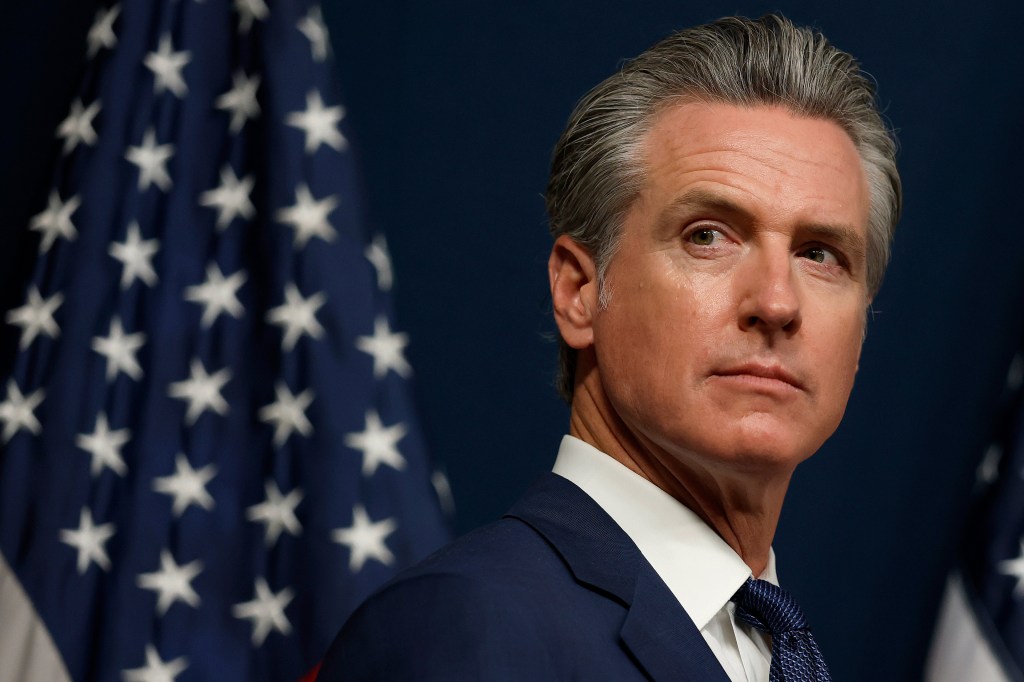
After Chiding Democrats on Transgender Politics, Newsom Vetoes a Key Health Measure

California Gov. Gavin Newsom this week signed a suite of privacy protection bills for transgender patients amid continuing threats by the Trump administration.

But there was one glaring omission that LGBTQ+ advocates and political strategists say is part of an increasingly complex dance the Democrat faces as he curates a more centrist profile for a potential presidential bid.

Newsom vetoed a bill that would have required insurers to cover, and pharmacists to dispense, 12 months of hormone therapy at one time to transgender patients and others. The proposal was a top priority for trans rights leaders, who said it was crucial to preserve care as clinics close or limit gender-affirming services under White House pressure.

Political experts say Newsom’s veto highlights how charged trans care has become for Democrats nationally and, in particular, for Newsom, who as San Francisco mayor engaged in civil disobedience by allowing gay couples to marry at City Hall. The veto, along with his lukewarm response to anti-trans rhetoric, they argue, is part of an alarming pattern that could damage his credibility with key voters in his base.

“Even if there were no political motivations whatsoever under Newsom’s decision, there are certainly political ramifications of which he is very aware,” said Dan Schnur, a former GOP political strategist who is now a politics lecturer at the University of California-Berkeley. “He is smart enough to know that this is an issue that’s going to anger his base, but in return, may make him more acceptable to large numbers of swing voters.”

Earlier this year on Newsom’s podcast, the governor told the late conservative activist Charlie Kirk that trans athletes competing in women’s sports was “deeply unfair,” triggering a backlash among his party’s base and LGBTQ+ leaders. And he has described trans issues as a “major problem for the Democratic Party,” saying Donald Trump’s trans-focused campaign ads were “devastating” for his party in 2024.

Still, in a conversation with YouTube streamer ConnorEatsPants this month, Newsom defended himself “as a guy who’s literally put my political life on the line for the community for decades, has been a champion and a leader.”

“He doesn’t want to face the criticism as someone who, I’m sure, is trying to line himself up for the presidency, when the current anti-trans rhetoric is so loud,” said Ariela Cuellar, a spokesperson for the California LGBTQ Health and Human Services Network.

Caroline Menjivar, the state senator who introduced the measure, described her bill as “the most tangible and effective” measure this year to help trans people at a time when they are being singled out for what she described as “targeted discrimination.” In a legislature in which Democrats hold supermajorities in both houses, lawmakers sent the bill to Newsom on a party-line vote. Earlier this year, Washington became the first to enact a state law extending hormone therapy coverage to a 12-month supply.

In a veto message on the California bill, Newsom cited its potential to drive up health care costs, impacts that an independent analysis found would be negligible.

“At a time when individuals are facing double-digit rate increases in their health care premiums across the nation, we must take great care to not enact policies that further drive up the cost of health care, no matter how well-intended,” Newsom wrote.

Under the Trump administration, federal agencies have been directed to limit access to gender-affirming care for children, which Trump has referred to as “chemical and surgical mutilation,” and demanded documents from or threatened investigations of institutions that provide it.

In recent months, Stanford Medicine, Children’s Hospital Los Angeles, and Kaiser Permanente have reduced or eliminated gender-affirming care for patients under 19, a sign of the chilling effect Trump’s executive orders have had on health care, even in one of the nation’s most progressive states.

California already mandates wide coverage of gender-affirming health care, including hormone therapy, but pharmacists can currently dispense only a 90-day supply. Menjivar’s bill would have allowed 12-month supplies, modeled after a 2016 law that allowed women to receive an annual supply of birth control.

Luke Healy, who told legislators at an April hearing that he was “a 24-year-old detransitioner” and no longer believed he was a woman, criticized the attempt to increase coverage of services he thought were “irreversibly harmful” to him.

“I believe that bills like this are forcing doctors to turn healthy bodies into perpetual medical problems in the name of an ideology,” Healy testified.

The California Association of Health Plans opposed the bill over provisions that would limit the use of certain practices such as prior authorization and step therapy, which require insurer approval before care is provided and force patients and doctors to try other therapies first.

“These safeguards are essential for applying evidence-based prescribing standards and responsibly managing costs — ensuring patients receive appropriate care while keeping premiums in check,” said spokesperson Mary Ellen Grant.

An analysis by the California Health Benefits Review Program, which independently reviews bills relating to health insurance, concluded that annual premium increases resulting from the bill’s implementation would be negligible and that “no long-term impacts on utilization or cost” were expected.

Shannon Minter, legal director for the National Center for LGBTQ Rights, said Newsom’s economic argument was “not plausible.” Although he said he considers Newsom a strong ally of the transgender community, Minter noted he was “deeply disappointed” to see the governor’s veto. “I understand he’s trying to respond to this political moment, and I wish he would respond to it by modeling language and policies that can genuinely bring people along.”

Newsom’s press office declined to comment further.

Following the podcast interview with Kirk, Cuellar said, advocacy groups backing SB 418 grew concerned about a potential veto and made a point to highlight voices of other patients who would benefit, including menopausal women and cancer patients. It was a starkly different strategy than what they might have done before Trump took office.

“Had we run this bill in 2022-2023, the messaging would have been totally different,” said another proponent who requested anonymity because they were not authorized to speak publicly on the issue. “We could have been very loud and proud. In 2023, we might have gotten a signing ceremony.”

Advocates for trans rights were so wary of the current political climate that some also felt the need to steer clear of promoting a separate bill that would have expanded coverage of hormone therapy and other treatments for menopause and perimenopause. That bill, authored by Assembly member Rebecca Bauer-Kahan, who has spoken movingly about her struggles with health care for perimenopause, was also vetoed.

In the meantime, said Jovan Wolf, a trans man and military veteran, patients like him will be left to suffer.

Wolf, who had taken testosterone for more than 15 years, tried to restart hormone therapy in March, following a two-year hiatus in which he contemplated having children.

Doctors at the Department of Veterans Affairs told him it was too late. Days earlier, the Trump administration had announced it would phase out hormone therapy and other treatments for gender dysphoria.

“Having estrogen pumping through my body, it’s just not a good feeling for me, physically, mentally. And when I’m on testosterone, I feel balanced,” said Wolf, who eventually received care elsewhere. “It should be my decision and my decision only.”

This article was produced by KFF Health News, which publishes California Healthline, an editorially independent service of the California Health Care Foundation.

KFF Health News is a national newsroom that produces in-depth journalism about health issues and is one of the core operating programs at KFF—an independent source of health policy research, polling, and journalism. Learn more about KFF.

USE OUR CONTENT

This story can be republished for free (details).
What the Health? From KFF Health News: Schrödinger’s Government Shutdown

The Host

Julie Rovner
KFF Health News


@jrovner


@julierovner.bsky.social


Read Julie’s stories.

Julie Rovner is chief Washington correspondent and host of KFF Health News’ weekly health policy news podcast, “What the Health?” A noted expert on health policy issues, Julie is the author of the critically praised reference book “Health Care Politics and Policy A to Z,” now in its third edition.

Democrats and Republicans are both facing potential political consequences in their continuing standoff over federal government funding. Republicans are likely to face a voter backlash if they refuse to agree to Democrats’ demands that they renew additional tax credits for Affordable Care Act marketplace plans, since the majority of those facing premium hikes live in GOP-dominated states. For their part, Democrats are worried that Republicans will violate the terms of any potential spending deal.

At the same time, the Trump administration is using the shutdown to try to lay off thousands of federal workers, including those performing key public health roles at the Centers for Disease Control and Prevention.

This week’s panelists are Julie Rovner of KFF Health News, Anna Edney of Bloomberg News, Joanne Kenen of the Johns Hopkins Bloomberg School of Public Health and Politico Magazine, and Lauren Weber of The Washington Post.

Panelists

Anna Edney
Bloomberg News


@annaedney


@annaedney.bsky.social


Read Anna’s stories.

Joanne Kenen
Johns Hopkins University and Politico


@JoanneKenen


@joannekenen.bsky.social


Read Joanne’s bio.

Lauren Weber
The Washington Post


@LaurenWeberHP


Read Lauren’s stories.

Among the takeaways from this week’s episode:

  • As the federal government shutdown drags on, there has been little progress toward a deal on government spending — or on the expiring ACA marketplace subsidies Democrats are fighting to renew. Potential subsidy compromises could, for instance, implement a minimal premium in place of $0 premiums, to reduce enrollment fraud, as Republicans want.
  • A federal judge halted the Trump administration’s latest layoffs of federal workers amid questions about the layoffs’ legality. The administration in particular dealt a heavy blow this round to the CDC, an agency that has been battered by staff reductions, policy shifts, and even violence.
  • New reporting shows the Trump administration explored the feasibility of tracing abortion pill residue in wastewater, following up on an anti-abortion claim that the drugs may be contaminating the water supply. Yet advocates could have an ulterior motive: developing the ability to trace use of the pill to further crack down on abortions.
  • And President Donald Trump unveiled a deal with a second drugmaker, AstraZeneca, that allows the company to avoid tariffs in exchange for building a new U.S. facility. But as with the first deal, it’s unclear how much money the agreement will save patients.

Also this week, Rovner interviews health insurance analyst Louise Norris of Medicareresources.org about the Medicare open enrollment period, which began Oct. 15.

Plus, for “extra credit” the panelists suggest health policy stories they read this week that they think you should read, too:

Julie Rovner: Politico’s “RFK Jr.’s Got Advice for Pregnant Women. There’s Limited Data To Support It,” by Alice Miranda Ollstein.

Anna Edney: The New York Times’ “The Drug That Took Away More Than Her Appetite,” by Maia Szalavitz.

Joanne Kenen: Mother Jones’ “From Medicine to Mysticism: The Radicalization of Florida’s Top Doc,” by Kiera Butler and Julianne McShane.

Lauren Weber: KFF Health News’ “Senators Press Deloitte, Other Contractors on Errors in Medicaid Eligibility Systems,” by Rachana Pradhan and Samantha Liss.

Also mentioned in this week’s podcast:

click to open the transcript

Transcript: Schrödinger’s Government Shutdown

[Editor’s note: This transcript was generated using both transcription software and a human’s light touch. It has been edited for style and clarity.]

Julie Rovner: Hello, and welcome back to “What the Health?” I’m Julie Rovner, chief Washington correspondent for KFF Health News, and I’m joined by some of the best and smartest health reporters in Washington. We’re taping this week on Thursday, Oct. 16, at 10 a.m. As always, news happens fast and things might’ve changed by the time you hear this. So, here we go.

Today we are joined via videoconference by Lauren Weber of The Washington Post.

Lauren Weber: Hello, hello.

Rovner: Anna Edney of Bloomberg News.

Anna Edney: Hi.

Rovner: And Joanne Kenen of the Johns Hopkins Bloomberg School of Public Health and Politico Magazine.

Joanne Kenen: Hey, everybody.

Rovner: Later in this episode we’ll play my interview with health insurance expert Louise Norris, who will explain some of the changes coming with this year’s open enrollment for Medicare, which began Wednesday. But first, this week’s news.

So, today is Day 16 of the government shutdown, and there is still no discernible end in sight. This week Republicans shifted their main talking point against Democrats. They were arguing that Democrats are trying to restore eligibility for Medicaid to illegal immigrants. Now it’s become a general takedown of the Affordable Care Act and arguing that in urging continuing the expanded tax credits for ACA premiums, Democrats want to throw good money after bad, because the ACA has made health care more expensive.

First off, it has not. There’s lots of evidence that the ACA has actually held down health spending increases, although other factors have pushed it up. But more to the point, do Republicans still not get that the expiration of these additional tax credits are going to hurt their voters more than it’s going to hurt Democratic voters? I see arched eyebrows.

Edney: It doesn’t seem like they get that yet, but I’m not in those strategy rooms, so a little tough to say what their line will be with this game of chicken. They basically are allowing firings of federal workers to continue to go forward in a way that they hope maybe will turn the tide and attention. It doesn’t seem to be working. So I don’t know if they’re having these conversations quite yet, but I know that the notices are starting to go out to some people in some states about these increases, and so it really might depend on what that backlash is from people who are going to see much higher costs for their health care.

Rovner: Yeah, apparently open enrollment began in Idaho on Wednesday. I didn’t realize that they started early, and so there’s just that one little state where people are actually able to see what these premium increases look like, assuming that they do not continue these extra subsidies. I’m wondering sort of about the Republican strategy of, We couldn’t get any traction with the illegal immigrants, so we’re just going to move to “The ACA is terrible.” Joanne.

Kenen: Well, I mean, we talked about this a couple of weeks ago. And Julie linked to the story, and I wrote about the politics of this. And one of the issues is [President Donald] Trump is a master of deflection. Are these people going to think it’s really Republican policy? Or are they going to think it’s greedy insurers, leftovers of the flaws of Obamacare itself, it’s Biden’s fault? And also concentration, I mean where the voters are in these states. Are there enough of them who actually are going to turn out to make a difference? They’re not going to flip Texas, right?

Are there enough of them in swing states or closer-margin states to make any difference? Are there enough in a single congressional district to make any difference? I mean part of it, I think they’re just sort of banking on that they won’t get the blame, that it’s really easy for us to get mad at our insurers. And I think that’s part of what they’re hoping, that they can just say: Blame them. Blame the structure of Obamacare. Because it’s not our fault. So, whether that works as a selling tactic remains to be seen. If they thought it was a huge political risk, they wouldn’t do it.

Rovner: True. Lauren.

Weber: I’ve been fascinated to see [Rep.] Marjorie Taylor-Green come out and say, Wow, these are some expensive premiums. And her in general, her seeming split from some parts of the Republican Party, is fascinating to watch for many reasons. But it’s just a lot of money that these people could be staring down. I mean, there was an analyst quoted in some coverage that was, like, people will have to decide between groceries and rent. I mean, if you are paying over a thousand dollars more a month, for some of these folks, I mean, that is a significant amount of cash. So, I do feel like people vote with their pocketbooks more than they vote with anything else. But to Joanne’s point, I mean, will they attribute the blame? I’m not sure.

Rovner: So, Politico was reporting on some possible options for a deal on those subsidies, which lawmakers are apparently talking about quietly behind closed doors, since actual negotiations are not yet happening. Two of those possibilities seem like real potential common ground. Minimum premiums — so, people who are now not paying any premiums, and the argument from some Republicans is that that’s pushing fraud, because some people, if they’re not paying premiums, don’t even know that they’re enrolled, and that the brokers are making money, which my colleague Julie Appleby has written about ad nauseum. So that seems like a possible place for compromise, to have a minimum $5-a-month premium so people would know that they have insurance. And maximum incomes for the subsidies. I know that people are floating, like, $200,000 a year or something like that.

Then there are two possibilities that at least strike me as less likely. One of them is grandfathering the subsidies, so only people who are getting them now could continue to get them, which would be problematic at a time when the economy seems to be shedding jobs, and changing the abortion language, which I don’t even want to start with. So, I’m seeing the first two as a real possibility. The second two, not so much. I’m wondering what you guys think.

Kenen: I mean, I’ve talked to some Republicans who claim that the current structure of the subsidies would enable families who are making $600,000, which all of us would agree is a fair amount of money. When I was told that, I went on a whole bunch of different calculators and pretended I was making $600,000. And could I actually get the subsidies? And I kept being laughed at by these calculators. I think there are probably some cases where this has happened. It’s a complicated formula where 8% of — we don’t have to get into the technicality. There may be—

Rovner: But it is a percent of your income. You only get a subsidy if it’s more than — yeah.

Kenen: And you’d have to have a premium that’s, like, an extraordinarily rich premium. I mean, it has to be in a really, really, really, really high number. Can this exist under current law? Several reputable Republicans have told me yes. Or conservatives — they’re not all necessarily Republicans. Conservative on this issue, at least — have said yes. I mean, if that’s the kind of thing that you want, to set an income cap, that was probably what was intended. I would take that out of the nonstarter and into the starter pile. I don’t think that’s enough, but I think that’s a reasonable discussion for both sides to have. I don’t think the intention was to subsidize people who were really not lower-middle, middle class.

Rovner: The people who got the big tax cuts.

Kenen: Right. They’re getting other tax cuts. I thought that was an interesting piece with some interesting options, but I’m also hearing escalating rhetoric, back to 2014 kind of rhetoric, back to repeal kind of rhetoric, that everything that you hate about the health care system is the fault of Obamacare, nothing in Obamacare works. We’ve got a really — they’re not saying “repeal,” but they’re saying reform it, and I’m hearing more and more of that. It’s just in the air now. So, and Jon Cohn had a really good piece in The Bulwark about some of the background of this. I think it could mean that this becomes a more intense tug-of-war that does not bode well for a quick resolution of the shutdown.

I don’t think we necessarily get into a yearlong repeal fight, even if you call it reform. But I think that these demands and this rhetoric about, Well, high-risk pools worked. Well, no, they didn’t. That, This is why your insurance costs have gone up. No, there’s a whole bunch of incentives and structures and bad stuff in our health care system. It is, Obamacare fixed certain problems. Those of us, we all have employer insurance, I believe, and all of us face cost increases and frustrations and hitting our head against brick walls and delays. And things are not perfect by any means, but it’s not because of these subsidies in Obamacare.

Rovner: And it’s not because of Obamacare. [Barack] Obama himself this week was on a podcast and said it was intended as a start, not as the be-all, end-all. I was surprised. I mean, I think one of the reasons that Republicans, I mean, this is now in their talking points about, We’re going to go after Obamacare. And [Rep.] Mike Johnson, the speaker, had kind of a rant on Monday, I mean, which sort of opened this up. And I think some of the Republicans were also talking about it on the Sunday shows. But I can’t imagine that Republicans don’t remember that the last time they had this big fight against Obamacare, Obamacare won. That was in 2017, and if anything, it’s even more popular now because there’s twice as many people on it, which was kind of the way I set up my first question.

Kenen: Right. But the dynamic of a year’s worth of repeal votes while other things are actually functioning in government versus a fight about this when Trump holds a lot of the cards in a shutdown — it’s comparable but not the same.

Rovner: Anna?

Edney: Well, and I also have to wonder if an actual extended replace, or reform, whatever we’re going to call it, fight is what they want, or if this is a strategy to help blame the increases in premiums that are coming on Obamacare in general directed towards the Democrats, right?. I mean, you can see how that line could be drawn. And so if they just keep bashing Obamacare, it’s Obamacare’s fault that Obamacare’s premiums got higher, not because they didn’t vote on extending the subsidies.

Kenen: And we’re also talking about Obamacare again. We had been talking about the Affordable Care Act. It had gone from Obamacare, which is politically toxic, to Affordable Care Act, which was sort of a subtle acknowledgment that it had bipartisan popularity among people getting benefits. And now we’re back to Obamacare, which sort of tells me, yes, we’re back into some of this endless loop of political fights about Obamacare.

Rovner: Yeah.

Kenen: And trying to get the Guinness Book of World Records for repeal votes on a single piece of legislation.

Rovner: Well, meanwhile — and I said this last week and I think the week before — that even if there is a deal on the tax credits, the bigger problem for Democrats right now is that if they make a deal on spending levels for fiscal 2026, which is what this fight is actually over, the administration can simply undo it, and Congress can ratify that undoing with a simple majority of just Republican votes. This week, even Republican [Sen.] Lisa Murkowski wondered aloud why Democrats would do a deal like that. So, I’m still wondering how they get out of that box, even if they were to get some kind of a compromise on the ACA subsidies. I certainly don’t know how Democrats get out of that box. I think the Republicans don’t know how they get out of that box.

Kenen: They don’t realize they’re both in the box. That’s one of the problems. This is a large box.

Rovner: It’s Schrödinger’s shutdown. We will have to see how that plays itself out. In the meantime, I’m not holding my breath. Well, moving on, despite laws against it, as Anna already mentioned, the Trump administration began firing federal workers last week, and the cuts hit particularly hard at the Department of Health and Human Services and agencies like the Centers for Disease Control and Prevention and the Substance Abuse and Mental Health Services Administration. The cuts appeared both sweeping and devastating, at least at first, including the entire staff of the CDC’s news journal and lead public health source of information, the Morbidity and Mortality Weekly Report. Though by the end of the weekend, many of the firings had been rescinded. It’s not clear whether that really was a coding mistake, as was the official explanation, or an effort to continue to put federal workers, quote, air quotes here, “in trauma” as OMB [Office of Management and Budget] Director Russell Vought famously promised before he took office for the second time. Whichever, it’s not really the way to get the best work out of your workforce, right? Telling you: You’re fired. No, you’re not. Maybe you are? Go ahead, Lauren.

Weber: I would like to go back to the story I wrote in April when a bunch of fired health workers were told to contact an employee who had died. I don’t think, based on the coding error or some of these past things, it does not seem like these layoffs are being done in any sort of organized way. It doesn’t seem like they have up-to-date records. It seems like, also, are these layoffs even legal, based on some of the litigation that’s been filed? I think there’s going to be a lot that has to shake out there. But, I mean, to be quite honest, it is very striking to see a bunch of CDC employees continue to get laid off after, again, this is an agency that got shot at with hundreds of bullets. Police officer—

Rovner: Yeah, literally shot at.

Weber: Literally shot at with hundreds of bullets, and a police officer died responding to that, due to a shooter who had been radicalized in part, it seems, from his father’s account, by information that was wrong about the covid vaccine. So, to see more of those employees get laid off, I mean, you just have to wonder who’s going to want to work at these places. Morale is just completely, as we understand it, terrible. But yeah, I also question if that was a coding error or what exactly was happening there, because there were a lot of priorities of folks that were seemingly let go that are allegedly Make America Healthy Again priorities, but that’s also been true for many months of policymaking, so—

Rovner: Yeah, there’s a lot of right hand not seemingly knowing what left hand is doing in all of this, which may be the goal. I mean, I think you put your finger on it. It’s like, who would want to work at these places after what’s being done? And I think that’s the whole idea of the Russell Vought strategy of, Let’s shrink the federal government to a point where it’s so small that you can just sort of put it in a box and put it under the bed. That’s essentially where we are. Well, Lauren, as you mentioned, Wednesday afternoon, a federal district court judge ordered the administration to pause the firings. But will they actually obey that? And do we even know what offices have been most affected at this point?

I mean, we heard a lot of things like the entire Office of Population Affairs at HHS, which runs Title X, has apparently been reduced to one person. The people who do a lot of the statistics and survey work at CDC. All these people sort of appear to have been laid off, but we’re not quite sure, and we’re not quite sure what’s going to happen from here.

Kenen: I’m not sure if they know they’ve been laid off and rehired, because if you were laid off, you lost your access to your work email, and then if you get an email in your work email saying, Oops, you’re hired. I mean, I guess people sort of may just see if they have access again, but I’m not really sure how the actual notification of this somewhat chaotic layoff, no-layoff thing is.

Rovner: It has been chaotic. I think that’s a good word to describe all of this. Well, one reason it was relatively easy for the administration to go after the CDC is that it doesn’t have a leader — or even a nominated leader — at the moment, after the firing of Susan Monarez in August, less than a month after her Senate confirmation vote. Another high HHS position that remains vacant is that of surgeon general, although that office at least has a nominee, Casey Means. She’s the sister of RFK [Robert F. Kennedy] Jr. top aide and MAHA associate Calley Means and more than a little bit controversial. Lauren, you did a deep dive this week into the prospective surgeon general. What’d you find?

Weber: Yeah, my colleague Rachel Roubein and I did a deep dive into her background. And she’s, look, she’s a fascinating example, really, of MAHA today. And you could argue she really wrote the manifesto to MAHA with her book “Good Energy” that she authored with her brother, Calley Means. But basically she’s a very accomplished person in the sense that she went to Stanford undergrad; she graduated from Stanford med school; she had a very prestigious residency in ear, nose, and throat surgery; and then she resigned. She left and decided she wanted to take a different path and has become a bestselling author, a health products entrepreneur, and has also worked, as her financial disclosures have revealed, to promote a variety of products in some of her work. Financial disclosures revealed that she had received over half a million dollars over basically the last year and a half promoting a variety of different supplements, teas, elixirs, diagnostic products, and so on.

And several of the medical and scientific experts I spoke to said that they worried that she spoke in too absolute of terms about health, and they were really concerned that as someone who would be the surgeon general that she would use that bully pulpit and speak in terms not necessarily grounded in evidence. They pointed to some of her remarks about how cancer and Alzheimer’s and fertility was within one’s power to prevent and reverse, and they felt like that language went a step too far. And looking at her history, they are concerned about what that could mean for the health of the nation if she is directing it.

Rovner: She doesn’t even have a confirmation hearing scheduled yet, does she? Well, the Senate’s in so they could.

Weber: She is pregnant, so I think that is playing into the timing of some of her stuff. But yes, she does not have it scheduled. Her forms seemingly were pretty delayed. And then obviously there’s other things going on. I mean, I think the CDC firing also sucked a lot of health air out of the room of what people want to deal with and spend their political capital on, I suspect. But yes, we shall see.

Kenen: Yeah, she has to go before the [Senate] HELP [Health, Education, Labor, and Pensions] Committee, which is, Sen. [Bill] Cassidy is the chair. He is not a happy camper at the moment, from his public statements, and we do not know what the private conversations he is having at this point in time.

Rovner: And of course, that committee will also have to pass on the new CDC nominee when there is one.

Kenen: Yes. And the last CDC hearing, which all of us watched, I think he’s clearly concerned and displeased by lots of things going on at the federal health agencies. So, none of us are in those rooms, but they’re probably interesting conversations.

Rovner: As I like to say, we will watch that space. Well, turning to reproductive health, The New York Times has a story this week about something that we’ve talked about before on the podcast, arguments by anti-abortion activists that abortion pill residue in wastewater might be contaminating the nation’s waterways. Notwithstanding that there is no evidence of that, the Environmental Protection [Agency], acting on a request from anti-abortion lawmakers in Congress, ordered scientists to see if they could develop methods to detect the drug in wastewater. Now, the groups that originally pushed this say they were concerned about pollution. But if such a detection method is successfully developed, abortion rights supporters worry that it could be used to trace users in particular buildings in order to enforce abortion bans. This is basically another step in this sort of, Let’s try and shut down abortion nationwide. Is it not? And Anna I see you nodding.

Edney: Well, I mean that was my feeling when I read this really good piece that you’re talking about. And it’s a little bit lower down in the piece when they do start talking about using this to target maybe buildings or places where someone might have used an abortion drug. And I kind of was like, Yes, this is what I assumed they were trying to do, as I read this. And the reason for that is not just because I feel like there’s always a vindictive motive or something, but it’s because there are lots of drugs that are in our wastewater, and people are taking far larger amounts daily of many more things that is all going into our wastewater. So, particularly, why you would want to track that one, which is not used by millions of people for a chronic condition on a daily basis, it seems like there would be an ulterior motive.

Rovner: And has not been shown to do any harm, even if it is showing up in trace amounts in the wastewater. Although presumably that’s what the EPA scientists were also tasked with trying to figure out.

Kenen: I mean, it’s really hard to get rid of a drug you no longer take. I mean, pharmacies don’t want to take it back. In my neighborhood, there is a pharmacy at a supermarket that does have a take-back, which is great, but it’s always broken. If you have any drug that you want to get rid of responsibly and not have it end up — Anna’s right, I mean, there’s just a lot of stuff in our water. It’s really hard to do. And this is not the only drug that is an issue with.

Rovner: Although if you Google it, there are a lot of places where you can actually take back drugs.

Kenen: It’s hard. It’s limited hours, limited access, and the machines are often—

Rovner: Yeah. Yeah.

Kenen: I’ve been trying for a couple of them for a few months, actually.

Rovner: You do have to actually take some steps actively to do it. Well, turning to drugs, and drug prices, there was so much other news, you might’ve missed this, but President Trump last Friday afternoon announced a deal with a second drug company to bring back manufacturing, in order to avoid tariffs. This deals with AstraZeneca, which promised to build a plant in Virginia. But Anna, is there any promise to actually bring down prices for consumers in any of this?

Edney: Minimally, possibly. It’s a lot like the Pfizer deal, and we saw that focus largely on Medicaid, that already has extremely steep discounts that are required by law. And so how much they’d actually be slashing to offer the “most favored nations” pricing that Trump wants to the Medicaid program, it seems like that probably isn’t a huge leap, and certainly we saw that Wall Street didn’t react with any hair on fire. They’re not worried about the bottom lines of these companies when these deals come out, and they’re avoiding tariffs for three years. So, kind of net positive, seemingly. We don’t have all the details of the deal—

Rovner: Like with the Pfizer deal where we never got all the details.

Edney: Yeah, exactly. So, there’s some stuff that we still don’t know, but Medicaid is the main focus. Then they’ll offer, again, some of their drugs on TrumpRx. So, maybe if your insurance doesn’t cover something, or if you don’t have insurance, and you want to get a drug, that might be helpful. But most people I think are going to opt to pay their lower copay than the cost of a drug that is discounted but still full price.

Rovner: Well, in case you’re looking for a reason why it might be a good thing to reshore some drug manufacturing, the World Health Organization this week warned of potentially poisonous cough syrup made in India. According to one of your Bloomberg colleagues, Anna, 22 children have died in the central Indian state of Madhya Pradesh — I hope I’m pronouncing that close to right. And this is far from the first time poisonous substances have been found in medications made in India, right? You’ve done a lot of reporting on this.

Edney: Yeah, for sure, and these are really tragic stories that now seem to keep, particularly with these kind of cough medicines, keep popping up. And thankfully the FDA did put out a message saying these cough medicines in this round were not sold in the U.S., but there have been times where India has imported some of these. There were children in the Gambia that died last time — this was a few years ago. Because what’s happening is some of the drugmakers in India are supposed to be purchasing a solvent. It’s propylene glycol. Well, that solvent, that helps the medicine kind of all mix together. It can be a lot cheaper if you buy something that looks like it but is actually deadly, diethylene glycol. And so that’s what some of these companies are doing, is saving money and substituting a deadly ingredient. And so we see that this is a problem a lot of times with some of the drugmakers, and it’s happened, unfortunately, particularly in India, where the cost-cutting, the corner-cutting has actually affected people’s lives, and in this case, tragically, children.

Rovner: Yeah. There is reason to kind of want to keep drug manufacturing where the FDA can keep an eye on it, which I know you will continue to report on.

Edney: For sure.

Rovner: Because that has been your specialty, I know, of late.

Edney: Yes.

Rovner: All right, that is this week’s news. Now we will play my Medicare open enrollment interview with Louise Norris, and then we’ll come back with our extra credits.

I am so pleased to welcome to the podcast Louise Norris. She’s a health policy analyst at Medicareresources.org and at Healthinsurance.org and the author of some of the most helpful guides to health insurance out there — and the person who keeps track of all the changes for health reporters like me. Louise, so happy to welcome you to “What the Health?”

Louise Norris: Thank you so much, Julie. It’s a pleasure to be here.

Rovner: So, we’ve talked a lot these past few months about how the Affordable Care Act and its potentially skyrocketing premiums for 2026 is about to happen, but we haven’t talked as much about some of the changes to Medicare, for which open enrollment began this week. Now, most years it’s probably OK for Medicare recipients just to let whatever coverage they have kind of roll over. But that’s not the case this year, right?

Norris: Well, I feel like it’s never the best idea to just let your coverage roll over, because there’s always plan-specific changes that people just really need to pay attention to. And even though averages might be fairly steady in terms of premiums and benefits, that doesn’t mean your plan will have a steady premium or benefits. And for 2026, we’re seeing in the Medicare Advantage and Part D —stand-alone Part D — drug plans, there are fewer plans available on average and actually a slight average decrease in premiums. But I feel like if people see that as the headline, they might be sort of lulled into complacency, of like, Oh, I just don’t need to look, when in reality there’s quite a bit of variation from one plan to another. So, although the average stand-alone Part D plan premium is actually decreasing slightly, some plans are increasing their premiums by as much as $50 a month. So, you need to really pay attention to the notice you got from your plan about what’s happening for 2026 and then comparison-shop. Comparison-shop is always in your best interest every year.

Rovner: Right, because, I mean, people don’t realize that maybe your doctor’s been dropped from your Medicare Advantage plan or your drug has been dropped from your Part D plan. So, I mean, even if your premium doesn’t change that much, your coverage might be changing a lot, right?

Norris: Exactly. And you don’t want to find that out when you go to the pharmacy in January to fill your prescription and then you’re locked into your Part D plan for all of 2026. It’s definitely better to know all those details at this right now during open enrollment.

Rovner: Now there are some coverage changes that people are starting to feel from really a couple of years ago, yes?

Norris: There are. So, there’s some basic changes like, for example, the maximum out-of-pocket cost on Part D plans, which just went into effect in 2025 under the Inflation Reduction Act, it was a $2,000 cap on out-of-pocket costs for Part D. That is indexed for inflation. So for 2026 it goes up to $2,100. So not a huge change but definitely a change people should know about. And you do still have the option to work with your plan to spread that out in equal payments across all 12 months of the year instead of having to meet it right at the beginning of the year, if you take an expensive medication. There’s this change in the maximum Part D deductible, just like there is every year. This year it’s, for 2025, it’s $590 is the maximum deductible. It’ll be $615 next year. That doesn’t mean your plan will have a $615 deductible, but it might.

But there are also plan-specific changes that vary from one plan to another. So, for example, your Medicare Advantage plan might be adding or subtracting supplemental benefits. They might be changing the amount of your deductible or changing the amount of your inpatient hospital copay. There’s all sorts of changes that aren’t necessarily broadly applicable but that apply to your plan. And then, like you were saying, whether or not your doctor and hospital are still in the network, whether your prescription drug is still covered and covered at the same level, plans can move prescription drugs from one tier to another. So, those are all the sorts of things you really need to pay attention to now so that you can comparison-shop and see if something else might be a better option.

Rovner: And we are seeing plans starting to sort of drop out. I mean, I know at one point there was concern that there were too many plans for people to choose from, that it was, just, it was too confusing. But now are we running the risk of having too few plans in some places?

Norris: Well, I think the concern about too many plans is definitely valid. For a while, there were — it could definitely be overwhelming for people shopping for coverage. For both Medicare Advantage and Part D, we do have, overall, an average of a reduction in how many plans are available for next year. There are a few states where the average beneficiary will actually see more options for Medicare Advantage, but that’s rare. But the average beneficiary will have access to more Medicare Advantage plans than they did before 2022, for example. It’s just been in the last few years that it has decreased, but it still hasn’t decreased below the level that it was in 2022. So it’s still a lot. I believe it’s an average of 32 plans. And then in the Part D, for people who buy stand-alone Part D coverage, everybody has between eight and 12 plans to pick from.

So, if your plan is ending, you obviously need to shop for new coverage. If you’re on a Medicare Advantage plan and you don’t shop for new coverage, you’ll just be automatically moved to original Medicare on Jan. 1. If you’re on a Medicare Advantage plan that’s ending, because your carrier is exiting the market or pulling out of your area and your plan can’t be renewed, you can pick any other Medicare Advantage plan that’s available in your area. But you also can do, you can switch to original Medicare, and you’ll have guaranteed issue access to Medigap, which is not normally the case. During this open enrollment period, people have guaranteed issue access to Medicare Advantage and Part D but not Medigap. So, for other folks whose Medicare Advantage plan is continuing, obviously they have the option to switch to original Medicare. But depending on how long they’ve been on their Advantage plan and what state they’re in, they do not have guaranteed issue access to Medigap. So, that is an important thing for folks to know if their plan is actually ending, is that they can make that choice if they want to.

Rovner: We’ve seen a lot of increases in health care costs overall, and I guess that’s true for Medicare, too. I mean, why should people who aren’t on Medicare care about what happens to Medicare and what happens to the Medicare market?

Norris: First of all, hopefully all of us will eventually be on Medicare. Almost everyone by the time they’re 65 is on Medicare. But even if you’re a long ways away from that, it is important to know how much the whole Medicare sphere, in terms of the insurance companies and the regulations, how that sort of trickles down to the rest of the commercial insurance sector. Drug price negotiation, for example, that will have a trickle-down effect into what the insurance companies in the rest of the commercial market pay for drugs. When regulations come out for Medicare, they oftentimes, the insurance companies follow suit in the private market, or states will follow suit in terms of how they regulate the private market. So, it certainly does matter for everyone, even if it’s not a direct effect.

Rovner: So even if you’re not 65 or helping somebody who’s over 65.

Norris: Exactly, yes, and that’s the other thing is a lot of folks who are younger are helping a parent or a grandparent navigate this, and so it really does affect most people.

Rovner: Yeah, it is one of the autumn tasks for many people.

Norris: Absolutely.

Rovner: Helping Mom and Dad or Grandma and Grandpa navigate their Medicare coverage for the following year.

Norris: And I do think, like you were saying earlier, as far as just letting it ride, obviously if you comparison-shop and you’re happy with your coverage and you’ve determined that it is still the best option, then, yes, you do not need to do anything. You just, assuming it’s still available for renewal, you just let it renew. But oftentimes I think people don’t comparison-shop, simply because the process seems overwhelming and they just figure, I’ll just keep what I have. And of course, if you’re in that situation, you might be one of the people who’s on a Part D plan that’s increasing by $50 a month next year, or you might find out in January that your doctor’s no longer in-network with your Advantage plan.

So if you get those notices from your plan and something doesn’t make sense or you’re confused, it’s much better to reach out to someone who can help you, whether it’s a family member or friend, asking them for help, or call 1-800-MEDICARE. Call the Medicare SHIP in your state. Every state has a State Health Insurance Assistance Program that’s staffed with people who can answer your questions. Contact a Medicare broker in your area. Just asking questions and finding out the answers is a much better approach than just assuming things will work out if you just let your plan renew.

Rovner: I’ll put a link to your site also.

Norris: Yeah, Medicareresources.org. We do have an open enrollment guide where we list all of the changes that are happening for 2026, the broad changes, and we’ll continue to update that. For example, we don’t yet have the Medicare Part B premiums for 2026, so as those numbers come out, we’ll update that guide with everything people need to know.

Rovner: Louise Norris, thank you so much.

Norris: Absolutely. Thank you so much for having me, Julie.

Rovner: OK, we’re back. It’s time for our extra-credit segment. That’s where we each recognize the story we read this week we think you should read, too. Don’t worry if you miss it. We will put the links in our show notes on your phone or other mobile device. Joanne, why don’t you go first this week?

Kenen: The piece I have this week is from Mother Jones, and it’s about Florida Surgeon General Dr. Joseph Ladapo. And the headline is “From Medicine to Mysticism: The Radicalization of Florida’s Top Doc,” by Kiera Butler and Julianne McShane. It’s a phenomenal read. He has stellar credentials — Harvard, Stanford. He was an academic medicine MPH [master of public health]. He’s public health and medicine. He had this stellar traditional career. He was widely respected. And now he is this leading voice. He’s trying to get rid of the vaccine mandates, childhood vaccine mandates, to the whole state of Florida. He has questioned all sorts of established public health practices. He is out there. And we’ve sort of all wondered: How do people get to this point?

And this story talks about his wife and her mysticism, and their guru healer, who walks on their thighs to the point that it’s painful. And they emerge from this foot-walking thigh-walking thing, and his mystical experiences with this whole different take on the human experience and the role of health. I cannot begin to capture it. And here it is. It is a long, detailed, and fascinating read on his wife, who he met on an airplane, and her beliefs in, we bring certain things on ourselves because of who we are and who are the ancestors that we carry. She sees auras and visions, and this is their current belief system. And it is not compatible with what most of us think of as science-based public health. Really good read. Really, really good read.

Rovner: Definitely MAHA to the max. Anna.

Edney: Mine was a guest essay in The New York Times, “The Drug That Took Away More Than Her Appetite,” [by Maia Szalavitz]. And I thought it was a really great look at how some of these obesity medications, the GLP-1s like Ozempic and others, can be used to treat addiction. And so it follows this woman who was addicted to different kinds of drugs at different times. And she lost her children and all sorts of horrible things and had tried over and over again to stop using, and then has been in this program that uses a version of these GLP-1s at a lower level — they don’t necessarily want you also losing weight — but to treat addiction, and just how it’s kind of been the only thing that’s worked for her. It stops the cravings, kind of as you think it might do for people with obesity as well.

I thought we don’t see this as much, and the companies that make these drugs aren’t extremely focused on this. So I thought the article did a good job of saying why this could be really important, and looking at the fact that right now it requires federal funding of research to keep the promise alive, and hope that at some point some pharmaceutical company will be more willing to pick it up.

Rovner: Right now, there’s a lot more money to be made in the obesity side of this. But yeah, it’s a really interesting story. Lauren.

Weber: I actually highlighted work from Rachana Pradhan and Samantha Liss from KFF Health News. The article’s titled “Senators Press Deloitte, Other Contractors on Errors in Medicaid Eligibility Systems.” It’s impact from their great reporting, which I think we talked about on this podcast earlier in the year, about how — talk about waste, fraud, and abuse — that there’s some questionable issues with how Deloitte manages Medicaid systems and how money’s being wasted through them. And the senators, it looks like, read KFF Health News’ reporting and have sent some letters about it. So, great work by the team over there, and eye-opening for sure to see, on some of the dollars, Medicaid, that are not going to patients.

Rovner: Journalism impact. My extra credit this week is a really thoughtful story from our fellow podcast panelist Alice Miranda Olstein at Politico. It’s called “RFK Jr.’s Got Advice for Pregnant Women. There’s Limited Data to Support It.” It’s about a topic that I have been covering for more than three decades — the difficulties of including women, particularly women of childbearing age, in clinical trials of drugs. As Alice outlined so well, the problem isn’t just ethical — an unborn fetus obviously can’t give informed consent to be part of an experiment — but it’s also a question of liability. Drugmakers are afraid of getting sued for bad pregnancy outcomes, and with good reason. That’s why it’s so hard to know what is and isn’t safe to take during pregnancy and what might cause birth defects or miscarriages. And despite the secretary’s promise to, quote, “do the science,” it is not that easy. It’s a really, really good read.

OK, that is this week’s show. Thanks this week to our editor, Emmarie Huetteman, and our producer-engineer, Francis Ying. If you enjoy the podcast, you can subscribe wherever you get your podcasts. We’d appreciate it if you left us a review. That helps other people find us, too. Also, as always, you can email us your comments or questions. We’re at whatthehealth@kff.org. Or you can find me still on X, @jrovner, or on Bluesky, @julierovner. Where are you folks these days? Joanne?

Kenen: I’m either on Bluesky, @joannekenen, or on LinkedIn.

Rovner: Anna?

Edney: Bluesky or X, @annaedney.

Rovner: Lauren.

Weber: I’m on X or Bluesky, @LaurenWeberHP.

Rovner: We will be back in your feed next week. Until then, be healthy.

Credits

Francis Ying
Audio producer

Emmarie Huetteman
Editor

To hear all our podcasts, click here.

And subscribe to KFF Health News’ “What the Health?” on SpotifyApple PodcastsPocket Casts, or wherever you listen to podcasts.

KFF Health News is a national newsroom that produces in-depth journalism about health issues and is one of the core operating programs at KFF—an independent source of health policy research, polling, and journalism. Learn more about KFF.

USE OUR CONTENT

This story can be republished for free (details).
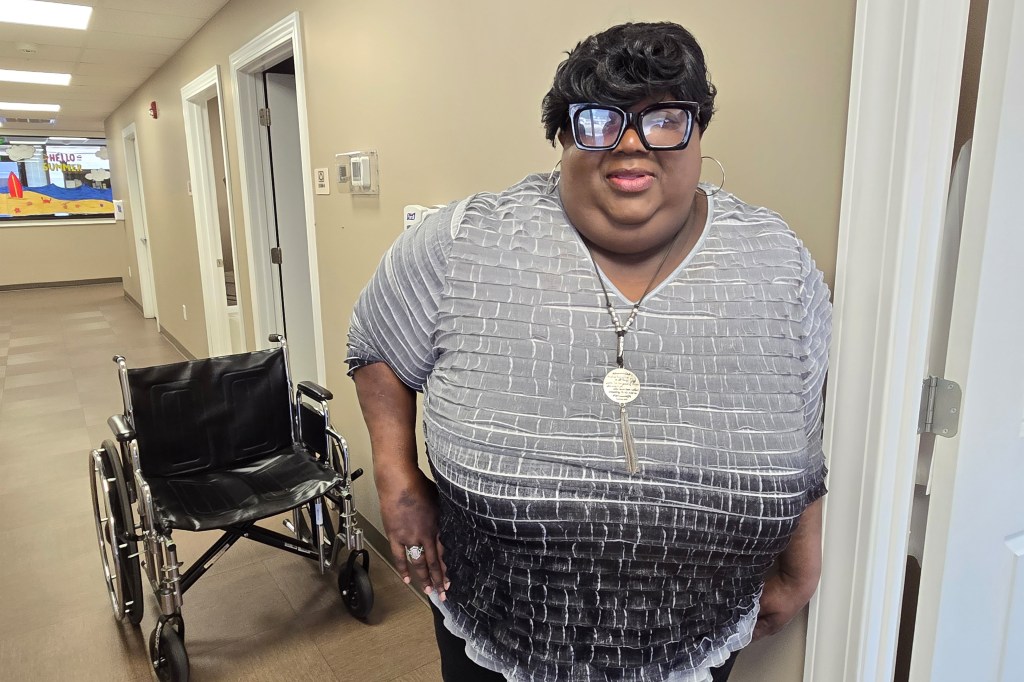
In Mississippi, Medicaid Coverage of Weight Loss Drugs Fails To Catch On

COLUMBUS, Miss. — April Hines has battled with her weight since she was a teenager.

But in the past couple of years, she’s fallen from 600 pounds to 385, and her blood pressure and blood sugar levels are down, too. “I’m not as fatigued as I used to be, and I’ve been able to go back to church,” she said.

Hines, 46, credits her weight loss to Trulicity, part of a new class of expensive weight loss drugs known as GLP-1s, and her Medicaid coverage for it. “It’s a blessing,” she said.

In a state where the obesity rate ranks among the highest in the country, many health providers were thrilled when Mississippi Medicaid in 2023 began covering GLP-1s for people 12 and older. Only 13 states cover the drugs for Medicaid enrollees for obesity, and Mississippi’s Medicaid program typically has some of the sparsest benefits and strictest eligibility rules.

Hines is one of relatively few enrollees to have used the new Medicaid benefit, which weight loss doctors in the state say has been hindered by national drug shortages, the state’s prior authorization process for the drugs, and a lack of marketing. Just 2% of adults on Mississippi Medicaid who meet the weight-related criteria had been prescribed a GLP-1 as of December 2024, according to a report to the state’s Medicaid Drug Utilization Review Board.

“It’s a little sad to have so many people out there not benefiting,” said William Rosenblatt, a family doctor in Columbus who treats Hines. “These drugs get to the root cause of so many health conditions.”

Already-scarce Medicaid coverage of the highly touted weight loss drugs could become more limited, with federal Medicaid funding cuts expected in the wake of the massive tax-and-spending bill President Donald Trump signed into law in July. The Congressional Budget Office estimated that the law would reduce Medicaid spending by about $911 billion over a decade.

“The law is going to create fairly intense pressure on states not to expand benefits,” said Michael Kolber, a partner in the health consulting firm Manatt. That may be especially true for these drugs, which often cost around $1,000 a month and could be used by a large percentage of Medicaid recipients, he said.

GLP-1s, which have been used for years to treat Type 2 diabetes, have gained widespread attention as a way to lose weight and reduce obesity-related conditions and their long-term costs.

But states may remain reluctant to offer the expensive drugs for obesity, because Medicaid recipients frequently churn on and off the coverage as their income changes. And because the drugs’ health benefits may take years to materialize — such as averting a future heart attack — the long-term financial advantages could accrue to other insurers.

Even ahead of the federal cuts, which will largely take effect in 2027, states are already feeling the pinch. North Carolina’s Medicaid program dropped its coverage of the drugs this month, citing their high cost.

Coverage for the weight loss drugs presents a dilemma for the Trump administration, which has identified as priorities attacking chronic health conditions and reducing federal spending. Health and Human Services Secretary Robert F. Kennedy Jr. has downplayed the need for the drugs and said more emphasis should be placed on eating better and exercising more.

In 2024, the Biden administration proposed that Medicare and Medicaid cover weight loss drugs to help tackle obesity as a public health crisis. In April, the Trump administration revoked the Biden-era proposal, saying the programs would not cover GLP-1 drugs for weight loss.

But in August, The Washington Post reported the Trump administration was considering a five-year pilot program for Medicare and Medicaid to cover the drugs after all. No details have been released. Asked for comment on the report, Centers for Medicare & Medicaid Services spokesman Alexx Pons told KFF Health News that all decisions go through a cost-benefit review.

Meanwhile, the Trump administration has included the GLP-1 drugs Ozempic, Wegovy, and Rybelsus on its list of 15 medicines that will be subject to price negotiations with pharmaceutical manufacturers under its Medicare Part D program, a system created during the Biden administration amid opposition from Republicans. The results of those negotiations are expected to be announced this fall.

Most private insurers don’t cover GLP-1s for weight loss, which can make the drugs unaffordable for those paying out of pocket.

Further analysis provided to Mississippi’s Medicaid drug review board shows that, in the first 15 months the drugs were covered, only about 2,900 Medicaid enrollees age 12 or older started treatment. Nearly 90% of them were female, and many had high blood pressure and high cholesterol.

The analysis also found most enrollees using the drugs lived in the southern, central, or northern parts of Mississippi — not along the Mississippi Delta on the western side of the state, where obesity rates are highest, at nearly 50%.

About 40% of adults in Mississippi are obese, just one percentage point behind top-ranked West Virginia, according to federal data.

Mississippi Medicaid spokesman Matt Westerfield told KFF Health News that the state spent $12 million in the first 15 months, providing the weight loss drugs to 2,200 adult members. He said the state approved the new drugs on the logic that treating obesity would improve enrollees’ health and eventually could lead to cost savings by reducing diseases caused by obesity.

Westerfield said that while utilization has been below the state’s projections, such treatment decisions are up to patients and their doctors. He said the state has been “raising awareness” of the drugs among health care providers, but he declined to comment further.

Rosenblatt, who works for Baptist Medical Group, part of a large regional health system, said some doctors have less incentive to prescribe the medicine, because the state doesn’t pay them to counsel patients about necessary dietary changes when taking the new drugs.

He called the drugs “game changers,” adding that he has seen patients lose 50 pounds or more within a few months of starting the drugs and no longer need medications for diabetes or other conditions.

A New England Journal of Medicine study published in 2021 found participants receiving GLP-1 drugs were more likely to show significant, sustained weight loss compared with those getting a placebo.

Other recent studies have shown the drugs help people with obesity lower their high blood pressure and reduce their odds of heart attacks or strokes.

Mississippi is one of 10 states that have not expanded Medicaid eligibility under the 2010 Affordable Care Act to everyone with an income under 138% of federal poverty level, or $21,597 this year.

In Mississippi, Medicaid does not cover adults without dependent children. Parents qualify only if their income is below 22% of the federal poverty level, or $5,863 for a family of three this year.

The state’s prior authorization process requires doctors to document to the state that patients meet certain obesity levels and that a treatment plan is in place. Doctors must demonstrate that enrollees are losing weight every six months to renew their prescription.

At the Hattiesburg Clinic — a large, multi-specialty group with a location in Hattiesburg, Mississippi — Virginia Crawford, a physician who specializes in obesity, said she was surprised so few patients are getting the drugs. A year ago, there were shortages of the drugs that could have curtailed physicians prescribing them. And she said the state’s prior authorization requirements for the drug could discourage primary care doctors. Many common medications do not require progress reports or even prior authorization.

“We need to make patients more aware that this option is available for them,” she said.

Lauren Scott, 40, of Laurel, Mississippi, said that with the help of Medicaid coverage, she lost nearly 100 pounds taking Wegovy.

“It’s just been amazing,” she said of how the drug drastically cut her appetite. “I remember going to Outback with my husband, and we got the onion ring appetizer and 16-ounce ribeye and salad with extra ranch dressing. I had some onion rings and started on the salad and realized I could not eat any more of this.”

KFF Health News is a national newsroom that produces in-depth journalism about health issues and is one of the core operating programs at KFF—an independent source of health policy research, polling, and journalism. Learn more about KFF.

USE OUR CONTENT

This story can be republished for free (details).

Cops on Ketamine? Largely Unregulated Mental Health Treatment Faces Hurdles

If you or someone you know may be experiencing a mental health crisis, contact the 988 Suicide & Crisis Lifeline by dialing or texting “988.”

ASHEVILLE, N.C. — A few months ago, Waynesville Police Sgt. Paige Shell was about to give up hope of getting better. The daily drip of violence, death, and misery from almost 20 years in law enforcement had left a mark. Her sleep was poor, depression was a stubborn companion, and thoughts of suicide had taken root.

Shell, who works in a rural community about 30 miles west of Asheville, tried talk therapy, but it didn’t work. When her counselor suggested ketamine-assisted psychotherapy, she was skeptical.

“I didn’t know what to expect. I’m a cop. It’s a trust thing,” she said with a thin smile.

Combining psychotherapy with low-dose ketamine, a hallucinogenic drug long used as an anesthetic, is a relatively new approach to treating severe depression and post-traumatic stress, especially in populations with high trauma rates such as firefighters, police officers, and military members. Yet evidence of the efficacy and safety of ketamine for treatment of mental health conditions is still evolving, and the market remains widely unregulated.

“First responders experience a disproportionately high burden of trauma and are often left without a lot of treatment options,” said Signi Goldman, a psychiatrist and co-owner of Concierge Medicine and Psychiatry in Asheville, who began including ketamine in psychotherapy sessions in 2017.

Law enforcement officers in the U.S., on average, are exposed to 189 traumatic events over their careers, a small study suggests, compared with two to three in an average adult’s lifetime. Research shows that rates of depression and burnout are significantly higher among police officers than in the civilian population. And in recent years, more officers have died by suicide than been killed in the line of duty, according to the first-responder advocacy group First H.E.L.P.

Ketamine is a dissociative drug, meaning it causes people to feel detached from their body, physical environment, thoughts, or emotions.

The Food and Drug Administration approved it as an anesthetic in 1970. It became a popular party drug in the 1990s, and in 1999, ketamine was added to the list of Schedule III nonnarcotic substances under the Controlled Substances Act.

The death of “Friends” actor Matthew Perry in 2023, which was attributed to ketamine use, further tainted the drug’s reputation.

But starting with a 1990 animal study and followed by a landmark human trial, research has shown that low doses of ketamine can also rapidly reduce symptoms of depression. In 2019, the FDA approved esketamine — derived from ketamine and administered as a nasal spray — for treatment-resistant depression.

All other forms of ketamine remain FDA-approved only for anesthesia. If used to treat psychiatric disorders, it must be prescribed off-label.

“This is a situation where the clinical practice is probably ahead of the evidence to support it,” said John Krystal, chair of the Department of Psychiatry at the Yale School of Medicine and a pioneer of ketamine research.

Krystal has studied the effect of ketamine on veterans and active-duty military members — a population comparable to first responders in their exposure to trauma. While research shows strong evidence of ketamine’s antidepressant effects, he said further studies are needed on its potential role in PTSD treatment.

The regulatory environment for ketamine also remains a concern, Krystal said. State oversight varies, and federal regulations don’t outline dosing, administration methods, safety protocols, or training for providers.

In this regulatory patchwork, more than 1,000 ketamine clinics have sprung up across the country. At-home ketamine treatments have flooded the market, prompting the FDA to issue a warning.

Side effects of ketamine can range from nausea and blood pressure spikes to suppressed breathing. The drug can also cause adverse psychological effects.

“Being on a psychedelic puts people in an extremely vulnerable state,” Goldman said. People can get retraumatized as they relive disturbing memories. That’s why it’s critical that a mental health provider guide a person through a ketamine session, she said.

With proper precautions — and when other treatments have failed — Rick Baker thinks ketamine-assisted psychotherapy is a good fit for first responders. Baker is CEO and founder of Responder Support Services, which provides mental health treatment exclusively to police officers, firefighters, and other first responders in North Carolina, South Carolina, and Tennessee.

As a population, first responders are more resistant than civilians to traditional therapy, said Baker, who is a licensed clinical mental health counselor. Ketamine provides a potential shortcut into the trauma memory and works “like an accelerant to psychotherapy,” he said. “It strips away people’s armor.”

When used for mental health treatment, a dose of ketamine — typically half a milligram per kilogram of body weight, less than for anesthesia — creates a mildly altered state of consciousness, Goldman said. It makes people look at their own traumatic memories at a distance “and tolerate them differently,” she said.

The ketamine sessions in her practice are usually two hours long, and clients are under the drug for about 45 minutes. The drug is administered as an IV drip, an intramuscular injection, under-the-tongue lozenges, or a compounded nasal spray. The drug is short-acting, meaning its dissociative effects largely wear off within about an hour.

But most insurers won’t pick up the cost of ketamine-assisted psychotherapy, which can be more than $1,000 per session for the IV drip.

“That’s certainly prohibitive for first responders,” Goldman said.

The Department of Veterans Affairs covers some forms of ketamine treatment, including ketamine-assisted psychotherapy, for eligible veterans on a case-by-case basis.

In Shell’s case, a donation made to Responder Support Services covered what her insurance wouldn’t when she decided this spring to try ketamine-assisted psychotherapy with Baker, her counselor.

Revisiting the most gruesome calls in her nearly two decades as a police officer was not something Shell wanted to do. But Hurricane Helene, which caused catastrophic flooding in western North Carolina last year, pushed the 41-year-old “over the edge,” she said.

“Some of the sessions were rough,” said Shell, who is also a member of her agency’s SWAT team. “Things came up that I didn’t want to think about, that I’d buried during my entire career.”

The badly mangled victim in a fatal car crash. A murder-suicide, in which a man cut his pregnant girlfriend’s throat then slit his own.

Under ketamine, the images came to life as still pictures, she said, like a surreal slideshow replaying some of her darkest memories. “Then I would sit there and cry like a baby.”

As of early October, Shell had undergone 12 ketamine sessions. They have not provided a sudden miraculous cure, she said. But her sleep has improved, and bad days are now bad moments. She also finds it easier to manage stress. “And I smile more than I used to,” she said.

She was hesitant to share her experience within her department because of the ongoing stigma associated with seeking help in the hard-charging police culture.

“I just didn’t want my people to think that I couldn’t handle the job,” she said. “I didn’t want them to feel that I’m posing a risk to them.”

The perception of ketamine plays a role as well, said Sherri Martin, national director of wellness services at the Fraternal Order of Police, an organization representing more than 377,000 sworn law enforcement officers. Many cops are used to ketamine as an illegal street drug, she said, or think of it as a counterculture psychedelic.

“So, when they are supposed to accept this as a treatment, that’s hard for them to grasp,” she said.

Few if any police departments provide clear guidance on ketamine-assisted psychotherapy. If it were medically prescribed, it would likely be viewed the same as taking an antidepressant, Martin said.

Shell ultimately shared her story with colleagues, most of whom were curious and supportive, and she now encourages other officers to speak up about their struggles. She believes seeking mental health treatment — in her case, ketamine-assisted psychotherapy — has made her a better and safer police officer.

“It’s hard to help other people when you can’t take care of yourself,” she said.

KFF Health News is a national newsroom that produces in-depth journalism about health issues and is one of the core operating programs at KFF—an independent source of health policy research, polling, and journalism. Learn more about KFF.

USE OUR CONTENT

This story can be republished for free (details).