Criminally Ill: Systemic Failures Turn State Mental Hospitals Into Prisons

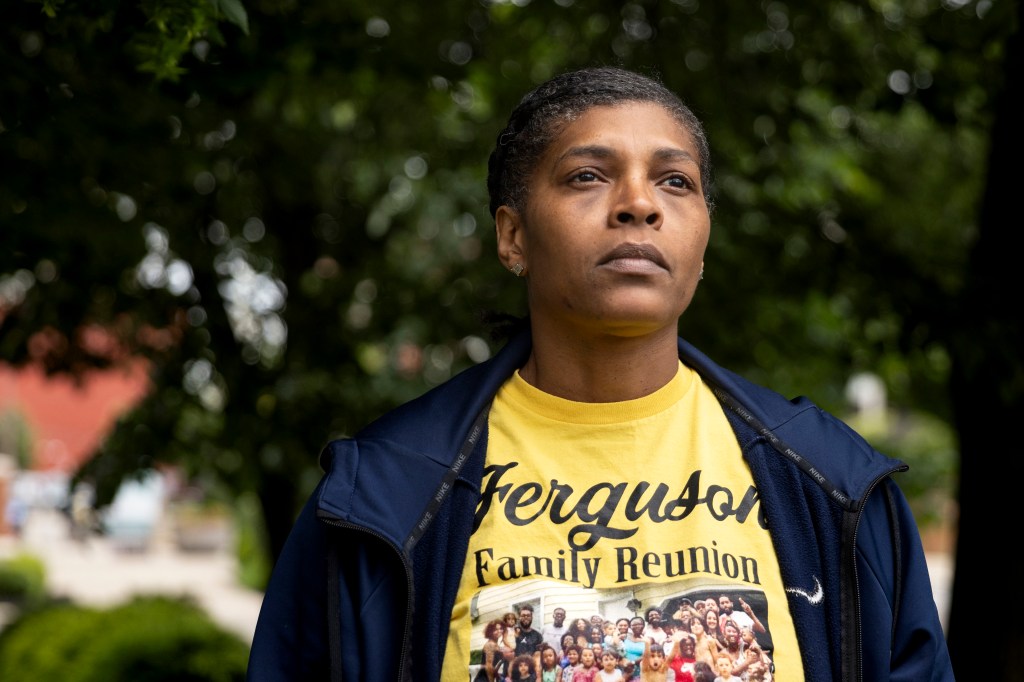
SPRINGFIELD, Ohio — Tyeesha Ferguson fears her 28-year-old son will kill or be killed.

“That’s what I’m trying to avoid,” said Ferguson, who still calls Quincy Jackson III her baby. She remembers a boy who dressed himself in three-piece suits, donated his allowance, and graduated high school at 16 with an academic scholarship and plans to join the military or start a business.

Instead, Ferguson watched as her once bright-eyed, handsome son sank into disheveled psychosis, bouncing between family members’ homes, homeless shelters, jails, clinics, emergency rooms, and Ohio’s regional psychiatric hospitals.

Over the past year, The Marshall Project – Cleveland and KFF Health News interviewed Jackson, other patients and families, current and former state hospital employees, advocates, lawyers, judges, jail administrators, and national behavioral health experts. All echoed Ferguson, who said the mental health system makes it “easier to criminalize somebody than to get them help.”

State psychiatric hospitals nationwide have largely lost the ability to treat patients before their mental health deteriorates and they are charged with crimes. Driving the problem is a meteoric rise in the share of patients with criminal cases who stay significantly longer, generally by court order.

Patients Wait or Are Turned Away

Across the nation, psychiatric hospitals are short-staffed and consistently turn away patients or leave them waiting with few or no treatment options. Those who do receive beds are often sent there by court order after serious criminal offenses.

In Ohio, the share of state hospital patients with criminal charges jumped from about half in 2002 to around 90% today.

The surge has coincided with a steep decline in total state psychiatric hospital patients served, down 50% in Ohio in the past decade, from 6,809 to 3,421, according to the U.S. Substance Abuse and Mental Health Services Administration. During that time, total patients served nationwide dropped about 17%, from 139,434 to 116,320, with state approaches varying widely, from adding community services and building more beds to closing hospitals.

Ohio Department of Behavioral Health officials declined multiple interview requests for this article.

The decline in capacity at state facilities unfurled as a spate of local hospitals across the country shuttered their psychiatric units, which disproportionately serve patients with Medicaid or who are uninsured. And the financial stability of local hospital mental health services is likely to deteriorate further after Congress passed President Donald Trump’s One Big Beautiful Bill Act, which slashes nearly $1 trillion from the federal Medicaid budget over the next decade.

The constricted flow of new patients through state hospitals is “absolutely” a crisis and “a huge deal in Ohio and everywhere,” said retired Ohio Supreme Court Justice Evelyn Lundberg Stratton. As co-chair of the state attorney general’s Task Force on Criminal Justice and Mental Illness, Lundberg Stratton has spent decades searching for solutions.

“It hurts everybody who has someone who needs to get a hospital bed that’s not in the criminal justice system,” she said.

‘It’s Heartbreaking’

Quincy Jackson III’s white socks stuck out of the end of a hospital bed as police officers stood watch.

At 5 feet, 7 inches tall, Jackson has a stocky build and robotic stare. Staff at Blanchard Valley Hospital in Findlay, Ohio, had called for help, alleging Jackson had assaulted a security guard.

“I’m sick; I take medication,” Jackson said to the officers, according to law enforcement body camera footage. His hands were cuffed behind his back as he lay on the bed, a loose hospital gown covering him.

Ferguson called it one of his “episodes” and said her son experienced severe psychosis frequently. In one incident, she said, Jackson “went for a knife” at her home.

From December 2023 through this July, Jackson was arrested or cited in police reports on at least 17 occasions. He was jailed at least five times and treated more than 10 times at hospitals, including three state-run psychiatric facilities. A recent psychiatric evaluation noted that Jackson has been in and out of community and state facilities since 2015.

Jackson is among a glut of people nationwide with severe mental illness who overwhelm community hospitals, courtrooms, and jails, eventually leading to backlogs at state hospitals.

High-Profile Incidents

That dearth of care is often cited by families, law enforcement authorities, and mental health advocates after people struggling with severe mental illness harm others. In the past six months, at least four incidents made national headlines.

In August, a homeless North Carolina man reportedly diagnosed with schizophrenia fatally stabbed a woman on a train. Also in August, police said a Texas gunman with a history of mental health issues killed three people, including a child, at a Target store. In July, a homeless Michigan man who family members said had needed treatment for decades attacked 11 people at a Walmart store with a knife. In June, police shot and killed a Florida man reportedly diagnosed with schizophrenia after authorities said he attacked law enforcement.

Mark Mihok, a longtime municipal judge near Cleveland, told a spring gathering of judges and lawyers that he had never seen so many people with serious mental illnesses living on the streets and “now punted into the criminal justice system.”

37-Day Wait for a Bed

At Blanchard Valley Hospital, sheriff’s deputies had taken Jackson from jail for a mental health check. But Jackson’s actions raised concerns.

In the body camera video, a nurse said Jackson was “going to be here all weekend. And we’re going to be calling you guys every 10 minutes.”

The officer responded: “Yeah, well, if he keeps acting like that, he’s going to go right back” to the county jail.

Within minutes, Jackson was taken back to jail, yelling at the officers: “Kill me, motherf—–. Yeah, shoot them, shoot them. Pop!”

Statewide, Ohio has about 1,100 beds in its six regional psychiatric hospitals. In May, the median wait time to get a state bed was 37 days.

That’s “a long time to be waiting in jail for a bed without meaningful access to mental health treatment,” said Shanti Silver, a senior research adviser at the national nonprofit Treatment Advocacy Center.

Long waits, often leaving people who need care lingering in jails, have drawn lawsuits in several states, including Kansas, Pennsylvania, and Washington, where a large 2014 class action case forced systemic changes such as expansion of crisis intervention training and residential treatment beds.

Ohio officials noticed bed shortages as early as 2018. State leaders assembled task forces and expanded treatment in jails. They launched community programs, crisis units, and a statewide emergency hotline.

Yet backlogs at the Ohio hospitals mounted.

Ohio Department of Behavioral Health Director LeeAnne Cornyn, who left the agency in October, wrote in a May emailed statement that the agency “works diligently to ensure a therapeutic environment for our patients, while also protecting patient, staff, and public safety.”

Eric Wandersleben, director of media relations and outreach for the department, declined to respond to detailed questions submitted before publication and, instead, noted that responses could be publicly found in a governor’s working group report released in late 2024.

Elizabeth Tady, a hospital liaison who also spoke to judges and lawyers at the May gathering, said 45 patients were waiting for beds at Northcoast Behavioral Healthcare, the state psychiatric hospital serving the Cleveland region.

“It’s heartbreaking for me and for all of us to know that there are things that need to be done to help the criminal justice system, to help our communities, but we’re stuck,” she said.

Ohio officials added 30 state psychiatric beds by replacing a hospital in Columbus and are planning a new 200-bed hospital in southwestern Ohio.

Still, Ohio Director of Forensic Services Lisa Gordish told the gathering in Cleveland that adding capacity alone won’t work.

“If you build beds — and what we’ve seen in other states is that’s what they’ve done — those beds get filled up, and we continue to have a waitlist,” she said.

This year, Jackson waited 100 days in the overcrowded and deadly Montgomery County jail for a bed at a state hospital, according to jail records.

Ferguson said she was afraid to leave him there but could not bail him out, in part, she said, because her son cannot survive on his own.

“There’s no place for my son to experience symptoms in the state of Ohio safely,” Ferguson said.

Sick System

Patrick Heltzel got the extended treatment Ferguson has long sought for her son, but he stabbed a 71-year-old man to death before getting it.

The 32-year-old is one of more than 1,000 patients receiving treatment in Ohio’s psychiatric hospitals.

“People need long-term care,” Heltzel said in October, calling from inside Heartland Behavioral Healthcare, near Canton, where he has lived for more than a decade after being found not guilty by reason of insanity of aggravated murder. Inpatient care, he said, helps patients figure out what medication regimen will work and deliver the therapy needed “to develop insight.”

As he spoke, the sound of an open room and patients chatting filled the background.

“You have to know, ‘OK, I have this chronic condition, and this is what I have to do to treat it,’” Heltzel said.

As the ranks of criminally charged patients in Ohio’s hospitals have increased over the past decade, the shift has had an impact on patient care: The hospitals have endangered patients, have become more restrictive, and are understaffed, according to interviews with Heltzel, other patients, and former staff members, as well as documents obtained through public records requests.

Escapes and a Lockdown

Katie Jenkins, executive director of the National Alliance on Mental Illness Greater Cleveland, said the shift from mostly civil patients, who haven’t been charged with a crime, to criminally charged patients has changed the hospitals.

“It’s hard in our state hospitals right now,” she said. Unfortunately, she said, patients who have been in jail bring that culture to the hospitals.

In the first 10 months of 2024, at least nine patients escaped from Ohio’s regional psychiatric hospitals — compared with three total in the previous four years, according to state highway patrol reports.

In one instance, two female patients at Summit Behavioral Healthcare near Cincinnati escaped after one lunged at a staff member. In another, a man broke a window and climbed out.

Most of the escapes, though, were not violent. Days after a patient at Northcoast jogged away during a trip to the dentist in a Cleveland suburb, state officials stopped allowing patients to leave any of the six regional hospitals.

A memo to leaders at the hospitals said officials had seen “similarities across multiple facilities,” raising significant concern about “ensuring patient and public safety.”

For Heltzel, the inability to go on outings or to his mother’s house on the weekends was a setback for his treatment. In 2024, when the lockdown began, he had more freedom than most patients at the psychiatric hospitals, regularly leaving to go to the local gym and attend off-site group therapy.

His mother signed him out each Friday to go home for the weekend, where he drove a car and played with his 2-year-old German shepherd, Violet. On Sundays, Heltzel was part of the “dream team” at church, volunteering to operate the audio and slides.

Federal records reveal that, at Ohio’s larger state-run psychiatric hospitals, including Summit and Northcoast, patients and staff have faced imminent danger.

In 2019 and 2020, federal investigators responded to patient deaths, including two suicides in six months at Northcoast. One hospital employee told federal inspectors, “The facility has been understaffed for a while and it’s getting worse,” according to the federal report. “It is very dangerous out here.”

Disability Rights Ohio, which has a federal mandate to monitor the facilities, filed a lawsuit in October against the department. The advocacy group, alleging abuse and neglect, asked for records of staff’s response to a Northcoast patient who suffocated from a plastic bag over their head. At the end of October, the court docket showed the parties had settled the case.

Retired sheriff’s deputy Louella Reynolds worked as a police officer at Northcoast for about five years before leaving in 2022. She said the increase in criminally charged patients meant the hospitals “absolutely” became less safe. Her hip still hurts from a patient who threw her against a cement wall.

Reynolds said officers should be able to carry weapons, which they don’t, and that more staff are needed to handle the patients. Mandatory overtime was common, she said, and often staff would report to work and not “know when we would get off.”

A Disaster That Wasn’t Averted

Back at Heartland, Heltzel requested conditional release. The judge denied the release request.

Heltzel said it was devastating. He grew up Catholic and said, “I was kind of looking for absolution.”

Now, Heltzel said he is practicing acceptance. “Acceptance is all the more important to practice when you don’t agree with something,” Heltzel said, adding, “I’m a ward of the state.”

He still hopes to be released: “I just do what I can to move forward.”

Heltzel, like Jackson, had been hospitalized before and released.

In early 2013, Heltzel said, he asked his dad to kill him. “And he refused and I did smack him,” he said. Heltzel was sent to Heartland for a short stay — about 10 days, according to his mother, Jan Dyer. She recalled “begging” the hospital staff to keep him.

Heltzel said he remembers not being ready to leave: “I was still sick, and I was still delusional.” Back at home, he said, he had a “sense of existential dread, like that all this horrible stuff was going to happen.” He stopped taking his medication.

Within weeks, Heltzel killed 71-year-old Milton A. Grumbling III at his home, placing him in a chokehold and stabbing him repeatedly, according to court records. He beat him with a remote control and then left, taking a Bible from the home, as well as a ring. Delusional with schizophrenia, Heltzel believed that Grumbling had sexually abused him in another life, according to the records.

A family member of the man he killed told the judge in 2023 that Heltzel should “stay in prison,” according to court records.

In denying his conditional release, judges cited Heltzel’s failure to take medication before killing Grumbling.

Jenkins, who said she worked at a state hospital for nine years before becoming the lead advocate for NAMI Greater Cleveland, said psychiatric medications can take as long as six weeks to become fully effective.

“So clients aren’t even getting stabilized when they’re being hospitalized,” Jenkins said.

‘He’s Not a Throwaway Child’

In a July interview, Jackson said inconsistent care or unmedicated time in jail “worsens my symptoms.” Jackson was on the phone during a stay at a state psychiatric hospital.

Without medicine, “my head hurts, to be honest,” Jackson said, before asking to get off the phone because he was hungry. It was lunchtime. “Can you get the information from my mom?” Jackson said. “She has the records.”

After Jackson hung up the phone, Ferguson explained that “he says the food is excellent, so he does not want to miss it.” And, she added, the hospital staff had not yet seen the explosive side of her son.

In early September, after 45 days at Summit — his longest stay yet at a state psychiatric hospital — Jackson returned to the Montgomery County jail facing misdemeanor charges because of an altercation in April with staff at a Dayton behavioral health hospital. In court, Ferguson said, her son struggled to explain to the judge why he was there. On a video call from the jail days later, she saw him playing with his hair and ears.

“That tells me he’s not OK,” Ferguson said.

Before Jackson’s diagnosis more than a decade ago, Ferguson said, her son wasn’t a troublemaker. He had goals and dreams. And he’s still “loved and liked by a lot of people.”

“He’s not a throwaway child,” she said.

The Marshall Project – Cleveland is a nonprofit news team covering Ohio’s criminal justice systems.

KFF Health News is a national newsroom that produces in-depth journalism about health issues and is one of the core operating programs at KFF—an independent source of health policy research, polling, and journalism. Learn more about KFF.

USE OUR CONTENT

This story can be republished for free (details).

In the Vast Expanses of Indian Country, Broadband Gaps Create Health Gaps, Too

FORT HALL RESERVATION, Idaho — Standing atop Ferry Butte, Frances Goli scanned the more than half a million acres of Shoshone-Bannock tribal land below as she dug her hands into the pockets of a pink pullover.

The April wind was chilly at one of the tribes’ highest vistas in remote southeastern Idaho.

“Our goal is to bring fiber out here,” Goli said, sweeping one hand across the horizon. The landscape below is scattered with homes, bordered in the east by snowcapped mountain peaks and to the west by “The Bottoms,” where tribal bison graze along the Snake River.

In between, on any given day, a cancer patient drives to the reservation’s casino to call doctors. A young mother asks one child not to play video games so another can do homework. Tribal field nurses update charts in paper notebooks at patients’ homes, then drive back to the clinic to pull up records, send orders, or check prescriptions.

Three years ago, the Shoshone-Bannock Tribes were awarded more than $22 million during the first round of the federal Tribal Broadband Connectivity Program. But tribes that were awarded millions in a second round of funding saw their payments held up under the Trump administration. Last month, federal leaders announced modifications to tribal broadband programs as part of a larger effort to “reduce red tape.” The National Telecommunications and Information Administration said it plans to “promote flexibility” and launch a new grant in the spring.

Federal regulators declined to provide details. The announcement comes after a year of upheaval for federal broadband programs, including the elimination of Digital Equity Act funding, which President Donald Trump has called “racist,” and a restructured $42 billion Broadband, Equity, Access, and Deployment program, which U.S. Commerce Secretary Howard Lutnick said was influenced by “woke mandates.”

Across Indian Country and on the Fort Hall Reservation, high-speed internet service gaps persist despite billions set aside for tribes. In early November, U.S. Sens. Maria Cantwell (D-Wash.) and Brian Schatz (D-Hawaii) asked federal agency leaders why funds already awarded had not been released to tribes and whether federal regulators were providing adequate technical assistance.

So far, the $3 billion tribal program has announced $2.24 billion in awards for 275 projects nationwide. But tribes that won awards have drawn down only about $500 million, according to a recent update from the Commerce Department’s Office of Inspector General.

The agency has initiated tribal consultation on the broadband programs, offering tribal leaders two dates in January for online meetings.

The Shoshone-Bannock Tribes have drawn down less than 2% of their awarded funding and the program has not yet connected a single household, Goli said. NTIA spokesperson Stephen Yusko said the Shoshone-Bannock Tribes are still slated to get their full grant award and, he confirmed, future spending will not be subject to the administration’s recalibrations.

Gaps in high-speed internet can be profound and urgent on tribal lands. Tribal members are historically underserved and, on average, live with the highest rates of chronic illnesses and die 6.5 years earlier than the average U.S. resident.

Diabetes and high suicide rates are among the most pernicious tribal health challenges — and federal research confirms telehealth can improve health outcomes. A KFF Health News analysis showed that people tend to live sicker and die younger in America when they live in dead zones, or places where poor internet access intersects with shortages of health care providers, leaving patients who need it most unable to use telehealth.

“We’re in survival mode,” said Nancy Eschief Murillo, a longtime Shoshone-Bannock leader. The tribes, which have an on-site clinic, need more health care both in person and with telehealth, she said. “Right now, our reservation? We don’t have accessibility.”

‘Not 100% Accurate’

Inside a trailer that serves as the temporary headquarters for Fort Hall’s tribal broadband office, Goli sat at a desk in June and scanned the Federal Communications Commission’s most recent online map of the reservation.

As the tribes’ broadband project manager, Goli didn’t like what she saw on the map. Blue hexagons highlighted varying rates of high-speed coverage and signified that high-speed internet is available on much of the reservation. Companies have told federal regulators they provide fast transmission speeds to homes there.

“These are untrue,” Goli said. Fort Hall has about 2,400 households, and nearly all of them live without high-speed internet, she said.

When it comes to tracking who on a reservation has high-speed internet, “everybody acknowledges, including the FCC, that the map is not 100% accurate,” said Robert Griffin, co-chair of the Fiber Broadband Association Tribal Committee, an industry trade group. He is also the broadband director for the Choctaw Nation of Oklahoma.

Attempting to correct the maps is one of the many tasks Goli has taken on since becoming the Shoshone-Bannock Tribes’ broadband project manager in January 2023 — seven months after the tribes won the award.

A series of hurdles, including flaws in the plan initially approved by the federal government and a cyberattack, have delayed the project, she said. The attack hit in August 2024 and for months shut down nearly all phones and computers on the reservation.

“We didn’t have access to any of our information,” Goli told KFF Health News this month, adding that the tribes are still “in recovery mode” from the attack.

Goli, who grew up on the reservation and still plays basketball at the tribal gym, left her job as a data analyst in Seattle to return home to be with family and to work. For two years, and with no broadband industry experience, Goli has overseen the multimillion-dollar grant without a staff.

Her first task, she said, was to collect data that could help create a realistic plan to deliver broadband to every home on the reservation. “Data tells a story,” Goli said.

Fort Hall and many other tribal lands are remote with rugged, expansive terrain. To build fiber-optic cables underground, the tribes must navigate lava rock and work with the Bureau of Indian Affairs to get permits. To build communications towers, the tribes must ensure they follow migratory bird rules for American bald eagles. To provide wireless connections, the tribes must buy or license spectrum from federal regulators, Goli said.

When the federal tribal broadband program launched, more than 300 tribal applicants — pitching projects totaling $5 billion  — submitted requests to the NTIA. During a later round of funding, more than 160 tribal applicants asked for more than $2.6 billion, even though only $980 million was available. There are 574 federally recognized tribes in the United States.

The tribal program funding was not enough to “build out Indian Country,” said Joe Valandra, chief executive and chairman of the broadband consulting firm Tribal Ready. Valandra is a member of the Rosebud Sioux Tribe of South Dakota.

Congress created the tribal program to be used in combination with funds from the larger $42 billion Broadband, Equity, Access, and Deployment, or BEAD, program, Valandra said.

But now, it seems “the administration has no appetite for expensive broadband infrastructure builds in rural areas,” said Jessica Auer, a senior researcher with the community broadband networks team at the Institute for Local Self-Reliance, a research and advocacy nonprofit.

Auer, who has followed the implementation of tribal programs, said the administration may think the money already given to states for BEAD, as well as the use of satellite internet connections, will be enough for tribal lands.

“They seem to have a strong interest in declaring this problem solved,” she said. Low-earth-orbit satellites, though, are costly for the consumer and do not always offer the consistent high speeds they should, she said.

Goli’s plan does not include the use of satellites. On Fort Hall, the few households that have fast speeds now buy Starlink, but tribal leaders say the $80 to $120 monthly subscription costs are too expensive for most members.

The newly revised plan will use a hybrid of fiber-optic cables and wireless internet to ensure that people can “live their lives, whether it be health, education, telehealth,” Goli said.

The Test

Ladd Edmo, a councilman for the Shoshone-Bannock Tribes, thinks the tribal broadband project is taking too long.

Goli “is doing the best she can,” Edmo said.

But when he thinks about the millions waiting to be spent, Edmo said, he worries federal regulators “can just grab it back.”

“I’m not afraid of the current administration,” said Edmo, who is in his fifth term on the tribes’ business council. “I just think that they’re looking for money everywhere they can.”

Edmo lives about half a mile from the Fort Hall townsite and said he can’t really use his internet because he “gets a tremendous amount of buffering.” When he travels to doctors for his prostate cancer treatment, Edmo has them print paper schedules to keep track of his treatment.

He said he is not a big fan of telehealth, “probably because I don’t know how to use it.”

For 53-year-old Carol Cervantes Osborne, who also lives on the reservation, having internet is a necessity. Osborne is in constant pain from severe rheumatoid arthritis.

“I’m just all broke down,” Osborne said as she stared at the open pasture last June. She talked about how she misses riding cattle roundups. At times, Osborne has been bed-bound because of her arthritis and bad knees. She said she tapped her credit line, which uses land and cattle as collateral, and signed up for Starlink so that she can connect with doctors remotely through telehealth appointments.

“I’m poor because of it, but we’ve got to have it,” Osborne said.

Meanwhile, nearly 15 months after the cyberattack, Goli said the tribes are beginning to hire vendors.

“Things happen very slow when it comes to processing things in the tribal government,” Goli said, adding there are a lot of “checks and balances.”

This month — as the holidays approached — Goli said she was excited.

“We’ve actually started our first segment of fiber,” Goli said. The engineering work is done, and they have begun issuing permits, she said. The fiber-optic lines, built by a private vendor, will cover a two-mile segment on the northern end of the reservation. The line will come from outside the reservation and connect to the tribes’ data hub, which is an old radio station still being converted into broadband offices.

“It’s our first segment, and we’re really using this as a test,” Goli said.

Eventually, the old radio station will be central to operations, with fiber-optic cable lines that web out over about 800 square miles to reach the reservation’s five district lodges. Each lodge will establish a communications tower, which will use the fiber line to power wireless antennas that will then provide high-speed internet to the reservation’s most remote homes.

Goli said the tribes are applying for another extension — and, she said, they would not be the only award winners of the Tribal Broadband Connectivity Program to ask for more time. Working with tribes, she said, takes time.

“It really saddens me that we’ve been left behind all these years,” Goli said, but “this is our opportunity. We want to do it right, slow and steady.”

Sarah Jane Tribble, KFF Health News’ chief rural correspondent, spent more than a year interviewing Frances Goli through calls, texts, and emails. She traveled to Fort Hall Reservation twice, having received tribal approval to visit the land: in spring 2024 and again in summer 2025. Tribble also reviewed publicly requested copies of the tribal contract and interviewed dozens of industry and regulatory broadband experts.

KFF Health News is a national newsroom that produces in-depth journalism about health issues and is one of the core operating programs at KFF—an independent source of health policy research, polling, and journalism. Learn more about KFF.

USE OUR CONTENT

This story can be republished for free (details).

Oregon Hospital Races To Build a Tsunami Shelter as FEMA Fights To Cut Its Funding

ASTORIA, Ore. — Residents of this small coastal city in the Pacific Northwest know what to do when there’s a tsunami warning: Flee to higher ground.

For those in or near Columbia Memorial, the city’s only hospital, there will soon be a different plan: Shelter in place. The hospital is building a new facility next door with an on-site tsunami shelter — an elevated refuge atop columns deeply anchored in the ground, where nearly 2,000 people can safely wait out a flood.

Oregon needs more shelters like the one that Columbia Memorial is building, emergency managers say. Hospitals in the region are likely to incur serious damage, if not ruin, and could take more than three years to fully recover in the event of a major earthquake and tsunami, according to a state report.

Columbia Memorial’s current facility is a single-story building, made of wood a half-century ago, that would likely collapse and sink into the ground or be swallowed by a landslide after a major earthquake or a tsunami, said Erik Thorsen, the hospital’s chief executive.

“It is just not built to survive either one of those natural disaster events,” Thorsen said.

At least 10 other hospitals along the Oregon coast are in danger as well. So Columbia Memorial leaders proposed building a hospital capable of withstanding an earthquake and landslide, with a tsunami shelter, instead of relocating the facility to higher ground. Residents and state officials supported the plans, and the federal government awarded a $14 million grant from the Federal Emergency Management Agency to help pay for the tsunami shelter.

The project broke ground in October 2024. Within six months, the Trump administration had canceled the grant program, known as Building Resilient Infrastructure and Communities, or BRIC, calling it “yet another example of a wasteful and ineffective FEMA program … more concerned with political agendas than helping Americans affected by natural disasters.”

Molly Wing, director of the expansion project, said losing the BRIC grant felt like “a punch to the gut.”

“We really didn’t see that coming,” she said.

This summer, Oregon and 19 other states sued to restore the FEMA grants. On Dec. 11, a judge ruled that the Trump administration had unlawfully ended the program without congressional approval.

The administration did not immediately indicate it would appeal the decision, but Department of Homeland Security spokesperson Tricia McLaughlin said by email: “DHS has not terminated BRIC. Any suggestion to the contrary is a lie. The Biden Administration abandoned true mitigation and used BRIC as a green new deal slush fund. It’s unfortunate that an activist judge either didn’t understand that or didn’t care.” FEMA is a subdivision of DHS.

Columbia Memorial was one of the few hospitals slated to receive grants from the BRIC program, which had announced more than $4.5 billion for nearly 2,000 building projects since 2022.

Hospital leaders have decided to keep building — with uncertain funding — because they say waiting is too dangerous. With the Trump administration reversing course on BRIC, fewer communities will receive help from FEMA to reduce their disaster risk, even places where catastrophes are likely.

More than three centuries have passed since a major earthquake caused the Pacific Northwest’s coastline to drop several feet and unleashed a tsunami that crashed onto the land in January 1700, according to scientists who study the evolution of the Oregon coast.

The greatest danger is an underwater fault line known as the Cascadia Subduction Zone, which lies 70 to 100 miles off the coast, from Northern California to British Columbia.

The Cascadia zone can produce a megathrust earthquake, with a magnitude of 9 or higher — the type capable of triggering a catastrophic tsunami — every 500 years, according to the U.S. Geological Survey. Scientists predict a 10% to 15% chance of such an earthquake along the fault zone in the next 50 years.

“We can’t wait any longer,” Thorsen said. “The risk is high.”

Building for the Future

The BRIC program started in 2020, during the first Trump administration, to provide communities and institutions with funding and technical assistance to fortify their structures against natural disasters.

Joel Scata, a senior attorney with the environmental advocacy group Natural Resources Defense Council, said the program helped communities better prepare so they could reduce the cost of rebuilding after a flood, tornado, wildfire, or extreme weather event.

To qualify for a grant, a hospital had to show that the project’s benefits were greater than the future danger and cost. In some cases, that benefit might not be readily apparent.

“It prevents bad disasters from happening, and so you don’t necessarily see it in action,” Scata said.

Scata noted that the Trump administration has also stopped awarding grants through FEMA’s Hazard Mitigation Grant Program, which predates BRIC.

“There really is no money going out the door from the federal government to help communities reduce their disaster risk,” he said.

A recent KFF Health News investigation using proprietary data from Fathom, a global leader in flood modeling, found that at least 170 U.S. hospitals are at risk of significant and potentially dangerous flooding from more intense and frequent storms. That count did not include Columbia Memorial, as Fathom’s data did not account for tsunamis. It models flooding from rivers, sea level rise, and extreme rainfall.

In recent days, an atmospheric river — a narrow storm band carrying significant amounts of moisture — dumped more than 15 inches of rain on parts of Oregon and Washington, causing catastrophic flooding along rivers and the coast. In the Washington town of Sedro-Woolley, which sits along the Skagit River, the PeaceHealth United General Medical Center evacuated nonemergency patients.

High winds battered Astoria, leaving the city with some minor landslides, according to news reports. But flooding on the road to the nearby beach town of Seaside made the drive nearly impassable.

The Trump administration is leaning on states to take greater responsibility for recovering from natural disasters, Scata said, but most states are not financially prepared to do so.

“The disasters are just going to keep on piling up,” he said, “and the federal government’s going to have to keep stepping in.”

A Hospital at Risk

Columbia Memorial is blocks from the southern shore of the Columbia River, near the Washington border, where the area’s natural hazards include earthquakes, tsunamis, landslides, and floods. A critical access hospital with 25 beds, it opened in 1977 — before state building codes addressed tsunami protections.

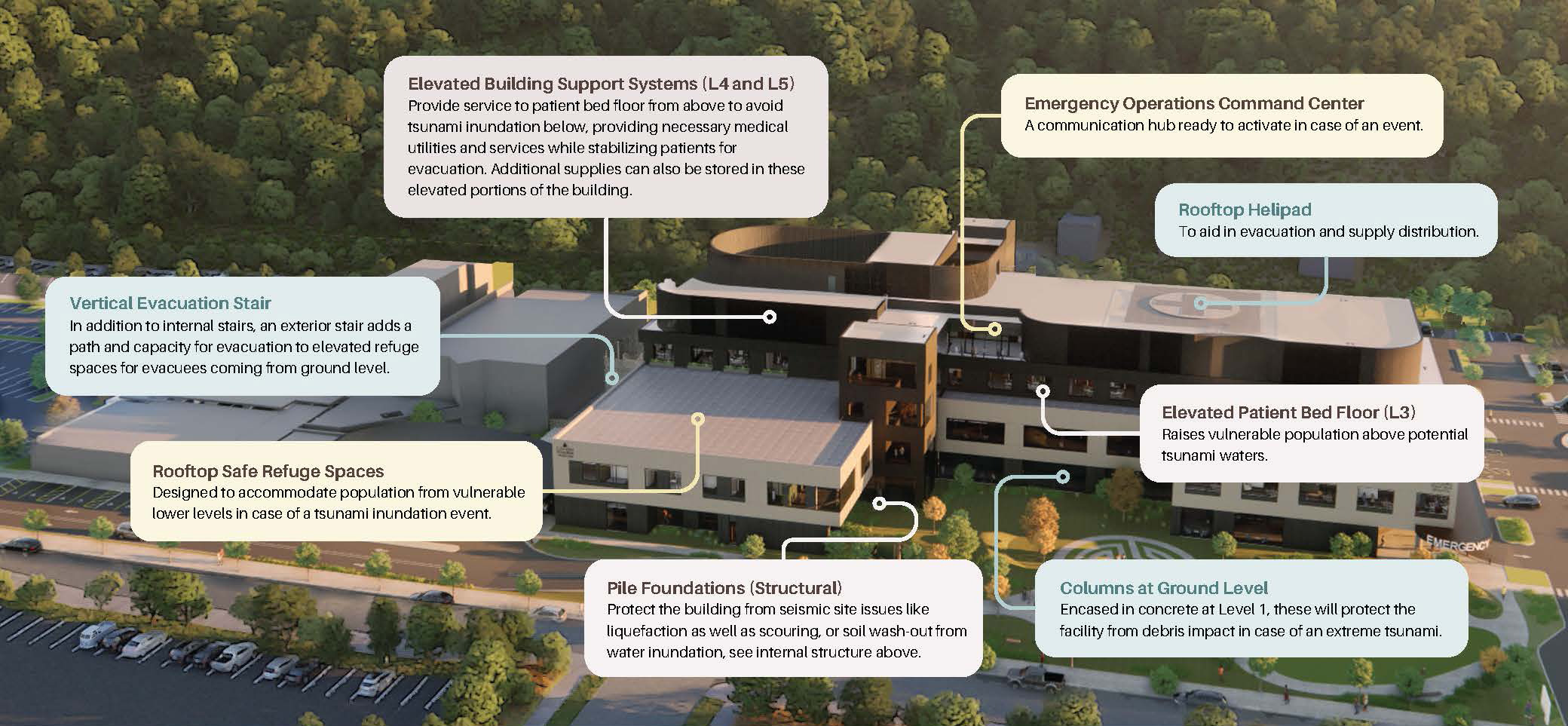
Thorsen said the new facility and shelter would be a “model design” for other hospitals. Design plans show a five-level hospital built atop a foundation anchored to the bedrock and surrounded by concrete columns to shield it from tsunami debris.

The shelter will be on the roof of the second floor, above the projected maximum tsunami inundation. It will be accessible via an outdoor staircase and interior staircases and elevators, with enough room for up to 1,900 people, plus food, water, tents, and other supplies to sustain them for five days.

With most patient care provided on the second and third levels, generators on the fourth level, and utility lines underground, the hospital is expected to remain operational after a natural disaster.

Thorsen said an earthquake and tsunami threaten not only vast flooding but also liquefaction, in which the ground loosens and causes structures above it to collapse. Deep foundations, thick slabs, and other structural supports are expected to protect the new hospital and tsunami structure against such failure.

Through the years, hospital administrators and civic leaders in Astoria have sought other locations for Columbia Memorial. But relocation wasn’t economical. Columbia Memorial committed to invest in a new hospital and tsunami shelter to protect not only patients and staff but also nearby residents.

“Your community should count on your hospital to be a safe haven in a natural disaster,” Thorsen said.

Fighting To Restore Funds

The estimated construction budget for Columbia Memorial’s expansion is $300 million, mostly financed through new debt from the hospital. The tsunami shelter is budgeted at about $20 million, for which FEMA’s BRIC program awarded nearly $14 million, with a $6 million matching grant from the state, which has maintained its support.

The shelter and the building’s structural protections — featuring reinforced steel, deeper foundations, and thicker slabs — are integral to the design and cannot be removed without compromising the rest of the structure, said Michelle Checkis, the project architect.

“We can’t pull the TVERS [tsunami vertical evacuation refuge structure] out without pulling the hospital back apart again,” she said. “It’s kind of like, if I was going to stack it up with Legos, I would have to take all those Legos apart and stack it up completely differently.”

Columbia Memorial has sought help from Oregon’s congressional delegation. In a letter to Department of Homeland Security Secretary Kristi Noem and former FEMA acting administrator David Richardson, the lawmakers demanded that the agencies restore the hospital’s grant.

The hospital’s leadership is seeking other grants and philanthropic donations to make up for the loss. As a last resort, Thorsen said, the board will consider removing “nonessential features” from the building, though he added that there is little fat to trim from the project.

The lawsuit brought by states in July alleged that FEMA lacks the authority to cancel the BRIC program or redirect its funding for other purposes.

The states argued that canceling the program ran counter to Congress’ intent and undermined projects underway.

In their response to the lawsuit, the Trump administration said repeatedly that the defendants “deny that the BRIC program has been terminated.”

The lawsuit cites examples of projects at risk in each state due to FEMA’s termination of the grants. Oregon’s first example is Columbia Memorial’s tsunami shelter. “Neither the County nor the State can afford to resume the project without federal funding,” the lawsuit states.

In response to questions about the impact of canceling the grant on Astoria and the surrounding community, DHS spokesperson Tricia McLaughlin said BRIC had “deviated from its statutory intent.”

“BRIC was more focused on climate change initiatives like bicycle lanes, shaded bus stops, and planting trees, rather than disaster relief or mitigation,” McLaughlin said. DHS and FEMA provided no further comment about BRIC or the Astoria hospital.

Preparing for a Tsunami Disaster

Located near the end of the Lewis & Clark National Historic Trail, Astoria sits on a peninsula that juts into the Columbia River near the Pacific Ocean.

Much of the city is not in the tsunami inundation area. But Astoria’s downtown commercial district — where gift shops, hotels, and seafood restaurants line the streets — is nearly all an evacuation zone.

Two hospitals — Ocean Beach Health in nearby Washington, and Providence Seaside Hospital in Oregon — are about 20 miles from Columbia Memorial. Both are 25-bed hospitals, and neither is designed to withstand a tsunami.

Ocean Beach Health regularly conducts drills for mass-casualty and natural disasters, said Brenda Sharkey, its chief nursing officer.

“We focus our planning and investments on areas where we can make a real difference for our community before, during, and after an event — such as maintaining continuity of care, ensuring rapid triage, and coordinating with regional emergency partners,” Sharkey said in an email.

Gary Walker, a spokesperson for Providence Seaside, said in a statement that the hospital has a “comprehensive emergency plan for earthquakes and tsunamis, including alternative sites and mobile resources.”

Walker added that Providence Seaside has hired “a team of consultants and experts to conduct a conceptual resilience study” that would evaluate the hospital’s vulnerabilities and recommend ways to address them.

Oregon’s emergency managers advise residents and visitors in coastal communities to immediately seek higher ground after a major earthquake — and not to rely on tsunami sirens, social media, or most technology.

“There may not even be cellphone towers operating after an event like this,” said Jonathan Allan, a coastal geomorphologist with the Oregon Department of Geology and Mineral Industries. “The earthquake shaking, its intensity, and particularly the length of time in which the shaking persists, is the warning message.”

The stronger the earthquake and the longer the shaking, he said, the more likely a tsunami will head to shore.

A tsunami triggered by a Cascadia zone earthquake could strike land in less than 30 minutes, according to state estimates.

Many of Oregon’s seaside communities are near high-enough ground to seek safety from a tsunami in a relatively short time, Allan said. But he estimated that, to save lives, Oregon would need about a dozen vertical tsunami evacuation shelters along the coast, including in seaside towns that attract tourists and where the nearest high ground is a mile or more away.

Willis Van Dusen’s family has lived in Astoria since the mid-19th century. A former mayor of Astoria, Van Dusen stressed that tsunamis are not a hypothetical danger. He recalled seeing one in Seaside in 1964. The wave was only about 18 inches high, he said, but it flooded a road and destroyed a bridge and some homes. The memory has stayed with him.

“It’s not like … ‘Oh, that’ll never happen,’” he said. “We have to be prepared for it.”

KFF Health News correspondent Brett Kelman contributed to this report.

KFF Health News is a national newsroom that produces in-depth journalism about health issues and is one of the core operating programs at KFF—an independent source of health policy research, polling, and journalism. Learn more about KFF.

USE OUR CONTENT

This story can be republished for free (details).

Nueva tarifa de $100.000 por visa impuesta por Trump afecta a trabajadores de salud rurales

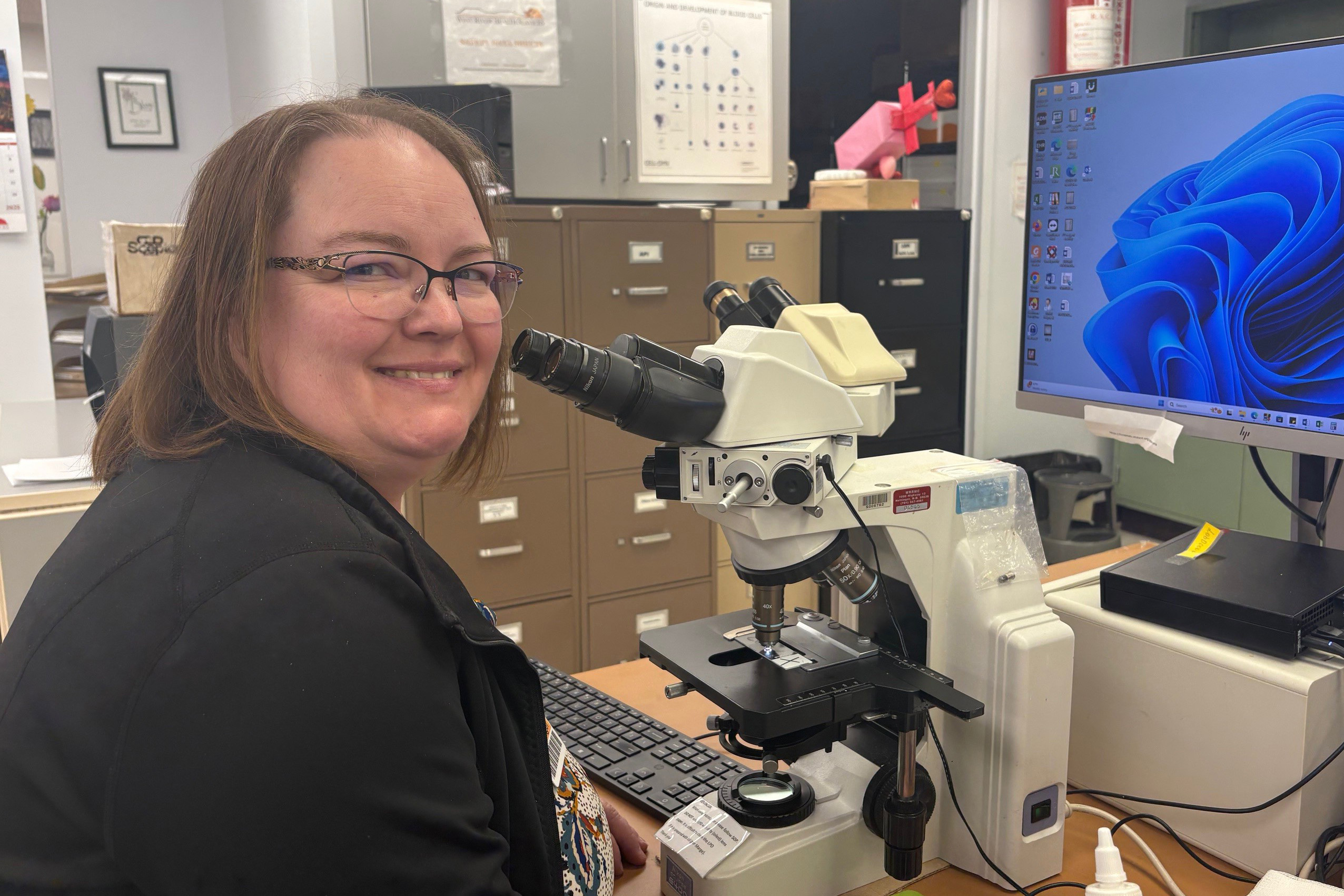
Bekki Holzkamm ha estado tratando de contratar a un técnico de laboratorio para un hospital en una zona rural de North Dakota desde finales del verano. Ningún ciudadano estadounidense presentó una solicitud.

West River Health Services, en Hettinger —un pueblo de unos 1.000 habitantes en el suroeste del estado— tiene cuatro opciones, y ninguna es buena.

El hospital podría pagar los $100.000 que cuesta la nueva tarifa de la visa H-1B impuesta por la administración Trump y contratar a uno de los más de 30 postulantes de Filipinas o Nigeria.

Pero esa cifra equivale a lo que algunos hospitales rurales pagarían por dos técnicos de laboratorio durante un año, señaló Holzkamm, quien es la jefa del laboratorio en el centro de salud.

West River también puede optar por pedir al Departamento de Seguridad Nacional una exención del pago. Pero no está claro cuánto tiempo tomaría el proceso ni si el gobierno la otorgaría. Otra posibilidad sería seguir tratando de reclutar a alguien dentro de Estados Unidos. O dejar la vacante sin cubrir, dijo Holzkamm, pero eso aumentaría la carga de trabajo del actual “equipo que ya es mínimo”.

El sistema de salud en Estados Unidos depende del personal nacido en el extranjero para cubrir plazas como médicos, enfermeros, técnicos y otros profesionales, especialmente en centros que siempre enfrentan escasez de personal en zonas rurales.

Pero una nueva orden presidencial dirigida al uso de visas H-1B en la industria tecnológica está dificultando que hospitales como West River y otros proveedores rurales los contraten.

“La industria de la salud ni siquiera fue considerada. Van a ser víctimas colaterales, y en un grado tan extremo que está claro que no se pensó en eso en absoluto”, dijo Eram Alam, profesora asociada en Harvard cuyo último libro examina la historia de los médicos extranjeros en Estados Unidos.

Elissa Taub, una abogada de Memphis, Tennessee, que asesora a hospitales en el proceso de solicitud de visas H-1B, ha escuchado preocupaciones similares de sus clientes.

“No es que haya un excedente de médicos o enfermeros estadounidenses esperando para llenar esas plazas”, dijo.

Hasta hace poco, West River y otros empleadores pagaban hasta $5.000 cada vez que patrocinaban a un trabajador con visa H-1B, que está reservada a trabajadores extranjeros altamente calificados.

La nueva tarifa de $100.000  —parte de una orden firmada en septiembre por Trump— se aplica a los trabajadores que viven fuera de Estados Unidos, pero no a quienes ya se encuentran en el país con una visa.

Kathrine Abelita, técnica de laboratorio en West River, es una de las nueve personas empleadas —seis técnicos y tres enfermeros— que actualmente tienen o han tenido visas H-1B. Abelita es originaria de Filipinas y trabaja en West River desde 2018. Ahora es residente permanente de Estados Unidos.

Respecto de la nueva tarifa, opinó: “Esto va a ser un gran problema para la atención médica rural”. Agregó que la mayoría de los trabajadores jóvenes estadounidenses prefieren vivir en áreas urbanas.

Según una encuesta del gobierno publicada en 2023, el 16% de las enfermeras registradas, el 14% de los asistentes médicos y el 14% de las enfermeras practicantes y parteras que trabajan en hospitales del país son inmigrantes.

Además, casi una cuarta parte de los médicos se graduaron en escuelas de medicina fuera de Estados Unidos o Canadá, según los registros de licencias de 2024.

La Asociación Americana de Hospitales (AHA, por sus siglas en inglés), dos organizaciones nacionales de salud rural y más de 50 sociedades médicas han solicitado al gobierno que exima al sector salud de este nuevo arancel. Argumentan que el alto costo afectará de manera desproporcionada a las comunidades rurales que ya enfrentan dificultades para financiar y atraer personal médico.

“Una excepción general para los proveedores de salud es la solución más sencilla”, escribieron en una carta conjunta la Asociación Nacional de Salud Rural (NRHA, por sus siglas en inglés) y la Asociación Nacional de Clínicas Rurales de Salud.

La disposición contempla exenciones para personas, trabajadores de empresas específicas e incluso industrias completas, siempre que sea en función del “interés nacional”.

Las nuevas directrices indican que la exención solo se otorgará en circunstancias “extraordinariamente raras”, esto implica demostrar que no hay trabajadores estadounidenses disponibles para el puesto y que obligar a la empresa a pagar los $100.000 “socavaría significativamente” los intereses nacionales.

Taub calificó esos requisitos como “extraordinariamente estrictos”.

Representantes de la NRHA y de la Asociación Médica Americana (AMA, por sus siglas en inglés), que organizó la carta firmada por las sociedades médicas, dijeron que no han recibido respuesta luego de enviar solicitudes a la secretaria de Seguridad Nacional, Kristi Noem, entre finales de septiembre y principios de octubre. La AHA no quiso decir si obtuvo alguna respuesta.

Funcionarios del Departamento de Seguridad Nacional remitieron las preguntas de KFF Health News a la Casa Blanca, que no respondió sobre los plazos para las exenciones individuales ni sobre la posibilidad de una excepción general para el sector salud.

En cambio, la vocera de la Casa Blanca, Taylor Rogers, envió una declaración en defensa del nuevo arancel, diciendo que busca “poner a los trabajadores estadounidenses en primer lugar”.

Sus comentarios reflejan el enfoque de la orden de Trump, que acusa a la industria tecnológica de abusar del programa H-1B al reemplazar a empleados estadounidenses por trabajadores extranjeros peor pagados. Pero la orden incluye a todos los sectores.

Alam, la profesora de Harvard, señaló que la dependencia que tiene el país de proveedores internacionales plantea preocupaciones legítimas, como el hecho de que se está atrayendo profesionales de países de bajos ingresos que enfrentan desafíos sanitarios y escasez de personal aún mayores que los de Estados Unidos.

Esta dependencia, que lleva décadas, se debe, explicó, al aumento poblacional, a que las facultades de medicina históricamente excluyeron a hombres no blancos, y al hecho de que resulta “mucho, mucho más barato” importar profesionales formados en el extranjero que invertir en ampliar la educación médica dentro del país.

Según un análisis de encuestas y estudios, los médicos formados en el extranjero suelen trabajar en zonas rurales o urbanas empobrecidas y con servicios limitados.

Este año, cerca de un millar de trabajadores con visas H-1B han estado empleados en zonas rurales, según la carta enviada por las dos organizaciones de salud rural al gobierno de Trump.

Las visas J-1, que son las más comunes entre los médicos extranjeros que realizan su residencia y otra formación de posgrado en Estados Unidos, exigen que los aspirantes regresen a su país de origen durante dos años antes de solicitar una visa H-1B.

Sin embargo, un programa gubernamental conocido como Conrad 30 Waiver Program permite que, cada año, hasta 1.500 personas con visa J-1 permanezcan en Estados Unidos y soliciten una H-1B a cambio de trabajar durante tres años en áreas con escasez de proveedores, incluidas muchas comunidades rurales.

La disposición presidencial de Trump indica que los empleadores que patrocinan a trabajadores con H-1B que ya se encuentran en el país —como los médicos con estas exenciones— no tendrán que pagar la tarifa de seis cifras. Esa excepción fue aclarada en una guía publicada aproximadamente un mes después de la normativa.

Pero los empleadores deberán pagar la nueva tasa si contratan médicos u otros trabajadores que solicitan la visa desde otros países.

Alyson Kornele, directora ejecutiva de West River Health Services, dijo que la mayoría de las enfermeras y técnicos de laboratorio extranjeros que emplea el hospital están fuera de Estados Unidos al momento de presentar la solicitud.

Ivan Mitchell, director ejecutivo de Great Plains Health en North Platte, Nebraska, dijo que la mayoría de los médicos de su hospital con visa H-1B ya estaban en el país con otro tipo de visa cuando se postularon. Pero mencionó que los fisioterapeutas, enfermeros y técnicos de laboratorio suelen solicitarla desde el extranjero.

Según Holzkamm, antes del nuevo arancel, contratar a solicitantes con visa H-1B para su laboratorio tomaba entre cinco y ocho meses.

Bobby Mukkamala, cirujano y presidente de la Asociación Médica Estadounidense, dijo que tanto los legisladores republicanos como los demócratas están preocupados por las consecuencias que esto tendrá en la atención médica rural.

Entre ellos se encuentra el líder de la mayoría en el Senado, John Thune, quien afirmó que planeaba comunicarse con el gobierno para plantear posibles exenciones.

“Queremos que el proceso sea más fácil, no más difícil; y menos costoso, no más caro, para quienes necesitan mano de obra”, dijo el republicano a KFF Health News en septiembre.

La oficina de Thune no respondió a las preguntas sobre si el senador ha tenido contacto con el gobierno respecto a posibles exenciones para personal médico.

El gobierno de Trump enfrenta al menos dos demandas judiciales que buscan bloquear la nueva tasa. Una de las demandas fue presentada por una empresa que recluta enfermeros extranjeros y un sindicato que representa a médicos recién graduados. Otra, elevada por la Cámara de Comercio de Estados Unidos, menciona la preocupación por la escasez de médicos y la capacidad de los sistemas de salud para asumir este nuevo costo.

Kornele dijo que West River no podrá pagar una tarifa de $100.000, por lo que está redoblando esfuerzos de reclutamiento y retención local.

Pero Holzkamm afirmó que no ha tenido éxito al buscar técnicos de laboratorio en las universidades de North Dakota, ni siquiera entre quienes realizan prácticas en el hospital. Agregó que West River no puede competir con los sueldos que se ofrecen en las ciudades más grandes.

“Es un ciclo muy negativo en este momento. Estamos en serios problemas”, dijo.

Phillip Reese es especialista en análisis de datos y profesor asociado de Periodismo en la California State University, Sacramento.

KFF Health News is a national newsroom that produces in-depth journalism about health issues and is one of the core operating programs at KFF—an independent source of health policy research, polling, and journalism. Learn more about KFF.

USE OUR CONTENT

This story can be republished for free (details).

Rural Health Providers Could Be Collateral Damage From $100K Trump Visa Fee

Bekki Holzkamm has been trying to hire a lab technician at a hospital in rural North Dakota since late summer.

Not one U.S. citizen has applied.

West River Health Services in Hettinger, a town of about 1,000 residents in the southwestern part of the state, has four options, and none is good.

The hospital could fork over $100,000 for the Trump administration’s new H-1B visa fee and hire one of the more than 30 applicants from the Philippines or Nigeria. The fee is the equivalent of what some rural hospitals would pay two lab techs in a year, said Holzkamm, who is West River’s lab manager.

West River could ask the Department of Homeland Security to waive the fee. But it’s unclear how long the waiver process would take and if the government would grant one. The hospital could continue trying to recruit someone inside the U.S. for the job. Or, Holzkamm said, it could leave the position unfilled, adding to the workload of the current “skeleton crew.”

The U.S. health care system depends on foreign-born professionals to fill its ranks of doctors, nurses, technicians, and other health providers, particularly in chronically understaffed facilities in rural America.

But a new presidential proclamation aimed at the tech industry’s use of H-1B visas is making it harder for West River and other rural providers to hire those staffers.

“The health care industry wasn’t even considered. They’re going to be collateral damage, and to such an extreme degree that it was clearly not thought about at all,” said Eram Alam, a Harvard associate professor whose new book examines the history of foreign doctors in the U.S.

Elissa Taub, a Memphis, Tennessee-based attorney who assists hospitals with the H-1B application process, has been hearing concerns from her clients.

“It’s not like there’s a surplus of American physicians or nurses waiting in the wings to fill in those positions,” she said.

Until recently, West River and other employers paid up to $5,000 each time they applied to sponsor an H-1B worker. The visas are reserved for highly skilled foreign workers.

The new $100,000 fee — part of a September proclamation by President Donald Trump — applies to workers living outside the U.S. but not those who were already in the U.S. on a visa.

West River lab tech Kathrine Abelita is one of nine employees — six technicians and three nurses — at the hospital who are current or former H-1B visa holders. Abelita is from the Philippines and has worked at West River since 2018. She’s now a permanent U.S. resident.

“It’s going to be a big problem for rural health care,” she said of the new fee. She said most younger American workers want to live in urban areas.

Sixteen percent of registered nurses, 14% of physician assistants, and 14% of nurse practitioners and midwives who work in U.S. hospitals are immigrants, according to a 2023 government survey. Nearly a quarter of physicians in the U.S. went to medical school outside the U.S. or Canada, according to 2024 licensing data.

The American Hospital Association, two national rural health organizations, and more than 50 medical societies have asked the administration to give the health care industry exemptions from the new fee. The new cost will disproportionally harm rural communities that already struggle to afford and recruit enough providers, the groups argue.

“A blanket exception for healthcare providers is the simplest path forward,” the National Rural Health Association and National Association of Rural Health Clinics wrote in a joint letter.

The proclamation allows fee exemptions for individuals, workers at specific companies, and those in entire industries when “in the national interest.” New guidance says the fee will be waived only in an “extraordinarily rare circumstance.” That includes showing that there is “no American worker” available for the position and that requiring a company to spend $100,000 would “significantly undermine” U.S. interests.

Taub called those standards “exceptionally high.”

Representatives of the NRHA and the American Medical Association, which organized a letter from the medical societies, said they’ve received no response after sending requests to Homeland Security Secretary Kristi Noem in late September and early October. The AHA declined to say whether it had heard back.

Homeland Security officials directed KFF Health News’ inquiries to the White House, which did not answer questions about individual waiver timelines or the possibility of a categorical exemption for the health care industry.

Instead, White House spokesperson Taylor Rogers sent a statement defending the new fee, saying it will “put American workers first.” Her comments echo Trump’s proclamation, which focuses on accusations that the tech industry is abusing the H-1B program by replacing American workers with lower-paid foreign ones. But the order applies to all trades.

Alam, the Harvard professor, said the U.S.’ reliance on international providers does raise legitimate concerns, such as about how it takes professionals away from lower-income countries facing even greater health concerns and staffing shortages than the U.S.

This decades-long dependency, she said, stems from population booms, medical schools’ historical exclusion of nonwhite men, and the “much, much cheaper” cost of importing providers trained abroad than expanding health education in the U.S.

Internationally trained doctors tend to work in rural and urban areas that are poor and underserved, according to a survey and research review.

Nearly 1,000 H-1B providers were employed in rural areas this year, the two rural health organizations wrote in their letter to the Trump administration.

J-1 visas, the most common type held by foreign doctors during their residencies and other postgraduate training in the U.S., require them to return to their home country for two years before applying for an H-1B.

But a government program called the Conrad 30 Waiver Program allows up to 1,500 J-1 holders a year to remain in the U.S. and apply for an H-1B in exchange for working for three years in a provider shortage area, which includes many rural communities.

Trump’s proclamation says employers that sponsor H-1B workers already inside the U.S., such as doctors with these waivers, won’t have to pay the six-figure fee, a nuance clarified in guidance released about a month later.

But employers will have to pay the new fee when hiring doctors and others who apply while living outside the U.S.

Alyson Kornele, CEO of West River Health Services, said most of the foreign nurses and lab techs it hires are outside the U.S. when they apply.

Ivan Mitchell, CEO of Great Plains Health in North Platte, Nebraska, said most of his hospital’s H-1B physicians were inside the U.S. on other visas when they applied. But he said physical therapists, nurses, and lab techs typically apply from abroad.

Holzkamm said it took five to eight months to hire H-1B applicants at her lab before the new fee was introduced.

Bobby Mukkamala, a surgeon and the president of the American Medical Association, said Republican and Democratic lawmakers are concerned about the ramifications for rural health care.

They include Senate Majority Leader John Thune, who said he planned to reach out about possible exemptions.

“We want to make it easier, not harder, and less expensive, not more expensive, for people who need the workforce,” the Republican told KFF Health News in September.

Thune’s office did not respond to questions about whether the senator has heard from the administration regarding potential waivers for health workers.

The Trump administration is facing at least two lawsuits attempting to block the new fee. One group of plaintiffs includes a company that recruits foreign nurses and a union that represents medical graduates. Another lawsuit, by the U.S. Chamber of Commerce, mentions concerns about the physician shortage and health systems’ ability to afford the new fee.

Kornele said West River won’t be able to afford a $100,000 fee so it’s doubling down on local recruiting and retention.

But Holzkamm said she hasn’t been successful in finding lab techs from North Dakota colleges, even those who intern at the hospital. She said West River can’t compete with the salaries offered in bigger cities.

“It’s a bad cycle right now. We’re in a lot of trouble,” she said.

Phillip Reese is a data reporting specialist and an associate professor of journalism at California State University-Sacramento.

KFF Health News is a national newsroom that produces in-depth journalism about health issues and is one of the core operating programs at KFF—an independent source of health policy research, polling, and journalism. Learn more about KFF.

USE OUR CONTENT

This story can be republished for free (details).
A North Carolina Hospital Was Slated To Open in 2025. Mired in Bureaucracy, It’s Still a Dirt Field.

Madison County, tucked in the mountains of western North Carolina, has no hospital and just three ambulances serving its roughly 22,000 people.

The ambulances frequently travel back and forth to Mission Hospital in Asheville, the largest and most central hospital in the region. Trips can take more than two hours, according to Mark Snelson, director of Madison Medics EMS, the local emergency medical service.

“When we get busy and all three of them are gone, we have no ambulances in our county,” he said.

Snelson and others in Madison County aren’t seeking more ambulances. They want a hospital closer than Mission. And the state agrees. In 2022, North Carolina Department of Health and Human Services officials said Madison and three other mountain counties needed 67 more acute care hospital beds. The state raised that to 93 beds in 2024, then to 222 by Oct. 15.

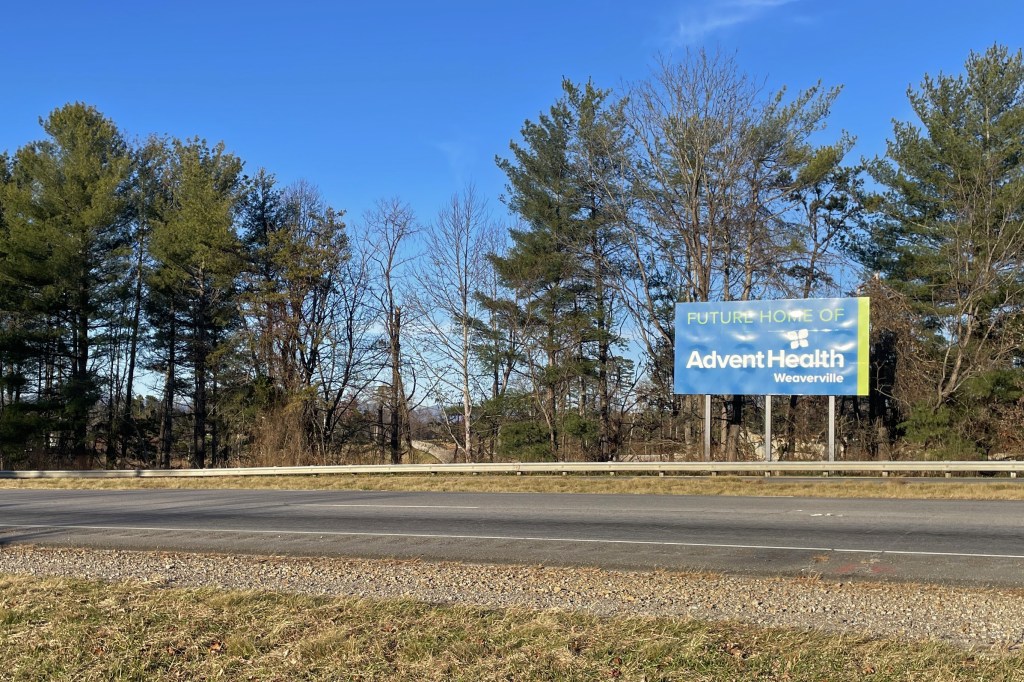
But the only indication of a new hospital thus far is a 25-acre field of graded dirt with a sign planted beside the highway reading “FUTURE HOME OF AdventHealth Weaverville.”

For the past three years, Mission Hospital’s owner has contested Florida-headquartered AdventHealth’s attempt to build the hospital on land bought for $7.5 million in rural Weaverville, just minutes south of Madison County. It was supposed to open this year, an event that would have defied the national trend of rural hospital closures.

The irony is that the very law that calls for the new hospital — the state’s certificate of need, or CON, law — has been used to prevent further construction. Such laws are intended to cap unfettered health care expansion by allowing new hospitals and expansions only when a state can document a need for them. But the legal process has tied up the proposed Weaverville hospital in court, just as other such laws have done with projects in Tigard, Oregon; Connecticut; and Fort Mill, South Carolina.

All states had certificate of need laws until 1987, when the federal government repealed a mandate requiring them. Today, North Carolina is one of 35 states with the laws still on the books. Twelve others have repealed them or let them expire, and some, such as Montana and South Carolina, have significantly weakened theirs amid concerns they limit health care access and boost costs. President Donald Trump’s Federal Trade Commission and Department of Justice are among those questioning the need for the laws.

In North Carolina, too, opposition to the state’s certificate of need law has surfaced in both the General Assembly, where a bill to repeal the law has been dormant since April, and more prominently in the state Superior Court.

But some hospital industry organizations, health care economists, and certificate of need lawyers argue that, though the laws create bureaucracy that can delay projects, that’s not justification to do away with them.

The principle behind certificates of need is to hold at bay what supporters say is unnecessary expansion and price inflation brought on by a free market, which makes health care more expensive for everyone.

“If the principle is worth preserving, don’t abandon the principle,” said Mark J. Silberman, a health care attorney with the Benesch law firm and former counsel for Illinois’ certificate of need board. “Improve the process to allow the principle to flourish.”

Who Should Fill the Need?

Mission Health is the largest health care network and the largest employer in the Tar Heel State’s share of the Appalachians. Nashville-based HCA Healthcare bought the century-old, nonprofit, six-hospital system for $1.5 billion in 2019, converting it to a for-profit operation that serves an 18-county region. (The Dogwood Health Trust, a nonprofit established as part of HCA’s purchase of Mission Health, helps fund KFF Health News’ coverage.)

Though AdventHealth already owns one hospital in the North Carolina mountains about a 30-minute drive from the Weaverville site, its bid to build a new one represents a threat to HCA’s stronghold. Mission argues it is best positioned to meet the needs the state says exist in the Madison County region.

“Not all acute care beds are the same,” Mission Health spokesperson Nancy Lindell said. “Instead of adding more beds at facilities that are unable to provide the complex medical and surgical care needed, the region would be better served by expanding bed capacity at Mission Hospital.”

An eastern North Carolina eye surgeon’s lawsuit filed in 2020 against the state’s health agency and top state officials alleged the state’s certificate of need law “has nothing to do with protecting the health or safety of real patients.” The ophthalmologist, Jay Singleton, has argued the law prevented him from performing surgeries at his own center because the state didn’t see a need to duplicate services already provided at the local hospital, where he was obligated to operate.

In early November, Republican state Treasurer Brad Briner, the State Employees Association of North Carolina, and several academics who study such laws nationally filed amicus briefs supporting Singleton’s case and urging a judge to reject the state’s attempt to dismiss it.

“I’ve characterized CON law as a permission slip to compete,” said Thomas Stratmann, a George Mason University economics and law professor who co-authored the brief. “It’s as if, when a McDonald’s wanted to open up a shop next to Burger King, they have to go to the state regulator to ask if that’s OK.”

Stratmann argued that, instead of raising prices, more competition would give hospitals and providers greater leverage in negotiating with insurance companies.

That view aligns with a stance the federal government has held for almost 40 years. With varying degrees of fervor under Democratic and Republican leadership, the Federal Trade Commission and Department of Justice have argued that the laws are anticompetitive and bad for consumers. The Justice Department did not respond to questions about its current position, and the FTC declined to comment on the record.

“CON laws create barriers to entry and expansion, limit consumer choice, and stifle innovation,” the Federal Trade Commission wrote in an April letter to Rhode Island Gov. Dan McKee, a Democrat, as the state’s legislature considered, but ultimately abandoned, amendments to its certificate of need law. “For these reasons, the Agencies have consistently suggested that states repeal or retrench their CON laws.”

‘It’s Personal’

In a June letter to Trump and congressional leaders, Senate Democrats named five North Carolina hospitals on a list of rural hospitals in danger of closing if the president’s then-pending spending and tax-cut legislation, called the One Big Beautiful Bill, became law, citing research from the University of North Carolina Sheps Center.

Two of the five North Carolina hospitals on that list, Angel Medical Center and Blue Ridge Regional Hospital, are part of the Mission Health system. Both had three consecutive years of negative profit margins, like hundreds of others on the list. Lindell, the Mission Health spokesperson, said HCA is committed to keeping those two facilities open.

Even so, Madison County Health Department Director Tammy Cody said the needs in the region remain and the certificate of need appeals process has slowed down getting help.

“This isn’t theoretical — it’s personal,” she said. “Every delay means a mother in labor risks a longer ride, an elder with chest pain waits longer for help, or a worker injured on the job faces unnecessary complications.”

AdventHealth spokesperson Victoria Dunkle said the hospital system supports the state’s law partly because it “protects rural access to health care and ensures the community has a voice in the process.” The legal process has kept families waiting, she said, but AdventHealth plans to move forward with the Weaverville hospital “as soon as possible.”

Snelson, the ambulance service director, voiced a question many in the region have asked since the hope of a new rural hospital surfaced.

“Why is it a bad thing for another hospital to come in here to take some of the stress off of Mission?” he asked. “Within a day of it opening, it’s going to be full.”

KFF Health News is a national newsroom that produces in-depth journalism about health issues and is one of the core operating programs at KFF—an independent source of health policy research, polling, and journalism. Learn more about KFF.

USE OUR CONTENT

This story can be republished for free (details).

Feds Promised ‘Radical Transparency’ but Withhold $50B Rural Fund Details

Medication-delivering drones. Telehealth at libraries. Church-hosted wellness events.

These are a few ideas proposed by states in their bids to win a portion of the new $50 billion federal Rural Health Transformation Program. Congress approved the five-year spending plan in the One Big Beautiful Bill Act, the same law that codified nearly $1 trillion in Medicaid spending reductions.

That law is expected to have an outsize effect on rural America, where the cuts are expected to slash health funding by $137 billion over 10 years.

So, how the rural health fund money rolls out is being watched closely by people like Alan Morgan, chief executive of the National Rural Health Association. State applications were due in early November, and federal officials have promised to announce awards by Dec. 31.

“Let’s be clear,” Morgan said. “The hospital CEOs, the clinic administrators, the community leaders: They’re going to want to know what their states are doing.”

As of last week, nearly 40 states had released project narratives, the main part of the application, which describes their proposed initiatives. Those include Maryland’s plan to create demand for healthy foods in addition to increasing their supply.

“Many rural Maryland children and adults have low intake of fruits, vegetables, and water, and limited engagement in physically active behaviors,” the state said in its application. Among other initiatives, officials propose to start mobile markets and install refrigerators and freezers to improve access in rural areas with limited grocery stores.

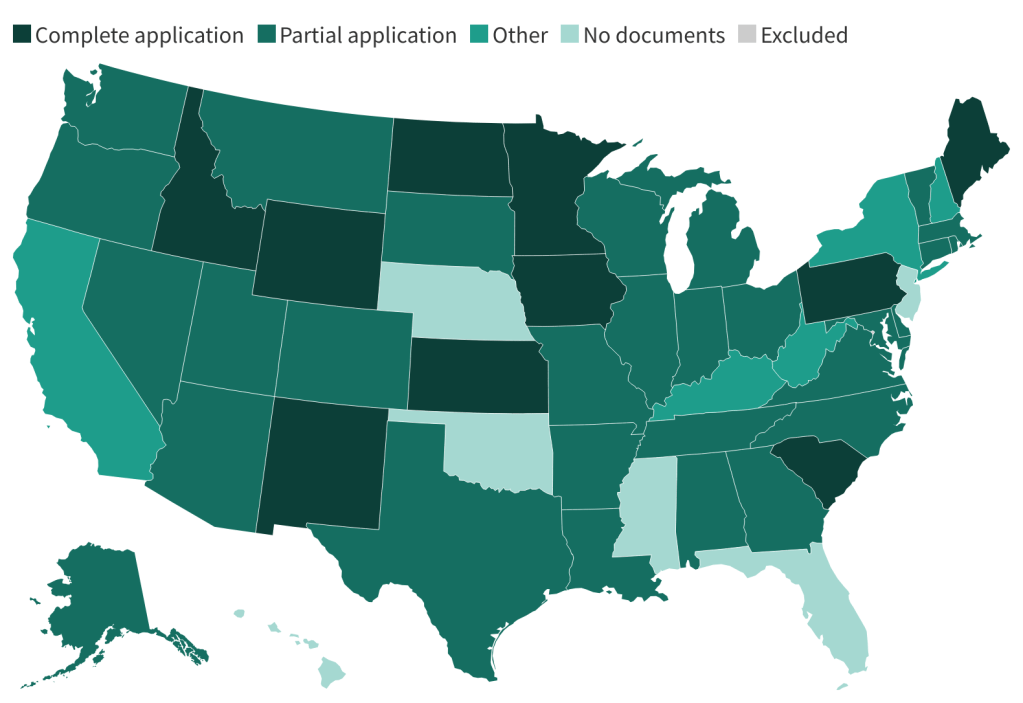
More than a dozen states have also released their budget narratives. And a handful of states — Idaho, Iowa, Kansas, Maine, Minnesota, New Mexico, North Dakota, Pennsylvania, South Carolina, and Wyoming — have released their full applications.

KFF Health News collected application documents through both informal and formal public records requests and published them on a map.

Heather Howard, a professor of the practice at Princeton University, said she is “pleasantly surprised at how transparent the states have been.” Princeton’s State Health and Value Strategies program is also tracking state documents.

But others are not pleased with what federal regulators are (or are not) releasing. Centers for Medicare & Medicaid Services spokesperson Catherine Howden said applications will not be released while they are being reviewed.

CMS plans to follow the federal regulations governing competitive grant materials when releasing information about the rural health program, Howden said.

In Illinois, where Democrats control state politics, Rep. Nikki Budzinski joined other Democratic members of the state’s U.S. House delegation in sending a letter to CMS Administrator Mehmet Oz last month asking for “full and fair consideration” of their state’s application.

“I am very concerned about retaliation,” she said.

KFF Health News is a national newsroom that produces in-depth journalism about health issues and is one of the core operating programs at KFF—an independent source of health policy research, polling, and journalism. Learn more about KFF.

USE OUR CONTENT

This story can be republished for free (details).

While Scientists Race To Study Spread of Measles in US, Kennedy Unravels Hard-Won Gains

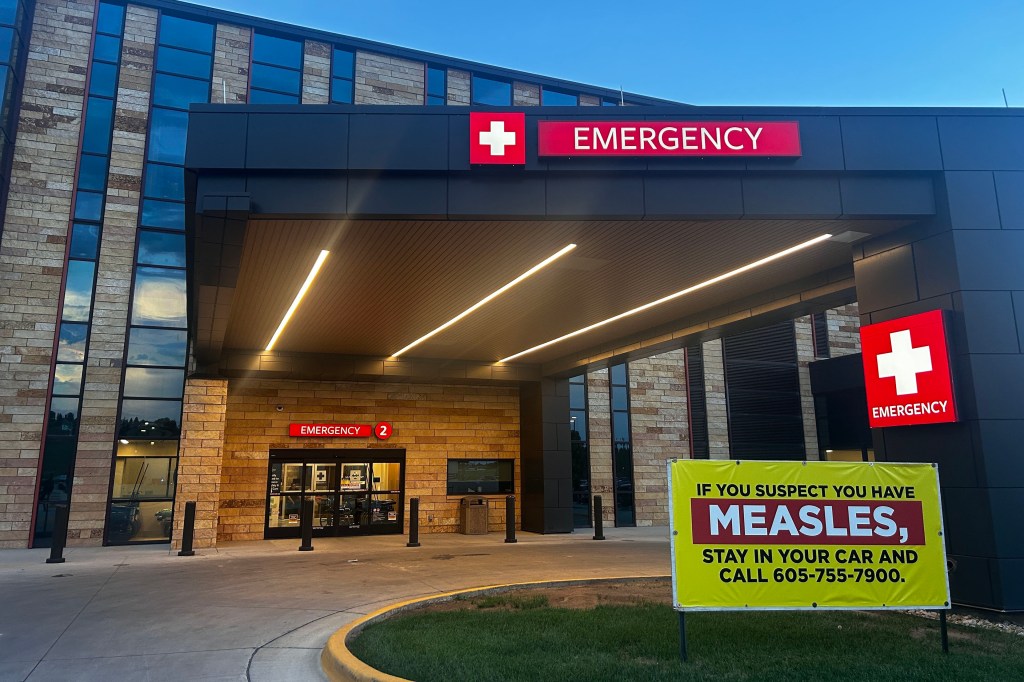
The United States is poised to lose its measles-free status next year. If that happens, the country will enter an era in which outbreaks are common again.

More children would be hospitalized because of this preventable disease. Some would lose their hearing. Some would die. Measles is also expensive. A new study — not yet published in a scientific journal — estimates that the public health response to outbreaks with only a couple of cases costs about $244,000. When a patient requires hospital care, costs average $58,600 per case. The study’s estimates suggest that an outbreak the size of the one in West Texas earlier this year, with 762 cases and 99 hospitalizations, costs about $12.6 million.

America’s status hinges on whether the country’s main outbreaks this year stemmed from the big one in West Texas that officially began Jan. 20. If these outbreaks are linked, and go on through Jan. 20 of next year, the U.S. will no longer be among nations that have banished the disease.

“A lot of people worked very hard for a very long time to achieve elimination — years of figuring out how to make vaccines available, get good vaccine coverage, and have a rapid response to outbreaks to limit their spread,” said Paul Rota, a microbiologist who recently retired from a nearly 40-year career at the Centers for Disease Control and Prevention.

Instead of acting fast to prevent a measles comeback, Robert F. Kennedy Jr., a lawyer who founded an anti-vaccine organization before taking the helm at the Department of Health and Human Services, has undermined the ability of public health officials to prevent and contain outbreaks by eroding trust in vaccines. The measles vaccine is safe and effective: Only 4% of more than 1,800 confirmed U.S. cases of measles this year have been in people who had received two doses.

Kennedy has fired experts on the vaccine advisory committee to the CDC and has said, without evidence, that vaccines may cause autism, brain swelling, and death. On Nov. 19, scientific information on a CDC webpage about vaccines and autism was replaced with false claims. Kennedy told The New York Times that he ordered the change.

“Do we want to go back into a prevaccine era where 500 kids die of measles each year?” asked Demetre Daskalakis, a former director of the CDC’s national immunization center, who resigned in protest of Kennedy’s actions in August. He and other scientists said the Trump administration appears to be occupied more with downplaying the resurgence of measles than with curbing the disease.

HHS spokesperson Andrew Nixon said in a statement that vaccination remains the most effective tool for preventing measles and that the “CDC and state and local health agencies continue to work together to assess transmission patterns and ensure an effective public health response.”

Looking for Links

CDC scientists are indeed tracking measles, alongside researchers at health departments and universities. To learn whether outbreaks are linked, they’re looking at the genomes of measles viruses, which contain all their genetic information. Genomic analyses could help reveal the origin of outbreaks and their true size, and alert officials to undetected spread.

Scientists have conducted genomic analyses of HIV, the flu, and covid for years, but it’s new for measles because the virus hasn’t been much of a problem in the U.S. for decades, said Samuel Scarpino, a public health specialist at Northeastern University in Boston. “It’s important to get a surveillance network into place so that we could scale up rapidly if and when we need it,” he said.

“We are working with the CDC and other states to determine whether what we’re seeing is one large outbreak with continued spread from state to state,” said Kelly Oakeson, a genomics researcher at the Utah Department of Health and Human Services.

At first glance, the ongoing outbreak in Utah and Arizona, with 258 cases as of Dec. 1, seems linked to the one in Texas because they’re caused by the same strain of measles, D8-9171. But this strain is also spreading throughout Canada and Mexico, which means the outbreaks could have been sparked separately from people infected abroad. If that happened, this technicality could spare the U.S. from losing its status, Rota said. Being measles-free means the virus isn’t circulating in a country continuously year-round.

Canada lost its measles-elimination status in November because authorities couldn’t prove that various outbreaks from the D8-9171 strain were unrelated, said Daniel Salas, executive manager of the comprehensive immunization program at the Pan American Health Organization. The group, which works with the World Health Organization, includes health officials from countries in North, South, and Central America, and the Caribbean. It makes a call on measles elimination based on reports from scientists in the countries it represents.

Early next year, PAHO will hear from U.S. scientists. If their analyses suggest that measles has spread continuously for a year within the U.S., the organization’s director may revoke the country’s status as measles-free.

“We expect countries to be transparent about the information they have,” Salas said. “We will ask questions, like, ‘How did you determine your findings, and did you consider other angles?’”

In anticipation of PAHO’s assessment, Oakeson and other researchers are studying how closely the D8-9171 strains in Utah match others. Instead of looking at only a short snippet of genes that mark the strain, they’re analyzing the entire genome of the measles virus, about 16,000 genetic letters long. Genetic mutations occur naturally over time, and the accumulation of small changes can act like a clock, revealing how much time has ticked by between outbreaks. “This tells us the evolutionary history of samples,” Oakeson said.

For example, if one child directly infects another, the kids will have matching measles viruses. But measles viruses infecting people at the start of a large outbreak would be slightly different than those infecting people months later.

Although the Texas and Utah outbreaks are caused by the same strain, Oakeson said, “more fine-grained details are leading us to believe they aren’t super closely related.” To learn just how different they are from each other, scientists are comparing them with measles virus genomes from other states and countries.

Ideally scientists could pair genetic studies with shoe-leather investigations into how each outbreak started. However, many investigations have come up dry because the first people infected haven’t sought care or contacted health departments. As in West Texas, the outbreak in Utah and Arizona is concentrated in close-knit, undervaccinated communities that are leery of government authorities and mainstream medicine.

Researchers are also trying to learn how many measles cases have gone undetected. “Confirmed cases require testing, and in some communities, there’s a cost to going to the hospital to get tested: a tank of gas, finding a babysitter, missing work,” Andrew Pavia, an infectious disease doctor at the University of Utah, said. “If your kid has a measles rash but isn’t very sick, why would you bother?”

Subtle Surveillance

Pavia is part of a nationwide outbreak surveillance network led by the CDC. A straightforward way to figure out how large an outbreak is would be through surveys, but that’s complicated when communities don’t trust public health workers.

“In a collaborative setting, we could administer questionnaires asking if anyone in a household had a rash and other measles symptoms,” Pavia said, “but the same issues that make it difficult to get people to quarantine and vaccinate make this hard.”

Instead, Pavia and other researchers are analyzing genomes. A lot of variation suggests an outbreak spread for weeks or months before it was detected, infecting many more people than known.

A less intrusive mode of surveillance is through wastewater. This year, the CDC and state health departments have launched efforts to test sewage from households and buildings for measles viruses that infected people shed. A study in Texas found that this could function as an early warning system, alerting public health authorities to an outbreak before people show up in hospitals.

The quiet research of CDC scientists stands in stark contrast to its dearth of public-facing actions. The CDC hasn’t held a single press briefing on measles since President Donald Trump took office, and its last publication on measles in the agency’s Morbidity and Mortality Weekly Report was in April.

Rather than act fast to limit the size of the Texas outbreak, the Trump administration impeded the CDC’s ability to communicate quickly with Texas officials and slowed the release of federal emergency funds, according to investigations by KFF Health News. Meanwhile Kennedy broadcast mixed messages on vaccines and touted unproven treatments.

Daskalakis said that as the outbreak in Texas worsened, his CDC team was met by silence when they asked to brief Kennedy and other HHS officials.

“Objectively they weren’t helping with the Texas outbreak, so if we lose elimination, maybe they’ll say, ‘Who cares,’” Daskalakis said.

Nixon, the HHS spokesperson, said Kennedy responded strongly to the Texas outbreak by directing the CDC to help provide measles vaccines and medications to communities, expediting measles testing, and advising doctors and health officials. The U.S. retains its elimination status because there’s no evidence of continuous transmission for 12 months, he added.

“Preliminary genomic analysis suggests the Utah and Arizona cases are not directly linked to Texas,” the CDC’s acting director, Deputy HHS Secretary Jim O’Neill, wrote on the social platform X.

Given Kennedy’s distortions of data on vitamin A, Tylenol, and autism, Daskalakis said the Trump administration may insist that outbreaks aren’t linked or that PAHO is wrong.

“It will be quite a stain on the Kennedy regime if he is the health secretary in the year we lose elimination status,” he said. “I think they will do everything they can to cast doubt on the scientific findings, even if it means throwing scientists under the bus.”

KFF Health News is a national newsroom that produces in-depth journalism about health issues and is one of the core operating programs at KFF—an independent source of health policy research, polling, and journalism. Learn more about KFF.

USE OUR CONTENT

This story can be republished for free (details).

Tracking Applications for Rural Health Transformation Funds

Since the Nov. 5 deadline passed for states to apply for their shares of the new $50 billion federal Rural Health Transformation Program funding, officials at the Centers for Medicare & Medicaid Services have declined to publicly release the applications. Federal officials are using those submissions, most of them more than 100 pages long, to decide how to divide the money among states. They’ve pledged to announce the allocations by Dec. 31.

KFF Health News is working to collect and post complete application materials, by state, here and will update this repository as new materials, released in response to public records requests, arrive.

KFF Health News is a national newsroom that produces in-depth journalism about health issues and is one of the core operating programs at KFF—an independent source of health policy research, polling, and journalism. Learn more about KFF.

USE OUR CONTENT

This story can be republished for free (details).
Gobierno prometió “transparencia radical”, pero oculta solicitudes de fondos para la salud rural

Drones que entregan medicamentos y telesalud en bibliotecas locales son algunas de las ideas que líderes estatales acaban de presentar para gastar su parte de un programa federal de salud rural de $50.000 millones.

El gobierno de Trump, que ha prometido “transparencia radical”, afirmó en un documento de preguntas frecuentes que planea publicar el “resumen de proyectos” de los estados que obtengan fondos. Siguiendo el ejemplo de los reguladores federales, muchos estados ocultan sus solicitudes completas, y algunos se han negado a revelar cualquier detalle.

“Seamos claros”, dijo Alan Morgan, director ejecutivo de la Asociación Nacional de Salud Rural (NRHA, por sus siglas en inglés). “Los directores de hospitales, los administradores de clínicas, los líderes comunitarios: todos van a querer saber qué están haciendo sus estados”.

Entre los miembros de la NRHA se incluyen hospitales y clínicas rurales con dificultades económicas, a los que legisladores federales prometieron beneficiar con el Programa de Transformación de la Salud Rural del gobierno de Trump.

Morgan señaló que sus miembros están interesados en saber qué proponen los estados, qué ideas son aprobadas o rechazadas y cuáles son sus justificaciones presupuestarias, que explican cómo podría gastarse el dinero.

Mejorar la atención médica rural es una “tarea increíblemente complicada y difícil”, afirmó Morgan.

El Programa de Transformación de la Salud Rural, con una duración de cinco años, fue aprobado por el Congreso en una ley —la llamada One Big Beautiful Bill Act— que también reduce drásticamente el gasto de Medicaid, del cual dependen en gran medida los proveedores de salud en zonas rurales. Este programa está siendo observado con atención porque representa una inyección muy necesaria de fondos, aunque con la condición impuesta por el gobierno de Trump de que el dinero se utilice en ideas transformadoras y no simplemente para mantener a flote a hospitales rurales en crisis.

La ley indica que la mitad de los $50.000 millones se dividirá en partes iguales entre todos los estados con una solicitud aprobada. El resto se distribuirá en base a un sistema de puntos. De la segunda mitad, $12.500 millones se asignarán en función del nivel de “ruralidad” de cada estado. Los otros $12.500 millones se otorgarán a estados que obtengan buenos puntajes en iniciativas y políticas alineadas, en parte, con los objetivos del gobierno de Trump bajo el lema “Hacer a Estados Unidos Saludable de Nuevo” (Make America Healthy Again).

El secretario de Salud y Servicios Humanos, Robert F. Kennedy Jr., ha prometido en repetidas ocasiones abrir el gobierno al pueblo estadounidense. Su agencia tiene una página web dedicada a la “transparencia radical”.

“Estamos trabajando para que este sea el Departamento de Salud y Servicios Humanos (HHS, por sus siglas en inglés) más transparente en sus 70 años de historia”, escribió Kennedy en un testimonio escrito al Congreso en septiembre.

Lawrence Gostin, profesor de derecho en salud pública en la Universidad Georgetown, dijo que el HHS está actuando “de manera totalmente opaca” y que el público tiene derecho a exigir “mayor apertura y claridad”. Sin transparencia, agregó, la población no puede evaluar las responsabilidades de esa agencia.

Catherine Howden, vocera de los Centros de Servicios de Medicare y Medicaid (CMS, por sus siglas en inglés), dijo que la agencia seguirá las regulaciones federales que rigen los materiales de subvenciones competitivas al publicar información sobre el programa de salud rural.

Las solicitudes de subvención “no se hacen públicas durante el proceso de evaluación por méritos”, dijo Howden, y agregó: “El propósito de esta política es proteger la integridad de las evaluaciones, la confidencialidad de los solicitantes y la naturaleza competitiva del proceso”.

Demócratas y algunos defensores de la atención de salud temen que las decisiones sobre la distribución del dinero tengan motivaciones políticas.

“Me preocupan las represalias políticas”, dijo la representante Nikki Budzinski, demócrata de Illinois. Como los demócratas controlan la política de nuestro estado, “nuestra solicitud podría no ser tomada tan en serio como la de otros estados liderados por republicanos”, agregó.

En noviembre, los legisladores demócratas de Illinois en la Cámara de Representantes enviaron una carta al administrador de los CMS, Mehmet Oz, solicitando una “evaluación justa e integral” de la solicitud estatal. Las autoridades de Illinois aún no han comunicado su propuesta a KFF Health News, que presentó una solicitud de registros públicos.

Heather Howard, profesora en la Universidad de Princeton, dijo que le “sorprende gratamente la transparencia de muchos estados”.

Howard dirige el programa State Health and Value Strategies de la universidad, que monitorea el fondo de salud rural, y elogió a la mayoría de los estados por publicar sus resúmenes del proyecto.

“Esto demuestra el enorme interés que despierta el programa”, dijo Howard.

Su equipo, que revisó cerca de dos docenas de resúmenes estatales, identificó temas comunes como la expansión de servicios móviles y a domicilio, mayor uso de tecnología, y desarrollo de la fuerza laboral con becas, bonos por contratación y ayuda para cuidado infantil en puestos de alta demanda.

“Creo que es emocionante”, dijo Howard. “Considero muy valioso lo que podemos aprender de estas propuestas”.

Howard señaló que las solicitudes de Georgia y Alabama incluían el uso de telerrobótica: una propuesta para utilizar robots para realizar ecografías remotas.

Otro tema que “me entusiasma”, dijo, es el esfuerzo de los estados por crear grupos o comités asesores, como en Idaho, donde se espera que los grupos de trabajo se enfoquen en tecnología, desarrollo de fuerza laboral, colaboración con comunidades indígenas, y salud mental y conductual.

Los 50 estados presentaron sus solicitudes a los reguladores federales antes de la fecha límite del 5 de noviembre, y las resoluciones se anunciarán antes de que termine el año, según los CMS.

Hasta finales de noviembre, casi 40 estados habían hecho público su resumen del proyecto, que es la parte principal de la solicitud donde se describen las iniciativas propuestas, según un seguimiento de KFF Health News. Más de una docena de estados también publicaron sus presupuestos.

Un pequeño grupo de estados —Idaho, Iowa, Kansas, Minnesota, Nuevo México, Dakota del Norte, Carolina del Sur y Wyoming— publicó todos los componentes de la solicitud.

KFF Health News presentó solicitudes de registros públicos para obtener las peticiones completas de los estados. Algunos se negaron a entregar cualquier parte de sus materiales.

Nebraska, por ejemplo, rechazó la solicitud argumentando que su contenido es “información comercial o propietaria” que “podría beneficiar a competidores comerciales”.

Kentucky compartió el resumen de su solicitud, pero indicó que el resto es un “borrador preliminar” no sujeto a divulgación bajo las leyes estatales.

Erika Engle, vocera del gobernador de Hawaii, Josh Green, dijo que el gobernador “está comprometido con la transparencia”, pero se negó a compartir la propuesta del estado.

Hawaii y otros estados aún están procesando solicitudes formales de registros públicos.

Este programa de salud rural forma parte de la ley aprobada en julio que se prevé que reducirá el gasto federal de Medicaid en zonas rurales en $137.000 millones durante los próximos 10 años.

Se espera que estos recortes afecten las finanzas de centros rurales, poniendo en riesgo su capacidad para seguir operando. Un informe reciente de Commonwealth Fund reveló que muchas áreas rurales siguen sin acceso adecuado a atención primaria. Pero las normas del programa de salud rural indican que solo el 15% de los nuevos fondos puede utilizarse para pagar atención directa a los pacientes.

Entre los recortes a Medicaid y la nueva inversión del programa, “hay una verdadera oportunidad para que las políticas nacionales tengan un impacto en las zonas rurales, tanto de forma negativa como positiva”, señaló Celli Horstman, investigadora principal de la fundación en Nueva York y coautora del informe.

Entre las propuestas disponibles al público, los estados con gobiernos demócratas muestran disposición para apoyar algunos de los objetivos del gobierno, aunque también rechazan otros, lo cual podría restarles puntos.

Por ejemplo, Nuevo México indicó que presentará una ley para que los estudiantes tomen la Prueba Presidencial de Aptitud Física (Presidential Fitness Test) y que los médicos realicen cursos de educación continua sobre nutrición. Pero no impedirá que las personas usen sus beneficios del Programa de Asistencia Nutricional Suplementaria (SNAP, por sus siglas en inglés) para comprar productos “no nutritivos” como sodas o dulces.

Muchos estados planean invertir en tecnología, como telesalud, ciberseguridad y equipos para monitoreo remoto de pacientes. Otros temas incluyen mejorar el acceso a alimentos saludables, fortalecer los servicios de emergencia, prevenir y tratar enfermedades crónicas, y recurrir a trabajadores comunitarios de salud y paramédicos para visitas domiciliarias.

Algunas propuestas específicas incluyen:

  • Arkansas quiere gastar $5 millones en su programa “FAITH” —Acceso, Transporte y Salud Basados en la Fe— para que instituciones religiosas rurales organicen eventos de educación y pruebas preventivas. También se instalarían circuitos para caminar y equipos de ejercicio en las congregaciones.
  • Alaska, que históricamente ha usado trineos de perros para entregar medicamentos en zonas remotas, quiere probar el uso de “sistemas aéreos no tripulados” para agilizar la entrega de medicinas.
  • Tennessee quiere aumentar el acceso a actividades saludables con inversiones en parques, senderos y mercados agrícolas.
  • Maryland propone abrir mercados móviles e instalar refrigeradores y congeladores para facilitar el acceso a alimentos frescos y saludables que suelen dañarse en zonas rurales con pocos supermercados.

El senador estatal Stephen Meredith, un republicano que representa una parte del oeste de Kentucky, dijo que espera que los hospitales rurales sigan cerrando, pese al programa estatal.

“Creo que estamos tratando los síntomas sin curar la enfermedad”, señaló después de escuchar una presentación sobre la propuesta de Kentucky.

Morgan, cuya organización representa a hospitales rurales que probablemente cerrarán, dijo que las ideas del estado pueden sonar bien.

“Uno puede escribir una narrativa que suene maravillosa”, afirmó. “Pero traducir esas metas aspiracionales en un programa funcional, eso es más difícil”.

Los reporteros de KFF Health News, Phil Galewitz, Katheryn Houghton, Tony Leys, Jazmin Orozco Rodriguez, Maia Rosenfeld, Bram Sable-Smith y Lauren Sausser contribuyeron con este artículo.

KFF Health News is a national newsroom that produces in-depth journalism about health issues and is one of the core operating programs at KFF—an independent source of health policy research, polling, and journalism. Learn more about KFF.

USE OUR CONTENT

This story can be republished for free (details).